
A Resonant Anthem for Justice and Hope
Ah, “Chimes of Freedom.” Just the title itself evokes a particular era, doesn’t it? A time when music wasn’t just background noise, but a vibrant, living force that articulated the hopes, fears, and burgeoning conscience of a generation. And when you add the names Bob Dylan and Joan Baez to the mix, you’re not just talking about a song; you’re talking about a moment, a movement, a whisper that became a roar for civil rights and human dignity.
Let’s cast our minds back to 1964, a year of profound change and simmering discontent in America. It was the year the Civil Rights Act was signed, a landmark achievement, but also a time when the fight for equality was far from over. It was against this backdrop that Bob Dylan, then a restless and prolific voice of protest, released his fourth studio album, “Another Side of Bob Dylan.” Tucked within its grooves, a song that would become an enduring testament to his poetic prowess and his commitment to social justice: “Chimes of Freedom.” While this wasn’t a chart-topping pop single in the conventional sense – Dylan’s work in those days wasn’t really for the charts in the way we understand them today – its impact resonated far beyond any Billboard Hot 100 position. It became, almost immediately, an anthem, adopted by activists and sung at rallies, a rallying cry for those yearning for a more just world. Its “chart position,” if you will, was measured in the hearts and minds of a generation, not on a radio countdown.
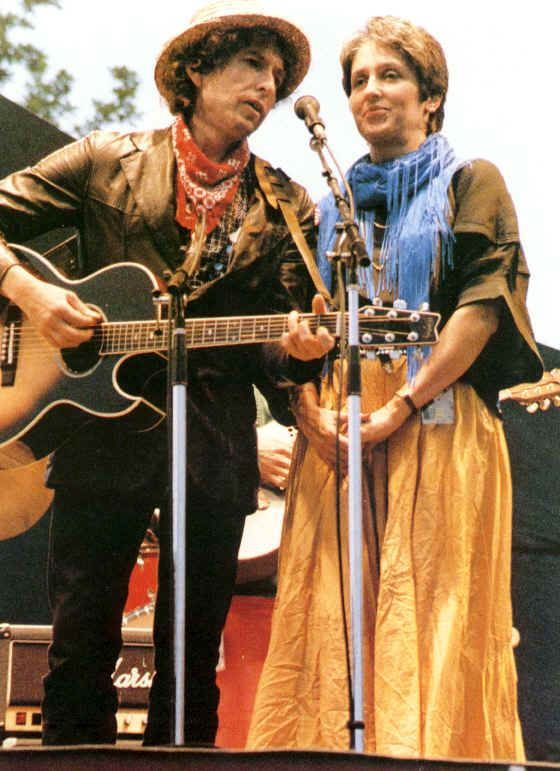
The version that many of us remember with such fondness, the one that truly cemented its place in the collective consciousness, often features the ethereal harmony of Joan Baez. Though “Chimes of Freedom” was initially a Dylan solo composition, it was their live performances together, particularly at pivotal moments like the 1964 Newport Folk Festival, that etched this song into the amber of history. Baez’s pure, soaring soprano intertwined with Dylan’s more grounded, raw delivery, creating a vocal tapestry that was both haunting and uplifting. It was a perfect sonic representation of the idealism and moral urgency of the time.
The story behind “Chimes of Freedom” is rooted in a moment of profound personal experience for Dylan. He reportedly wrote the song in the spring of 1964, following a cross-country drive with his friend and collaborator, Paul Clayton. During a fierce lightning storm, Dylan was struck by an almost spiritual epiphany, a sudden clarity about the universal struggle for freedom and the interconnectedness of all suffering. He saw the lightning flashes not just as natural phenomena, but as symbolic illuminations, revealing the injustices perpetrated against the oppressed and marginalized across the globe. This visceral experience translated into the song’s vivid imagery and its sweeping scope.
At its core, “Chimes of Freedom” is a poetic and impassioned plea for universal justice and empathy. It’s a litany of those who suffer – “the unfortunate,” “the deprived,” “the invisible,” “the dispossessed,” “the crippled and the insane,” “the refugees,” and “the countless dead.” Dylan doesn’t just list them; he gives them a voice, a presence within the swirling narrative of the song. The “chimes” themselves represent not just the sounds of bells, but the ringing of conscience, the awakening of awareness, and the hopeful promise of a better future. Each peal is a recognition of suffering, but also a call to action, a reverberation of hope that freedom, in its truest and broadest sense, will eventually ring for all. It’s a song that reminds us that true freedom isn’t just about political liberty, but about liberation from all forms of oppression – economic, social, and spiritual.
For many of us who lived through those tumultuous years, “Chimes of Freedom” wasn’t just a song; it was a companion. It accompanied us to protests, played softly on our record players during late-night discussions about the state of the world, and resonated in the background of our dawning political consciousness. It was a piece of music that gave voice to our own nascent feelings of injustice and our burgeoning desire for change. It reminded us that we were not alone in our convictions, that there was a collective yearning for a world where “the chimes of freedom” would ring for everyone, everywhere. And even now, decades later, when those opening guitar chords begin, a flood of memories returns – the idealism, the passion, the belief that music truly could change the world. It’s a timeless testament to the enduring power of art to speak truth to power and to stir the human spirit.