
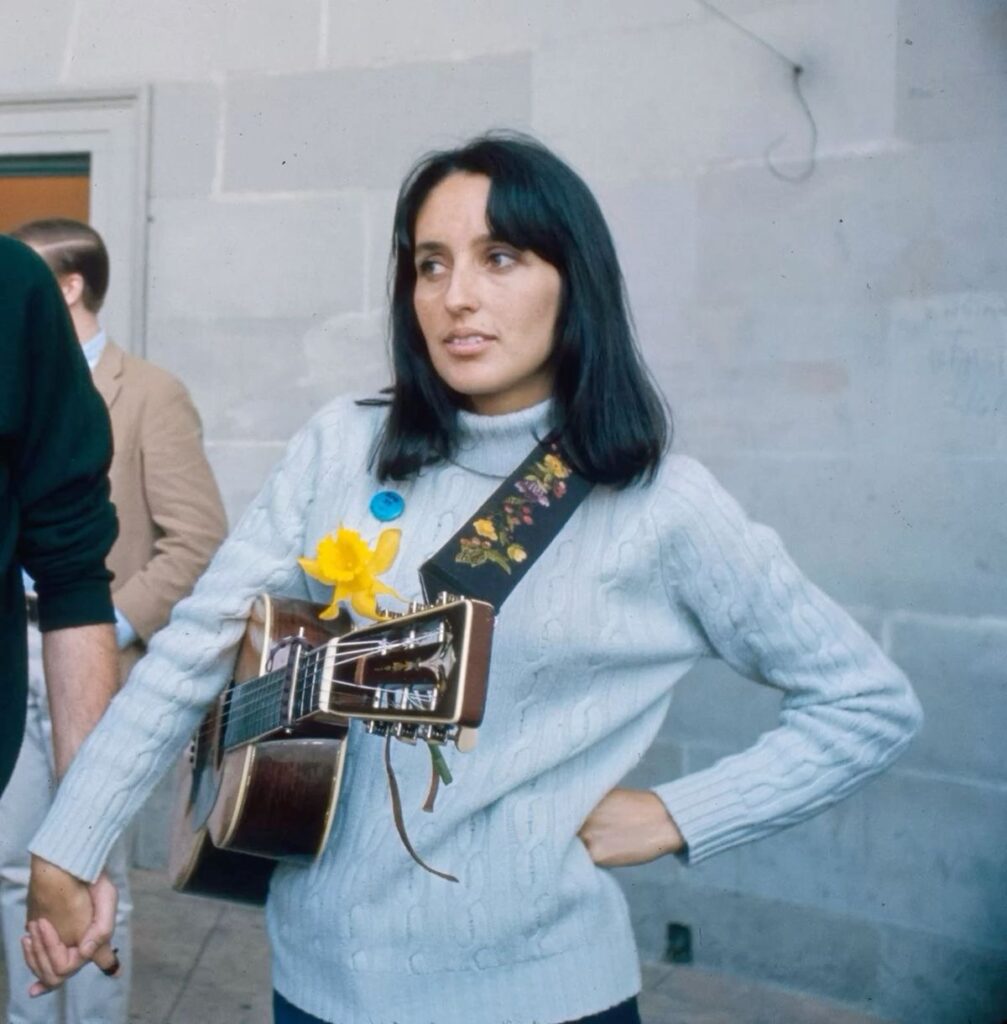
A Timeless Echo of Enduring Grief and Resilience
Ah, the whispers of the past, carried on the gentle breeze of a forgotten melody. We’re about to delve into one such profound whisper, a song that, for many of us who remember those simpler times, evokes a sense of deep melancholy, yet also a quiet strength. We’re talking about Joan Baez‘s haunting rendition of “Girl of Constant Sorrow”. While this particular track wasn’t a charting single for Baez in the traditional sense – it appeared on her seminal 1960 self-titled debut album, Joan Baez, an album that itself became a landmark, reaching No. 15 on the Billboard 200 – its impact was immeasurable, firmly cementing her status as a vital voice in the burgeoning folk revival. It was less about chart positions for an artist like Baez, and more about the raw, unvarnished truth she delivered.
The story behind “Girl of Constant Sorrow” is, in itself, a reflection of the folk tradition from which it springs. It’s a gender-swapped adaptation of the much older traditional American folk song, “Man of Constant Sorrow”. While the original’s precise origins are shrouded in the mists of time, it’s often attributed to Dick Burnett, a partially blind fiddler from Kentucky, who first recorded a version in 1913. Imagine, if you will, the hardships of early 20th-century rural America, the constant struggle against poverty, the yearning for a better life – these were the fertile grounds from which such laments grew. The song itself, in its various iterations, speaks of a life burdened by misfortune, of a wanderer ostracized and alone, facing an uncertain future. It’s a narrative that resonated deeply with the common man, a voice for those who felt unheard.
When Joan Baez took up the mantle and transformed it into “Girl of Constant Sorrow”, she infused it with a different, yet equally potent, kind of sorrow – one that many women of the era, particularly those in marginalized communities, could deeply identify with. The meaning of the song, in her tender yet unwavering hands, becomes a poignant testament to the unyielding weight of a woman’s grief, of being born into a life seemingly destined for hardship and sorrow. “I’ve seen trouble all my days,” she sings, her voice a pure, unadorned instrument, carrying the weight of generations of struggle. It speaks of a longing for solace, for a moment of peace in a world that offers little. Yet, there’s also a subtle undercurrent of resilience, a quiet determination to face another day, despite the overwhelming odds.
For those of us who came of age during the tumultuous 1960s, “Girl of Constant Sorrow” wasn’t just a song; it was an anthem of empathy. It was a reminder of the shared human experience of pain and endurance. It wasn’t about flashy production or catchy hooks; it was about the raw, emotional truth delivered with an almost spiritual reverence. Baez’s interpretation stripped away any artifice, leaving only the stark beauty of the melody and the profound honesty of the lyrics. Her finger-picked guitar accompaniment, spare and precise, allowed her voice to soar, carrying the lament directly to the listener’s heart. It’s a song that speaks to the cyclical nature of sorrow, but also to the enduring human spirit that somehow finds a way to carry on. As we listen to it now, decades later, it transports us back to a time when music was a powerful vehicle for social commentary and emotional catharsis, a time when a simple folk song could speak volumes about the human condition. And in its enduring resonance, we find a quiet comfort, a reminder that even in our darkest hours, we are not alone in our sorrow.