
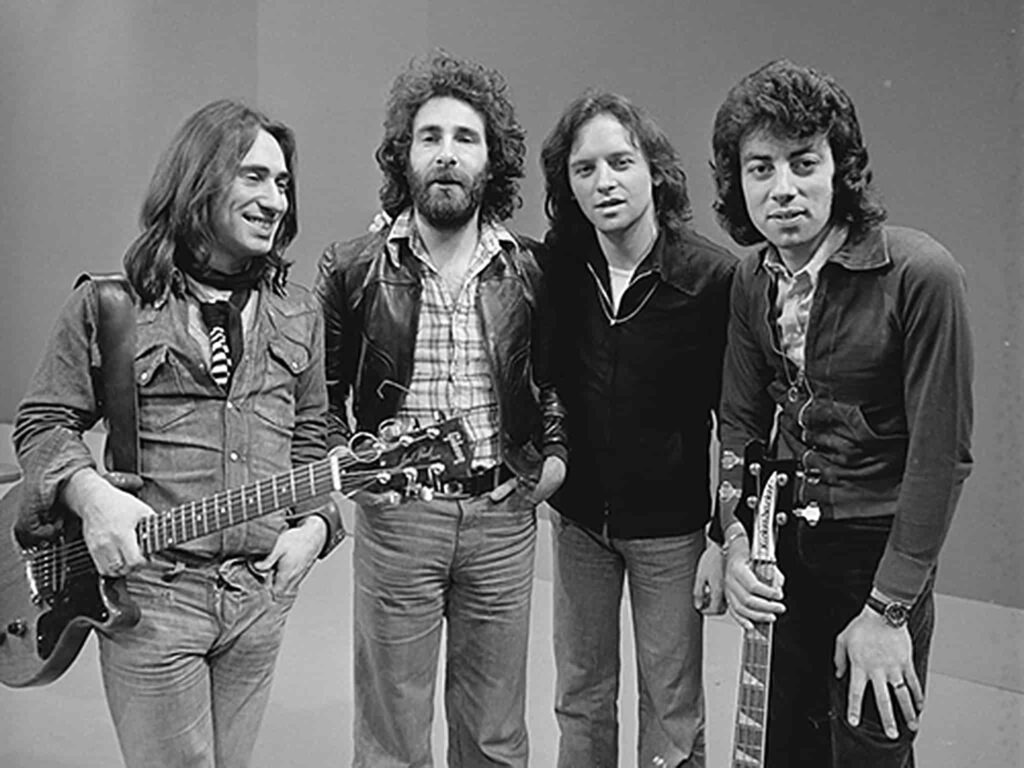
A poignant exploration of unspoken love and the delicate dance of denial.
Ah, “I’m Not in Love” by the ingenious British band 10cc. Just the title itself carries a whisper of the complexities of the human heart, doesn’t it? Released in the spring of 1975, this track wasn’t just a song; it was an experience, a sonic tapestry woven with layers of emotion and groundbreaking studio wizardry. It swiftly climbed the charts, nestling comfortably at the number one spot in the UK and reaching a respectable number two in the United States, solidifying 10cc‘s place in the pantheon of pop music innovators.
The story behind this masterpiece is as intriguing as the song itself. Initially conceived as a bossa nova tune by bassist Graham Gouldman, it was met with lukewarm enthusiasm by the rest of the band – Eric Stewart, Lol Creme, and Kevin Godley. It was Stewart who, in a moment of creative spark, envisioned it as the atmospheric, almost ethereal ballad we know today. Legend has it that he was inspired by the constant declarations of “I love you” that had become almost commonplace, and he wondered if the opposite – a repeated denial – could actually convey a deeper, more hesitant affection.
The recording process was revolutionary for its time. Eschewing traditional instrumentation for large parts of the song, 10cc painstakingly crafted a “choir” of their own voices. Each band member sang every note of the middle eight harmony multiple times onto a multi-track tape. These tapes were then mixed down, creating a haunting, almost otherworldly vocal backdrop that became the song’s signature. This meticulous approach, taking weeks to perfect, truly set “I’m Not in Love” apart from the prevailing sounds of the era. It was a testament to their dedication to sonic experimentation and their refusal to take the easy route.
The meaning of “I’m Not in Love” resonates deeply with anyone who has ever grappled with the vulnerability of admitting love. The lyrics paint a picture of someone caught in a delicate balance between desire and fear. The repeated assertion, “I’m not in love,” becomes increasingly unconvincing as the soft, almost pleading questions – “But you don’t want to see me cry, do you?” – reveal the true depth of feeling hidden beneath the surface. It speaks to the universal human experience of wanting to protect oneself from potential heartbreak by feigning indifference. The song captures that fragile moment when the walls we build around our hearts begin to crumble, and the truth of our emotions threatens to spill over.
Think back to those times, perhaps in your youth, when expressing deep affection felt daunting. There was a certain vulnerability in laying your heart bare. “I’m Not in Love” encapsulates that very feeling, that hesitant dance between wanting to express love and the fear of rejection or the unknown. The gentle synth washes, the subtle percussion, and that unforgettable vocal tapestry create an atmosphere of introspection and longing, drawing the listener into the narrator’s internal struggle. It’s a song that doesn’t shout its emotions; it whispers them, allowing the listener to feel them all the more profoundly.
The impact of “I’m Not in Love” has endured through the decades. Its innovative soundscapes influenced countless artists, and its poignant exploration of love’s complexities continues to resonate with new generations. It remains a staple on radio stations, a timeless ballad that evokes a sense of yearning and the bittersweet nature of unspoken feelings. It’s a reminder that sometimes, the most profound emotions are the ones we hesitate to voice, and that the space between denial and admission can be filled with a universe of unspoken longing. This isn’t just a song; it’s a memory, a feeling, a moment frozen in time.