
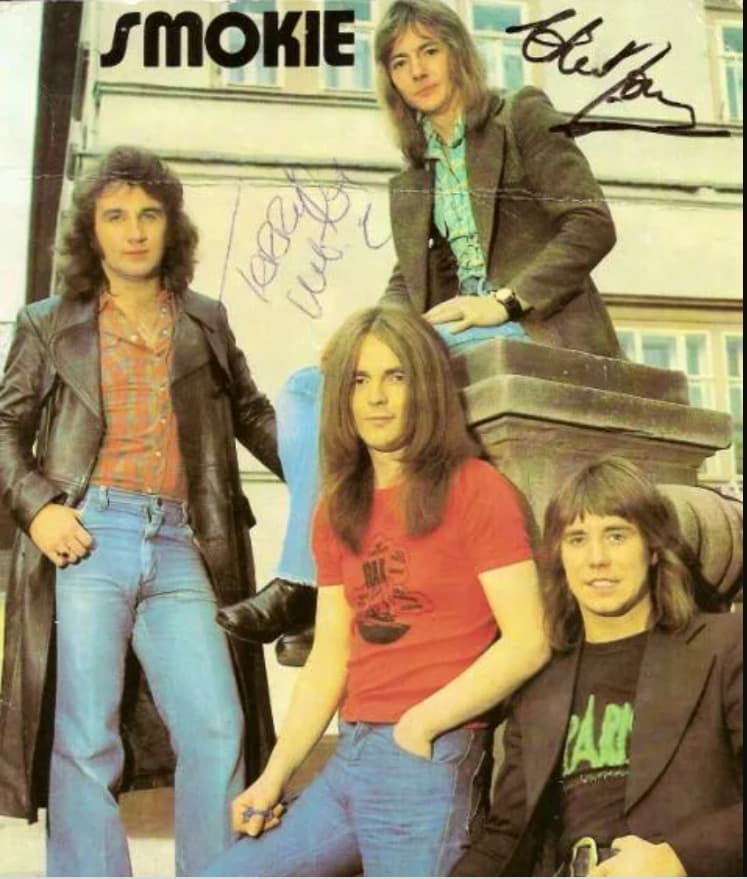
“What Can I Do” – a tender question of loss and longing
When the English rock band Smokie released “What Can I Do” in 1976, it arrived as a quietly resonant ballad woven with nostalgic ache and the gentle tremor of a heart in flux. Found on their third studio album Midnight Café (released 9 April 1976) under the RAK label, the song carries a reflective tone rarely seen in the band’s more upbeat hits.
While the precise single-chart peak of “What Can I Do” in the UK or US is elusive in public records, various sources indicate that the album itself achieved traction in Europe, and that this particular track gained a surprising popularity in parts of the Soviet bloc despite lacking a major single-release push in the West.
The story behind the song
What makes “What Can I Do” special is that it was one of the few tracks from Smokie that was solely written by the band’s lead guitarist Alan Silson, rather than relying entirely on the famed songwriting/production duo Nicky Chinn & Mike Chapman—who had penned many of the band’s hits. Silson also took lead vocal duties for this track, adding an unusually intimate colour to the performance.
The tale behind the lyrics hints at a subtle yet powerful narrative: a person realising that the world they knew has shifted—dreams drifting like clouds, gestures turning wrong-way, comfortable truths fading into the cold black night after a summer’s day. The voice asks itself, “What can I do?” not as a rhetorical flourish, but as a genuine cry from someone feeling displaced, perhaps by time, by love, by change.
Meaning and emotional resonance
For the listener who has lived through decades of memory, this song offers a poignant mirror. The questions raised—“Your laughter turns to silence … everything’s changed, my whole life’s rearranged” – speak to moments when the familiar dissolves, when the fabric of one’s life is subtly re-stitched by circumstance. With the simplicity of its direct question and the modesty of its arrangement, the song evokes a sense of quiet prior to acceptance.
The emotional landscape is one of longing plus awareness: the individual still loves, still hopes, still asks what more they can do—but recognises that some tides cannot simply be turned back. The lines about hearing voices singing when no one is there, a ghost of one’s life bringing the past into focus—such imagery resonates especially with those who remember more, who have felt the passage of years, seen relationships shift, watched hopes rearranged
Why it matters
“What Can I Do” is more than an evocative 70s soft-rock song—it stands as a subtle testament to what tables change, what remains unanswered, and how we carry our yesterday into our today. For an older listener—someone who remembers spinning vinyl or hearing this track on the radio in a gentle twilight hour—it might evoke not just nostalgia, but recognition: you’ve asked yourself the same question, in your fashion. The strength of the song lies not in bombast, but in its gentle surrender, its acknowledgement of the unfixable and the unresolved.
Though “What Can I Do” did not dominate global charts in the way some of Smokie’s more commercial singles did, its quiet popularity—especially in parts of Europe and in the Soviet era—gives it an almost cult-status among those who cherish songs with both melody and heart.
Final thoughts
To anyone taking a moment in the evening, perhaps looking out a window as dusk softens the day, this song offers companionship. The gentle guitar, the wistful lyric, the sincere question: What can I do? If you listen closely, beyond its 3-4 minutes you might hear your own reflection. And in that mirror, you may recognise the passage of time, the shifting of relationships, and the enduring ripple of memories that still ask—what now?