
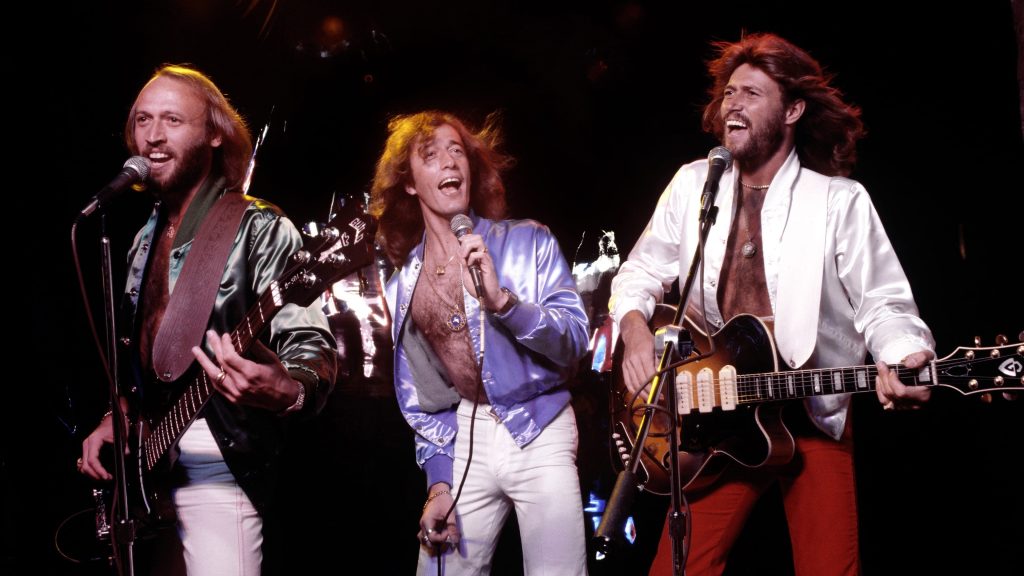
A Disco Ball Shattered, But the Melody Lingered: Unpacking the Timeless Anguish of “Tragedy”
“Tragedy,” the Bee Gees’ searing lament of lost love, captures the devastating aftermath of a romance gone cold, a pain so profound it echoes in the very fabric of the song’s pulsating disco beat. Reaching number one in several countries, including the UK, and peaking at number one on the Billboard Hot 100 in the US in 1979, this track became an anthem of heartbreak amidst the glittering disco era, proving that even within the most exuberant musical landscape, sorrow could find its voice.
The late 70s were a time of both musical innovation and personal exploration for the Gibb brothers. Having conquered the world with the Saturday Night Fever soundtrack, the Bee Gees were at the zenith of their popularity. Yet, even as they rode this wave of success, “Tragedy,” from their Spirits Having Flown album, hinted at a deeper emotional undercurrent. It wasn’t just a catchy tune; it was a story etched in the minor key of human experience. The song wasn’t necessarily born from a specific personal tragedy for the brothers, but rather from their keen observation of the universal pain of love and loss. They channeled the collective heartache of countless individuals, giving voice to the silent screams of broken hearts everywhere.
Think back to that era. The mirror ball spun, casting shimmering light across dance floors packed with revelers. Bell bottoms flared, platform shoes clicked, and the air crackled with youthful energy. Yet, beneath the surface of all that exuberance, life went on, with its inherent ups and downs, its joys and its sorrows. “Tragedy” acknowledged this duality. It acknowledged that even amidst the pulsating rhythms of disco, heartbreak could strike like a bolt from the blue, leaving devastation in its wake.
The song’s genius lies in its ability to juxtapose the upbeat tempo with the deeply melancholic lyrics. The driving beat, the soaring harmonies, the very structure of the song, invites you to dance, to move, to forget your troubles. But then, the words creep in, weaving a tale of despair, of a love that has died a sudden, agonizing death. “Here I lie awake and pray,” they sing, their voices laced with raw emotion, “that you’ll return someday.” The lyrics paint a vivid picture of a lover haunted by the ghost of a lost relationship, clinging to the fading embers of hope even as the reality of the situation sinks in. “Tragedy” isn’t just about the end of a relationship; it’s about the aftermath, the long, lonely nights, the gnawing emptiness, the desperate longing for what once was.
The brilliance of the Bee Gees, and what made “Tragedy” such a resonant hit, was their ability to capture the complex emotions of the human heart and translate them into music that was both infectious and deeply moving. They understood that life wasn’t just about the highs; it was also about the lows, the moments of pain, the times when we feel utterly lost and alone. And in “Tragedy,” they gave voice to those feelings, creating a song that has resonated with generations of listeners, reminding us that even in the midst of sorrow, there is a strange and bittersweet beauty. It’s a beauty that lies in shared experience, in knowing that we are not alone in our suffering. It’s a beauty that allows us to dance through the pain, to find solace in the rhythm, and to remember that even tragedy, in time, can fade into a bittersweet memory.