
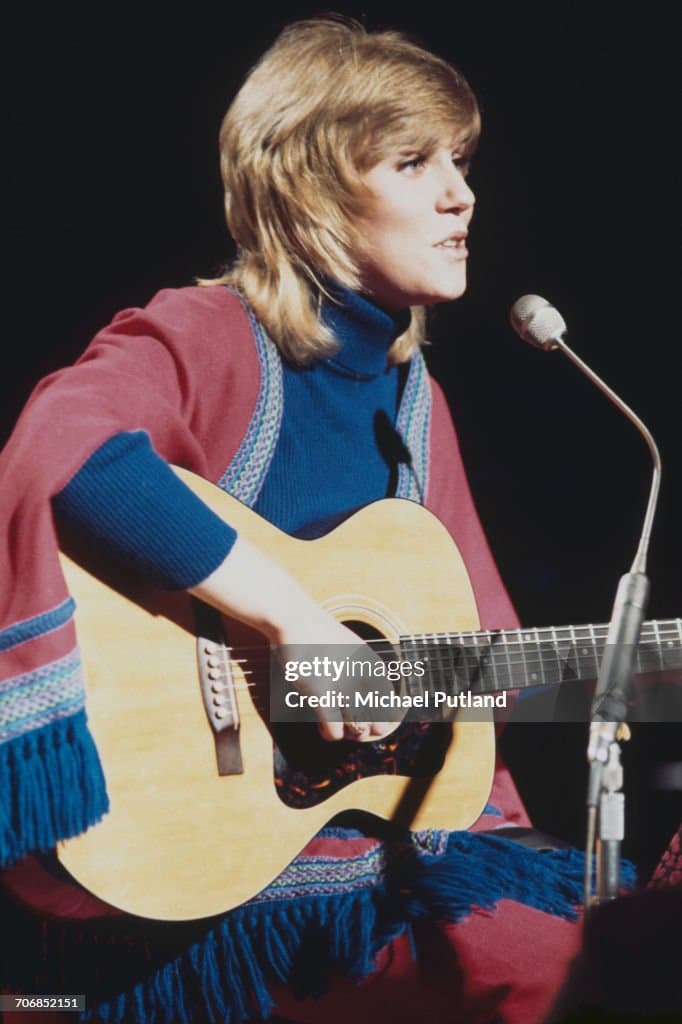
A quiet confession of resilience — how love can wound deeply, yet leave dignity standing
Few songs capture emotional vulnerability with such understated grace as “Broken Hearted Me”. Released at the close of the 1970s, this tender ballad stands as one of Anne Murray’s most quietly powerful recordings — a song that does not shout its pain, but allows it to breathe, gently and honestly, in the spaces between the notes.
“Broken Hearted Me” was released in 1979 as the title track from Anne Murray’s album Broken Hearted Me. Upon its release, the song performed impressively across multiple charts. In the United States, it reached No. 12 on the Billboard Hot 100, while also climbing to No. 1 on the Adult Contemporary chart and No. 1 on the Country chart — a rare crossover achievement that reflected Murray’s unique position between pop, country, and easy listening audiences. Internationally, the song also resonated strongly, reaching the Top 10 on the UK Singles Chart, further confirming its broad emotional appeal.
Written by Randy Goodrum, a songwriter known for his sensitivity and melodic restraint, “Broken Hearted Me” tells a deceptively simple story: a woman acknowledges heartbreak, yet refuses to dramatize or weaponize it. There is no bitterness here, no revenge fantasy, no theatrical collapse. Instead, the narrator speaks with calm self-awareness, admitting emotional loss while maintaining inner balance. The heartbreak is real, but so is her dignity.
This emotional posture is precisely what makes the song enduring. In an era when pop ballads were often grand and emotionally explosive, Anne Murray chose a different path. Her performance is restrained, almost conversational, as if she is confiding rather than performing. Her famously warm, clear alto voice carries the melody without strain, allowing listeners to lean in rather than be overwhelmed. The heartbreak unfolds quietly, like a realization that arrives after the tears have dried.
Musically, “Broken Hearted Me” is built on soft country-pop arrangements: gentle acoustic guitars, unobtrusive rhythm, and a melody that flows naturally rather than demanding attention. The production is clean and unadorned, placing Murray’s voice front and center. This simplicity serves the song’s emotional truth. Nothing distracts from the central feeling — the calm ache of love remembered, not dramatized.
The song’s meaning deepens with time. What initially sounds like a straightforward breakup ballad reveals itself as a meditation on emotional maturity. The narrator does not deny the pain of separation, but neither does she allow it to define her entire identity. There is an unspoken understanding that heartbreak is not a failure, but a chapter — one that can be acknowledged without shame. This emotional balance is what resonates most strongly with listeners who have lived, loved, lost, and learned.
For Anne Murray, “Broken Hearted Me” marked a significant artistic milestone. It earned her the Grammy Award for Best Female Country Vocal Performance, reaffirming her status as one of the most respected and emotionally credible voices of her generation. By this point in her career, Murray was no longer simply a hitmaker; she had become a trusted storyteller — someone whose songs felt lived-in, familiar, and emotionally safe.
Decades later, “Broken Hearted Me” remains a quiet companion rather than a nostalgic artifact. It is the kind of song that surfaces during reflective moments, when memories are close but no longer painful. It speaks to listeners who understand that heartbreak does not always arrive loudly — and healing does not always announce itself. Sometimes, it simply settles in, accepted with grace.
In the long arc of popular music, songs like “Broken Hearted Me” endure not because they were fashionable, but because they were honest. And in that honesty, Anne Murray offered something rare: a voice that reminds us that even in emotional loss, there can still be calm, clarity, and a quiet kind of strength.