
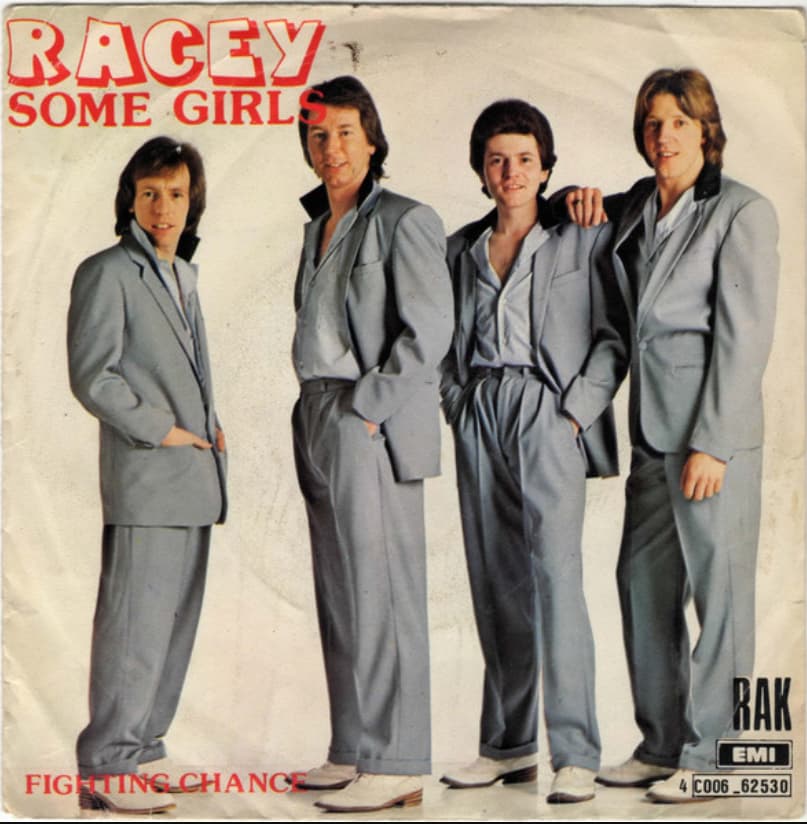
A sugary rush of bubblegum pop that captured the carefree spirit of a fading decade, reminding us of the vibrant, neon-lit nights of our youth.
When the needle dropped on Racey’s smash hit “Some Girls” in early 1979, it didn’t just play a melody; it ignited a rhythmic pulse that defined the transition from the glitz of disco to the sharp energy of the new wave era. Produced by the legendary duo Nicky Chinn and Mike Chapman—the masterminds behind the “Chinnichap” sound that powered the 70s—this track remains a quintessential time capsule. It peaked at No. 2 on the UK Singles Chart and dominated airwaves across Europe and Australia, proving that sometimes, the most enduring memories are built on the simplest, most infectious hooks.
To listen to “Some Girls” today is to step back into a world of flickering strobe lights and the scent of vinyl. It carries a heavy weight of nostalgia, evoking a time when the biggest worry of the weekend was finding a spot on the dance floor. The song is characterized by its driving, percussive “clapping” beat and the distinct, slightly gravelly vocals of Richard Gower. While the late 70s were often clouded by social upheaval, Racey offered a three-minute escape—a bright, rhythmic celebration of attraction and the timeless mystery of the fairer sex.
The Story and Significance
The genesis of the song is rooted in the hit-making factory of Chinn and Chapman. Originally, the song was offered to Blondie, as Mike Chapman was producing their Parallel Lines album at the time. One can almost hear Debbie Harry’s cool, detached delivery in the verses. However, fate intervened, and the track was handed to the British foursome Racey. Their version infused the song with a “pub-rock” friendliness and a masculine charm that made it an instant anthem.
The meaning behind the lyrics is deceptively simple, yet it resonates with anyone who remembers the exhilarating confusion of young love. It speaks of the diverse archetypes of women—the ones who “give you a look,” the ones who “give you the eye,” and the ones who simply “want to be loved.” It’s an observation of the human dance, the glances exchanged in crowded rooms, and the universal desire for connection. For those of us who lived through that era, it brings back the faces of old flames and the friends who stood by us under the spinning disco balls.
A Legacy in Rhythm
What makes “Some Girls” stand out in the vast sea of 70s pop is its production. The song relies heavily on a “Phil Spector-esque” wall of sound but stripped down for the pre-digital age. The persistent, foot-stomping rhythm feels like a heartbeat, steady and reassuring. It was the lead single from their debut album, Smash and Grab, and it solidified Racey’s place in the pantheon of British pop history.
There is a bittersweet quality to revisiting this track now. It represents the “last hurrah” of a specific kind of innocent pop music before the 1980s introduced more cynical, synthesized sounds. When we hear that opening drum fill, we aren’t just hearing a song; we are hearing the echoes of our own laughter, the revving of old car engines on summer nights, and the boundless optimism of a generation that believed the music would never stop. Racey might have been seen as a “singles band,” but with “Some Girls,” they captured lightning in a bottle, preserving a piece of our collective soul in the grooves of a 7 inch record.