
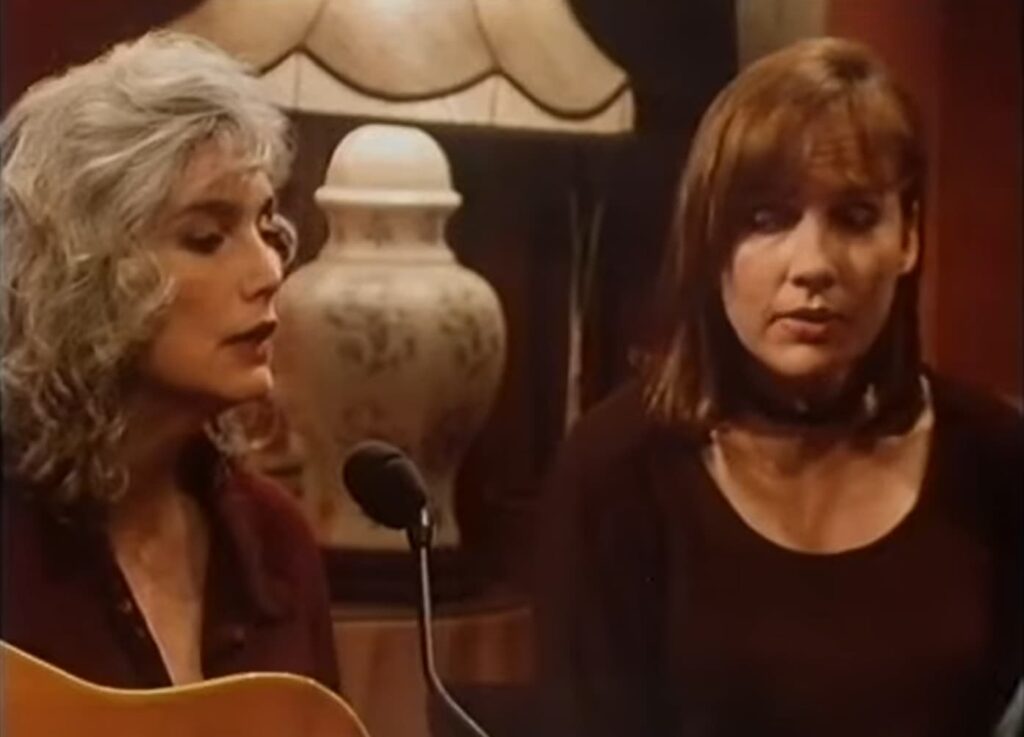
When Two Distinct Voices Bloom as One: Emmylou Harris and Iris DeMent Bring New Life to Wildwood Flower
In the spring of 1998, a remarkable recording session took place at Scruggs Sound Studio in Nashville, Tennessee. The result was a memorable interpretation of “Wildwood Flower,” one of the most enduring songs in American folk and country music. Featured on Randy Scruggs’ album Crown Of Jewels, the recording brought together two celebrated artists, Emmylou Harris and Iris DeMent, whose contrasting vocal styles created a performance that remains deeply admired decades later.
The session featured an accomplished group of musicians. Emmylou Harris and Iris DeMent shared lead vocal duties, while Randy Scruggs contributed guitar, autoharp, dobro, and also served as arranger and producer. The ensemble was completed by Sam Bush on mandolin, Harry Stinson on drums, and Dave Pomeroy on bass.
What makes this version particularly notable is the way the two singers preserve their individual identities while blending into a unified emotional expression. Harris brings her familiar clarity, elegance, and warmth, while DeMent contributes a more rustic and immediately recognizable tone. Rather than competing for attention, the two voices complement one another, allowing the song’s themes of memory, longing, and devotion to emerge with unusual depth.
The performance demonstrates how vocal contrast can become a creative strength. Listeners have long praised the recording for revealing the unique characteristics of each singer while simultaneously achieving a rare sense of harmony. The emotional weight of the lyrics is carried not through dramatic embellishment but through sincerity and restraint, qualities that have always been central to the finest traditions of American roots music.
The recording also serves as a reminder of Iris DeMent’s distinctive place within the genre. Though widely respected by musicians and dedicated followers of folk and country music, her artistry has often been described as deserving broader recognition. Her contribution to “Wildwood Flower” highlights the expressive power that has defined her career and helps explain why her voice continues to resonate so strongly with admirers of traditional songwriting.
More than a reinterpretation of a classic song, this 1998 recording stands as a meeting of two artistic sensibilities that share a deep respect for musical heritage. Supported by tasteful instrumentation and thoughtful production from Randy Scruggs, “Wildwood Flower” becomes both a tribute to the past and a living expression of timeless emotion.
Nearly three decades after its release, the performance remains a compelling example of how great musicians can honor a beloved standard while making it unmistakably their own.