
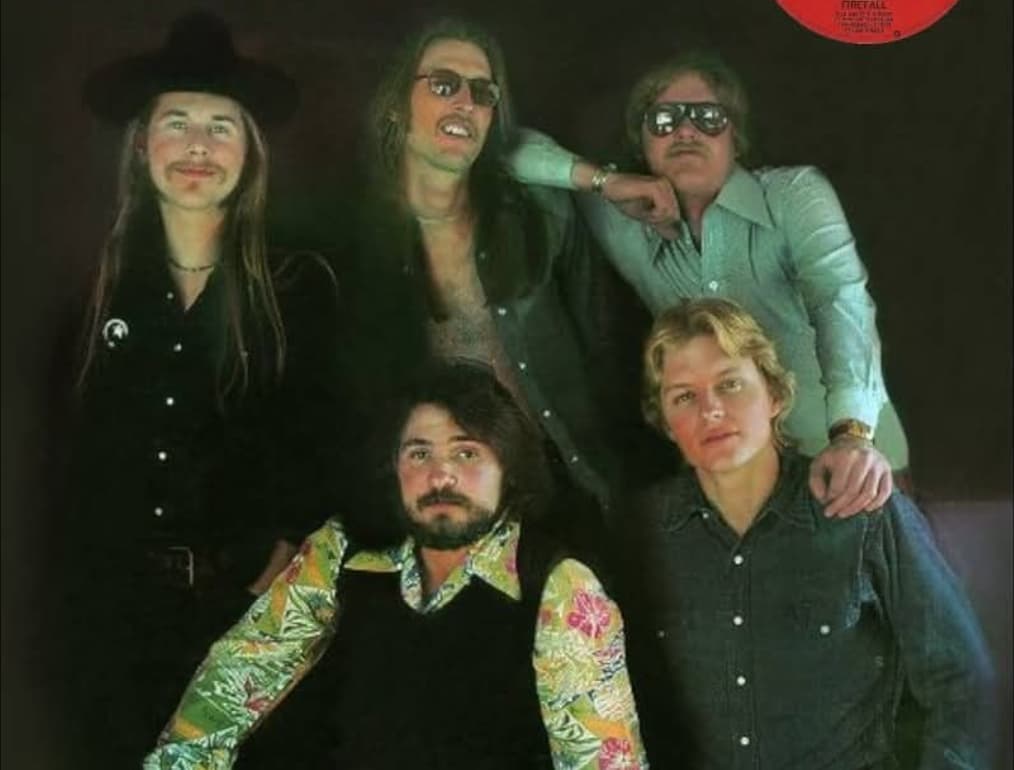
You Are the Woman — a warm declaration of love wrapped in harmony, sunlight, and the promise of staying
When “You Are the Woman” by Firefall first drifted onto American radio in 1976, it felt like a deep exhale — a moment of calm reassurance during a decade full of musical change and emotional turbulence. Gentle yet confident, intimate yet expansive, the song became the band’s defining statement and remains one of the most enduring soft-rock love songs of the 1970s.
Key facts, placed early and clearly:
- “You Are the Woman” was released in 1976 as the lead single from Firefall’s self-titled debut album Firefall.
- The song climbed to No. 9 on the Billboard Hot 100, marking the band’s first and biggest breakthrough hit.
- It was written by Rick Roberts, one of the founding members of Firefall and a former member of The Flying Burrito Brothers.
From its opening acoustic guitar and gentle keyboard wash, the song immediately establishes trust. There is no drama, no grand introduction — just a voice speaking plainly, as if already mid-conversation. That intimacy was rare even then, and it is precisely why the song resonated so deeply. In an era when love songs often leaned toward excess or heartbreak, “You Are the Woman” chose steadiness. It chose commitment.
The story behind the song is refreshingly sincere. Rick Roberts wrote it as a straightforward expression of devotion, inspired by a real relationship rather than an imagined fantasy. There is no irony in the lyrics, no emotional disguise. Lines like “You are the woman that I’ve always dreamed of” are delivered without hesitation, because the song is built on certainty — not longing for love, but gratitude for having found it.
That certainty is what makes the song age so gracefully. It does not speak to the rush of first attraction, but to the moment when love settles into something deeper and more enduring. The narrator isn’t asking questions; he already knows the answers. The woman he sings to is not a possibility — she is a presence, a grounding force, someone who has become part of his inner life.
Musically, Firefall blended elements of soft rock, country rock, and West Coast harmony into a sound that felt both polished and organic. The band’s vocal blend is central to the song’s emotional pull. Harmonies float in and out like sunlight through open windows, giving the song warmth without heaviness. It feels unforced, as though the music itself trusts the listener to lean in.
When “You Are the Woman” reached the Top 10 in 1976, it wasn’t just a commercial success — it was a cultural moment. FM radio was becoming a home for songs that valued mood and reflection, and Firefall fit perfectly into that landscape. The song didn’t demand attention; it earned it. And for many listeners, it became a companion — played during long drives, quiet evenings, and moments when words felt insufficient.
What gives the song its lasting emotional power is its lack of urgency. There is no fear of loss here, no desperation. Instead, there is a calm recognition that love, when real, does not need to shout. It simply stands its ground. For listeners who have lived long enough to understand that kind of love — the kind that remains after the noise fades — the song feels almost autobiographical.
Decades later, “You Are the Woman” still carries that same gentle authority. It reminds us of a time when a love song could be tender without being fragile, confident without being loud. It speaks to those who have chosen someone, stayed with them, and built a life not out of fireworks, but out of faith.
In the end, this song is not about romance as a fleeting emotion. It is about recognition — seeing the person beside you and knowing, without doubt, that this is where you belong. And when Firefall sings it, the feeling lingers long after the final harmony fades, like the comfort of a hand held quietly in the dark.