
Tell Me To My Face — a quiet plea for honesty, where melody and silence speak the same truth
When “Tell Me To My Face” unfolds, it does not rush toward you. It approaches slowly, almost cautiously, as if aware that truth — real truth — must be spoken softly to be heard. Performed by Dan Fogelberg and Tim Weisberg, the song appears on their 1978 collaborative album Twin Sons of Different Mothers, a record that stands as one of the most intimate and musically refined statements of its era.
Right from the beginning, it is important to place this work in context. Twin Sons of Different Mothers was released in 1978 and reached No. 19 on the Billboard 200 album chart, a respectable and telling achievement for a project that leaned toward introspection rather than commercial ambition. The album itself was not built around hit singles in the conventional sense, and “Tell Me To My Face” was never pushed as a chart-driven song. Instead, it lived — and still lives — in the deeper spaces of the record, where patience, listening, and emotional honesty matter more than immediacy.
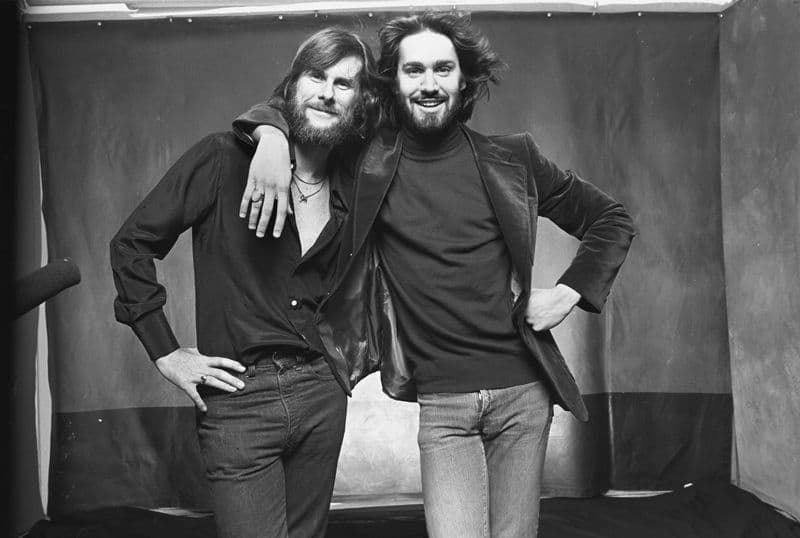
The partnership between Dan Fogelberg, known for his poetic songwriting and warm, reflective voice, and Tim Weisberg, whose flute playing brought a jazz-inflected, lyrical grace, was unusual yet profoundly natural. Their collaboration felt less like a pairing of egos and more like a conversation between old friends. In “Tell Me To My Face,” that conversation becomes the song itself.
Lyrically, the piece is a plea — not for reconciliation, not even for love, but for truth. The narrator does not beg someone to stay. He asks only for honesty, even if that honesty hurts. Tell me to my face, he seems to say, don’t hide behind silence, distance, or politeness. This is not the voice of youth demanding answers; it is the voice of experience, weary of guessing, tired of half-truths, longing for clarity even at the cost of comfort.
What makes the song so powerful is its restraint. Fogelberg’s vocal delivery is gentle, almost conversational, carrying the weight of a man who has already imagined every possible ending. Weisberg’s flute weaves around the melody like a second voice — not interrupting, not overpowering, but responding. It fills the spaces between words, reminding us that some emotions are too complex to be spoken aloud.
There is no accusation in the song, no bitterness. Instead, there is dignity. The narrator understands that love can fade, that feelings can change, but he asks for the respect of truth. This theme resonates deeply with listeners who have lived long enough to know that uncertainty is often more painful than loss itself.
Within the broader scope of Twin Sons of Different Mothers, “Tell Me To My Face” represents the album’s emotional center. The record as a whole explored friendship, reflection, and the shared musical language between two artists at the height of their sensitivity. It was not a loud album, nor a flashy one. Its success on the charts felt almost secondary to its deeper accomplishment: creating a space where listeners could sit with their thoughts and recognize themselves in the music.
For those who came of age during the late 1970s, this song carries the sound of a certain stillness — a time when records were played from beginning to end, when listening was an act of attention rather than distraction. Even today, it invites that same stillness. It asks the listener to slow down, to reflect on the moments when honesty mattered most, and on the times it was withheld.
In the end, “Tell Me To My Face” is not about confrontation. It is about courage — the courage to ask for truth, and the courage to offer it. It stands as a reminder that real connection, whether it lasts or not, deserves clarity. And in its quiet, thoughtful way, the song continues to offer something rare: understanding without judgment, and beauty without pretense.