
America — a quiet road song about youth, restlessness, and the long search for meaning
Few songs capture the emotional geography of a generation as quietly, and as truthfully, as “America” by Simon & Garfunkel. Released in 1968 on the album Bookends, the song arrived at a moment when the United States was restless, divided, and searching for itself. Yet America never raises its voice. It doesn’t argue, protest, or accuse. Instead, it listens, observes, and wonders — and in doing so, it becomes one of the most enduring reflections on youth, identity, and disillusionment ever set to music.
From the very beginning, the song unfolds like a memory. A bus ride. A young couple. Cigarettes, coffee, casual conversation. These are not grand symbols; they are ordinary details, and that is precisely their power. Paul Simon wrote America during a real journey he took across the country in the early 1960s with his then-girlfriend Kathy Chitty, whose name appears directly in the lyrics. What began as a personal travelogue slowly transformed into something far larger — a meditation on what it meant to be young in a vast country full of promise, yet strangely hard to understand.
Although America was not released as a single at the time of Bookends, it gained renewed life in 1972, when it was finally issued as a single in the United States. Even then, it was never designed for commercial dominance. The song reached No. 97 on the Billboard Hot 100 and performed better on the Adult Contemporary chart, peaking at No. 49. These modest positions tell their own story: America was not chasing hits. It was speaking to listeners who were ready to hear something quieter, deeper, and more reflective.
Musically, the song is understated but meticulously crafted. The gentle acoustic guitar, the subtle orchestration, and Art Garfunkel’s floating harmony create a sense of motion — not urgency, but travel. You feel the miles passing, the landscapes changing, the thoughts growing heavier. When the famous line arrives — “I’m empty and aching and I don’t know why” — it lands with devastating simplicity. No explanation follows, because none is needed. Anyone who has ever felt lost in the middle of their own life understands it immediately.
What makes America extraordinary is that its search is never clearly defined. The characters say they are “looking for America,” but what does that truly mean? Is it a place, a promise, an idea, or simply a feeling that has slipped away? The song refuses to answer. Instead, it allows the listener to sit with the uncertainty — an uncertainty that felt especially true in the late 1960s, when faith in institutions was eroding and the future felt both open and frightening.
As Bookends as a whole explored time, aging, and memory, America functioned as its emotional heart. It bridges youth and awareness, innocence and experience. There is tenderness in the way Simon writes, but also quiet resignation. By the final verse, the journey has not delivered clarity. The road continues, the people pass by, and the search remains unfinished.
Over the decades, America has grown in stature. It has been quoted, covered, and referenced countless times, not because it belongs to a specific political moment, but because it speaks to a timeless human condition. The feeling of movement without arrival. The hope that somewhere ahead — or perhaps behind — there is a sense of belonging waiting to be rediscovered.
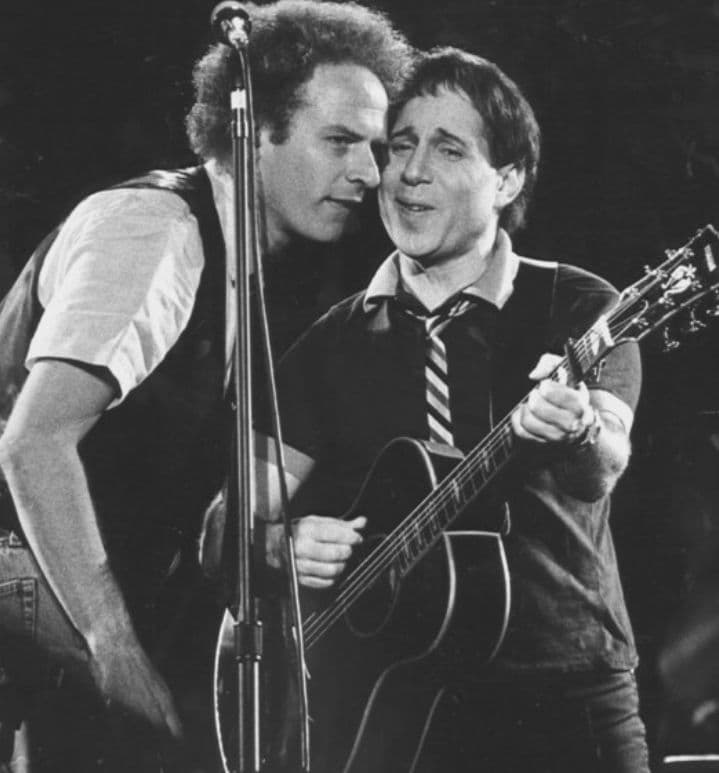
Listening to Simon & Garfunkel sing America today feels like opening an old photograph. The faces are young, the world looks simpler, yet the questions feel unchanged. That is the quiet miracle of the song. It reminds us that searching is part of living, and that sometimes the most honest songs are the ones that admit they don’t have answers.
In the end, America does not tell us where to go. It simply walks beside us for a while — on a bus, on a highway, through memory — and lets us feel less alone in the search.