
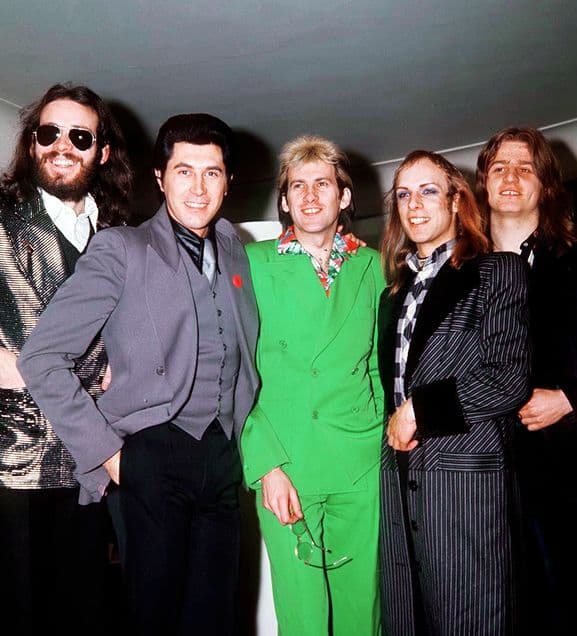
More Than This — when longing becomes atmosphere, and love dissolves into memory
From its very first shimmering synthesizer line, “More Than This” by Roxy Music announces itself not as a conventional love song, but as a state of mind. Released in 1982 as the opening track and lead single from the album Avalon, it arrived quietly, almost modestly, yet it would become one of the most enduring and emotionally resonant recordings of the band’s career. Upon release, the song reached No. 6 on the UK Singles Chart, confirming that Roxy Music — now refined, restrained, and mature — still held a deep connection with listeners. The album Avalon itself went even further, reaching No. 1 in both the UK and the United States, cementing the band’s late-career renaissance.
By the time “More Than This” emerged, Roxy Music were no longer the glamorous art-rock provocateurs of the early 1970s. The wild experimentation, the sharp edges, the theatrical posturing — all of that had softened. What replaced it was something subtler, perhaps more powerful: elegance, space, and emotional understatement. This song is the perfect distillation of that transformation.
Written by Bryan Ferry, the band’s principal songwriter and unmistakable voice, “More Than This” feels less like a narrative and more like a whispered confession. The lyrics are sparse, almost evasive, leaving much unsaid. And yet, within that restraint lies its magic. Lines like “I could feel at the time, there was no way of knowing” carry the weight of hindsight — the realization that love is often understood only after it has slipped through our fingers.
The story behind the song is inseparable from the atmosphere of Avalon. Recorded with meticulous care, the album was shaped by a sense of emotional distance and refinement. Ferry was going through profound personal changes at the time, including the end of an important relationship, and that sense of quiet loss permeates the record. “More Than This” does not rage or accuse. It accepts. It reflects. It lingers.
Musically, the song is a masterclass in restraint. Phil Manzanera’s guitar does not dominate; it glides. Andy Mackay’s saxophone no longer cries out — it sighs. The production, glossy yet intimate, creates the feeling of standing alone at night, lights reflected on water, thoughts drifting backward. Everything serves the mood. Nothing interrupts the emotion.
What makes “More Than This” so powerful for listeners who have lived a little is its honesty about uncertainty. The title itself suggests something just out of reach — a love that promised depth but never fully revealed itself, or perhaps a life that might have taken a different turn. The song understands that not all stories end with clarity. Some simply fade, leaving us with questions and memories.
Over the years, the song has taken on a life far beyond its original release. It has appeared in films, television, and countless personal soundtracks, often chosen to underscore moments of reflection and emotional pause. Yet its power has never diminished. If anything, time has made it richer. Bryan Ferry’s voice — cool, detached, yet quietly wounded — feels even more truthful with distance.
In the broader legacy of Roxy Music, “More Than This” stands as a farewell without saying goodbye. It captures the band at their most graceful, poised on the edge between presence and disappearance. Soon after Avalon, Roxy Music would quietly step away, leaving this song as one of their final statements — a memory suspended in sound.
Listening to it now, decades later, feels like opening an old photograph: familiar, beautiful, and tinged with melancholy. It reminds us that love is rarely simple, that time reshapes everything, and that sometimes the most powerful emotions are the ones spoken softly.
“More Than This” does not ask to be remembered loudly. It simply stays with you — long after the final note fades — like a thought you can’t quite let go of, and perhaps never should.