
Election Day — a small, ragged hymn for those standing on the edge of life
To hear “Election Day” by Blaze Foley is to step into a quiet, dim corner of America — the kind of place where the neon flickers, the night feels heavy, and a man’s entire world can be reduced to what he can carry in his hands. There is no grand political message here, no patriotic drumbeat. What you find instead is a plea — soft, desperate, and painfully human.
“Election Day” never charted, never reached radio rotation, and never brushed the edges of mainstream acclaim. But chart numbers were never the measure of Foley’s music. His songs lived — and still live — in the small spaces: smoky barrooms, worn-out guitar cases, late-night conversations among people who know what it feels like to live close to the margins.
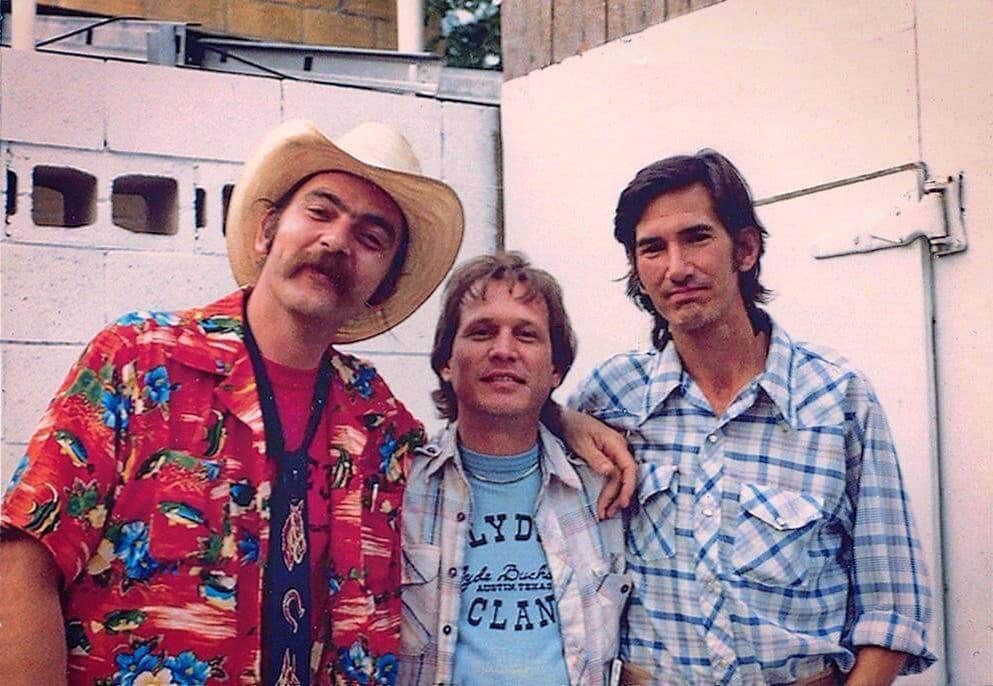
The story behind the song is tangled with Foley’s own life. Born Michael David Fuller, he grew up between Arkansas and Texas, carrying a childhood scarred by polio — a condition that left him with a limp and, perhaps, a deeper understanding of fragility. His voice, always tender beneath its grit, came from a place few understood: a world of drifters, bar poets, wounded dreamers, and people who slept wherever the night allowed. Foley himself lived hard, fought demons big and small, and tried to carve meaning out of the rough ground he walked.
“Election Day” captures that life perfectly.
The lyrics are almost deceptively simple — a man asking a policeman not to take his “stuff.” But the more you listen, the more that small plea expands into something heartbreaking. It stops being a literal request and becomes a symbol for the last scraps of dignity a man has left. In Foley’s world, “stuff” wasn’t just a bag or a bottle or a pocketful of belongings. It was everything that kept him going — the fragile comforts, the small rituals, the things that separated him from total collapse.
There is irony in the title, of course. Election Day — the moment a nation chooses its leaders — is, in Foley’s telling, a day when someone like him is simply trying to survive until morning. There are no polls for men living in the shadows. No ballots for those just hoping not to be forgotten. Foley turns a national event into a personal reckoning: the powerless man’s version of democracy, where life is a constant negotiation with authority, luck, and circumstance.
When you listen closely, you can almost feel the cold metal of a badge, the streetlight glowing overhead, the weight of someone afraid of losing everything he owns — not because those things are valuable, but because without them he has nothing.
This is the heart of the song: its understanding of the small, unspoken battles of the overlooked.
Foley recorded it the way he lived — roughly, honestly, without polish. You can hear the wear in his voice and the quiet resignation behind each line. And that is what makes “Election Day” stay with you long after the last chord fades. It’s not a protest song in the traditional sense. It’s a survival song, a confession sung by someone who knew the cost of wandering too far from comfort, someone who lived a life where one wrong moment could unravel everything.