
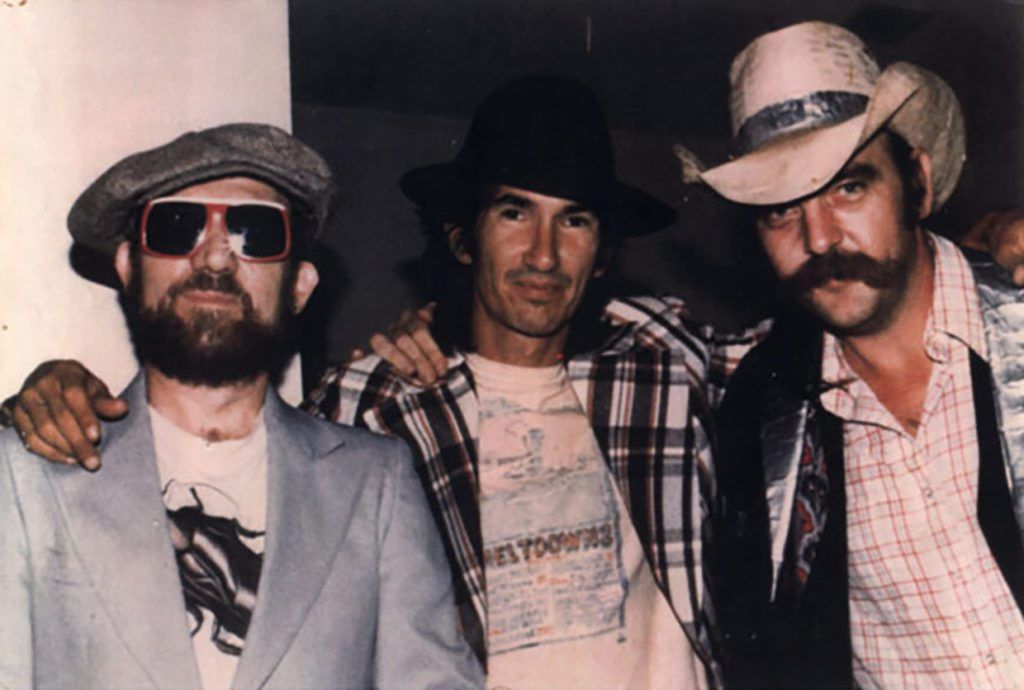
If I Could Only Fly — a quiet prayer of longing, carried on the trembling wings of a wounded heart
From the very first notes of “If I Could Only Fly” by Blaze Foley, you feel the unmistakable stillness of a man speaking straight from the tender, unguarded center of his soul. There are songs that entertain, songs that impress — and then there are songs like this, which feel like someone sitting beside you in the fading light, telling the truth they can’t carry alone.
Written in the late 1970s and recorded across several versions during Foley’s short, turbulent life, the song never touched any major charts. It did not have a grand debut, nor a promotional machine behind it. Instead, it lived quietly, passing from friend to friend, musician to musician, like a handwritten note folded carefully and slipped into a pocket. Its journey was humble — but its emotional weight was enormous.
The story behind “If I Could Only Fly” is the story of Blaze Foley himself: bruised by life, wandering through rooms filled with smoke and hope, always carrying more heart than the world seemed willing to hold. Foley wrote the song during a period of hardship and drifting — a man estranged from stability, yet still reaching for something pure, something steady, something that might lift him above the world’s heaviness.
And that longing — that deep ache for escape, for transcendence — is everywhere in the song.
The line “If I could only fly, I’d bid this place goodbye” is not simply a wish to leave; it is the cry of someone who has loved fiercely but suffered quietly. Someone who believes in beauty even when life has not been kind. Someone who dreams of rising above the noise, the disappointments, the loneliness — if only for a moment.
Foley’s voice on the recording is raw, unvarnished, almost fragile. But that fragility is the song’s strength. It makes every word feel lived-in. His delivery does not try to impress or dazzle; it simply tells the truth. And the truth, in his voice, is devastatingly beautiful.
Over the years, “If I Could Only Fly” found new life when Merle Haggard recorded it, later performing it with Willie Nelson, bringing the song into the broader landscape of American country music. Haggard, famously, called it one of the best songs he had ever heard. Their interpretations carried the tune to new ears — but at its heart, the song has always belonged to Blaze Foley: a man whose gentle, wounded poetry shaped the days of those who knew him and continues to echo long after his passing.
For listeners today, especially those who have lived long enough to understand the heavy simplicity of longing, Foley’s masterpiece offers a rare stillness. It feels like a quiet confession whispered late at night. The yearning is not youthful; it is the yearning of someone who has walked through years of loss and love, someone who has held hope even as it slipped through his hands.
It speaks to anyone who has ever wished to rise above their circumstances, to drift free of worry, to return to a place of peace that feels just out of reach. The song reminds us that even the most ordinary heart carries extraordinary dreams. And that sometimes, the simplest wish — to fly — holds all the sorrow and all the beauty of a lifetime.
In the end, “If I Could Only Fly” remains one of those rare creations that grow more profound with age. It asks for no applause. It seeks no spotlight. It simply opens its wounded wings and invites us to feel the lift for ourselves — if only for a moment.