
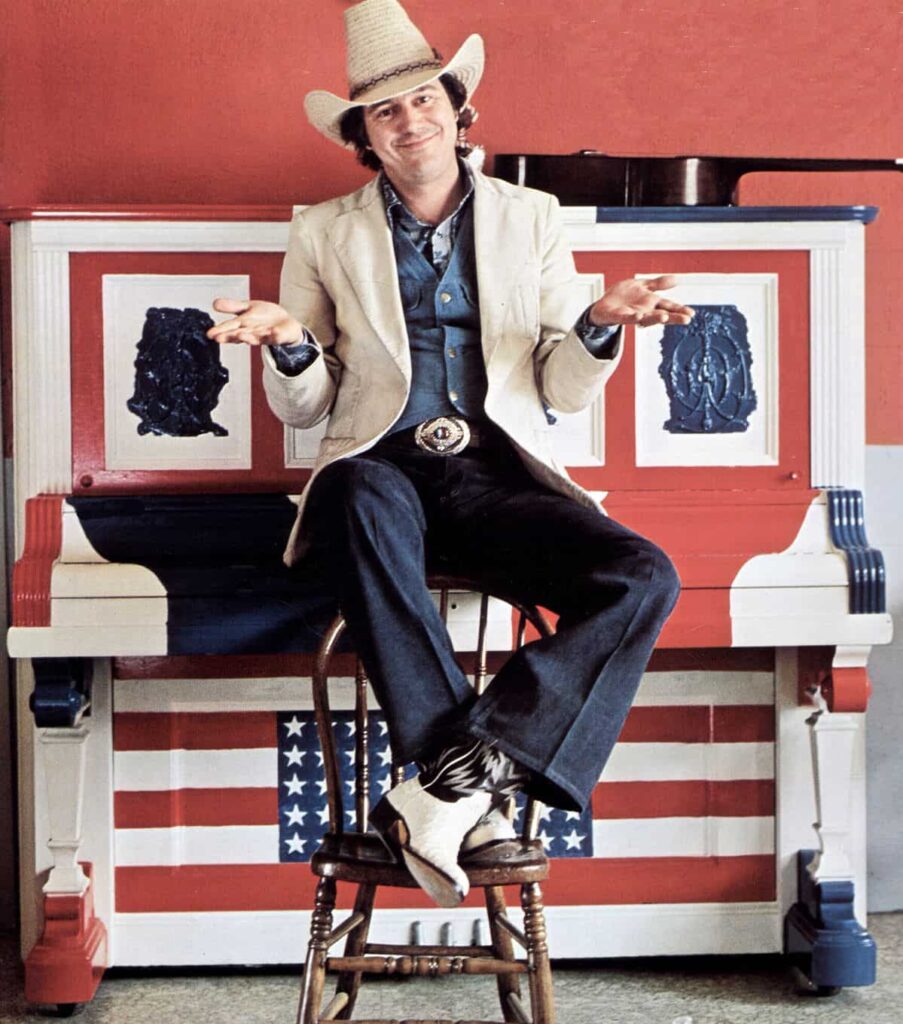
A song born from a fleeting encounter, “Mr. Bojangles” reminds us how a single human story can echo through a lifetime.
There are songs that feel less like compositions and more like memories carved in melody, and “Mr. Bojangles” by Jerry Jeff Walker is one of those rare creations. It carries the hazy glow of the late 1960s, a period when American songwriting was shifting toward deeply personal storytelling. Though Walker’s original recording—released on his 1968 album Mr. Bojangles—never charted on the major U.S. pop lists, the song’s emotional power was unmistakable. Its reputation grew steadily through word-of-mouth among musicians, eventually becoming a modern folk standard. Later cover versions would bring it commercial success—most famously the Nitty Gritty Dirt Band’s 1971 rendition, which climbed to No. 9 on the Billboard Hot 100—but the soul of the song forever belongs to Walker’s quiet, reflective original.
The story behind “Mr. Bojangles” is as intimate as the song itself. In 1965, Jerry Jeff Walker found himself spending a night in a New Orleans jail cell after a street-party arrest during a chaotic weekend. Inside, he encountered a group of vagrants, drifters, and wanderers—men who carried their lives in their pockets and their histories in their eyes. Among them was an older street performer who introduced himself only as “Bojangles.” When the tension in the room grew heavy after someone mentioned the death of the man’s dog, Walker asked if anyone had a story or a song to lighten the moment. And so, Bojangles began to tap his feet, shuffle, and dance—just enough to lift the spirits of the weary strangers around him. That small act, raw and unguarded, left a deep impression on the young songwriter.
What Walker preserved in “Mr. Bojangles” was not the name or fame of a dancer, but the essence of a man who had lived long, loved deeply, and lost painfully. The song avoids embellishment; it honors the fleeting connection between two people thrown together by chance. For many listeners, especially those who have weathered decades of joys and sorrows, the song’s themes cut close to the bone: aging, regret, resilience, and the power of memory to keep the lost alive.
The meaning of the song has sometimes been misunderstood. Despite the nickname, “Mr. Bojangles” is not about the legendary dancer Bill “Bojangles” Robinson. The man Walker met was a white street performer who used the name as a kind of stage persona—a mask that both protected and transformed him. In the song, that borrowed name becomes a symbol of countless forgotten entertainers who once gleamed briefly under dim stage lights before fading back into the shadows of ordinary life.
What makes the song endure is its gentle, compassionate gaze. Walker doesn’t romanticize poverty, loneliness, or addiction—realities the man in the cell likely battled. Instead, he offers a tender portrait of human dignity. In just a few verses, he paints a life of wandering, dancing for coins, dreaming of better days, mourning a loyal dog, and holding on to the one thing that could always lift his spirits: the dance.
For many who lived through that era, “Mr. Bojangles” evokes long roads, smoky bars, soft vinyl crackle, and evenings when music felt like a friend that whispered truths you weren’t ready to say aloud. It reminds us that songs are often born from ordinary moments—moments that, in retrospect, reveal a quiet beauty and wisdom we didn’t see at the time.