
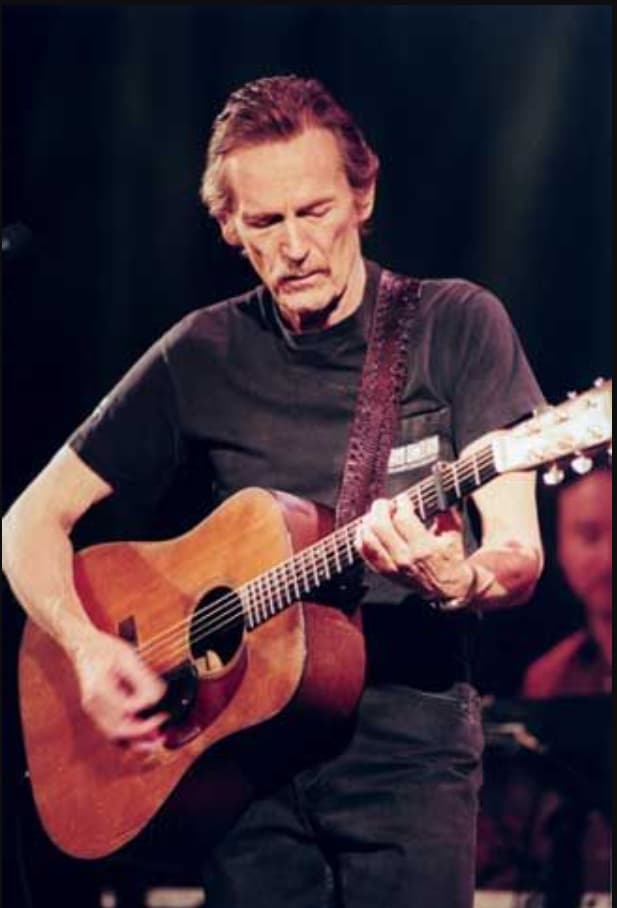
A tender tribute to the idealist’s unyielding spirit
Gordon Lightfoot’s “Don Quixote” is a deeply reflective folk ballad—a melancholic celebration of the dreamer who tilts at windmills, holding fast to hope in a cynical world.
When Don Quixote was released in February 1972, it served as the title track of Lightfoot’s seventh studio album. The album itself climbed to No. 42 on the U.S. Billboard 200, and even more meaningfully, it resonated deeply in his native Canada.
From its opening lines—“Through the woodland, through the valley / Comes a horseman wild and free”—Lightfoot evokes an image of Don Quixote, not as a buffoonish knight-errant, but as a symbol of pure, quixotic conviction. He is “wild but … mellow,” “strong but … weak,” “cruel but … gentle,” and “wise but … meek.” These beautiful contradictions reflect Lightfoot’s empathy for a man misunderstood, idealistic, and alone in his quest.
Behind the song lies a fascinating backstory: Lightfoot originally wrote “Don Quixote” for a 1969 Michael Douglas film called Hail, Hero!, though in the end, it was not used as the main theme—even while the movie adopted it. In his own reflections, Lightfoot acknowledged that the song’s literary source lies in Miguel de Cervantes’ iconic character, but he transformed him into something much more universal: the eternal dreamer, the moral conscience, the lonely believer.
Musically, the arrangement is understated but deeply evocative: Lightfoot’s acoustic guitar, tinged with warm orchestration by Bob Thompson, supports his introspective lyrics. The imagery in the song moves from pastoral (“moor and mountain / like the hawk upon the wing”) to social commentary: Lightfoot urges us to “See the children of the earth who wake to find the table bare… See the wise and wicked ones who feed upon life’s sacred fire.” In that way, **“Don Quixote” becomes a meditation not only on idealism but on injustice, on those who suffer, and on the lonely voices crying out for truth in a world that may not listen.
Perhaps the most poignant lines come later, where Quixote “takes a tarnished cross into his hand / then standing like a teacher … he shouts … till he can shout no more … gallops off across the land / where no one will hear … to search again.” This final image is heartbreaking yet noble: the knight may be out of step with the world, but he persists, riding on in quiet defiance.
Although “Don Quixote” was never released as a single, its impact has been enduring. It became one of the songs that Lightfoot frequently included in his live setlist, a favorite both of his and of his most devoted listeners. Over the years, it has come to represent more than just a literary homage—it’s a philosophical song about perseverance, purity of spirit, and the courage to believe in something greater.
Beyond its personal resonance, the song reflects Lightfoot’s mature songwriting at a moment when he was already a well-established voice in folk‑pop. The album Don Quixote itself blends his signature acoustic style with subtle orchestration, and includes other standout tracks such as “Alberta Bound”, “Christian Island”, and the protest-tinged “The Patriot’s Dream”. Critics have often noted that this record marks a moment of artistic consolidation for Lightfoot—rooted in tradition, yet thoughtfully engaged with social concerns.
For older listeners, “Don Quixote” can feel like a recollection of youth, of long-ago ideals, of battles we once waged in our minds more than in the world. Lightfoot’s gentle voice and poetic language evoke nostalgia—not just for a literary hero, but for our own forgotten dreams. Listening to it now, one hears echoes of idealism and melancholy, of love and disillusionment, and of that bittersweet longing for a world where the dreamer’s cause matters, even if no one applauds.
In a life marked by songs full of rivers, highways, lonely nights, and shipwrecks, Gordon Lightfoot chose to write this paean to the Quixotic spirit—a tribute that reminds us that sometimes, the bravest thing is to keep believing, to keep shouting, even when the windmills seem endless and no one hears our calls.