
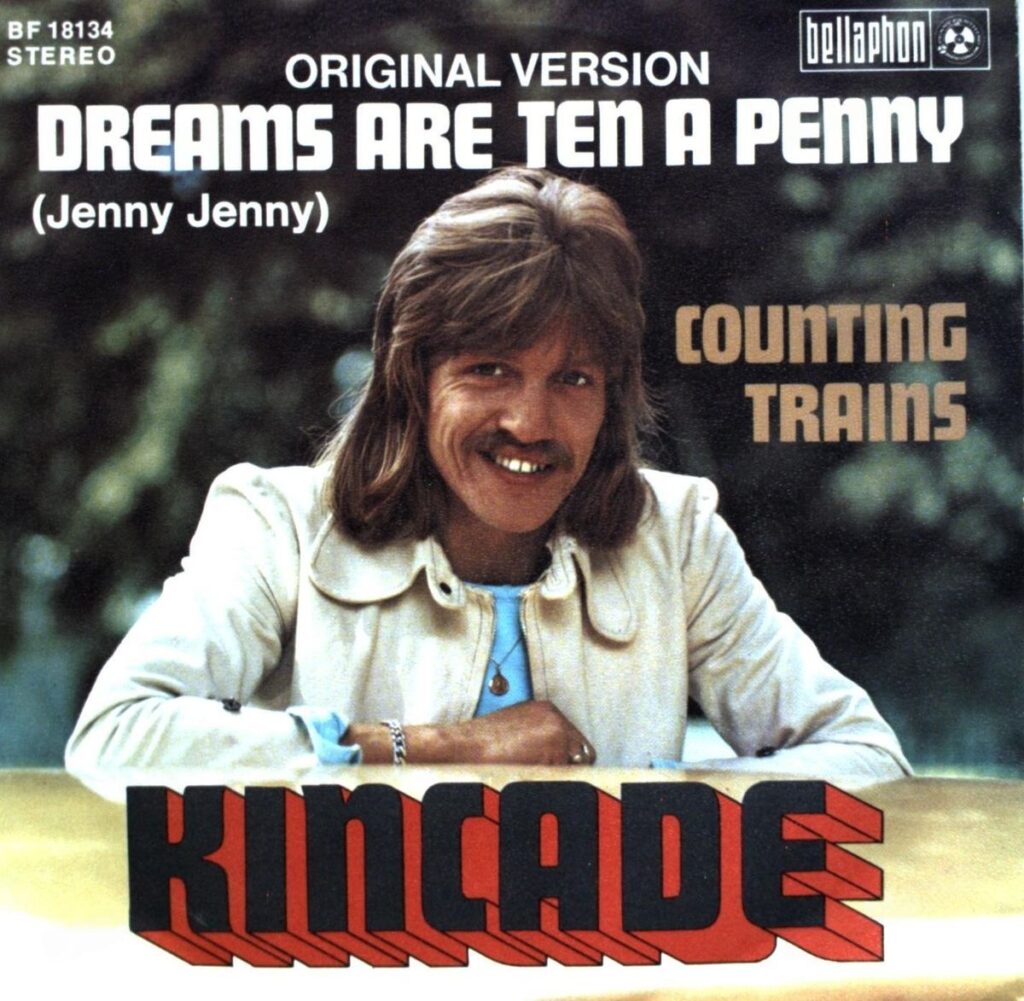
A bittersweet meditation on the cost of childish dreams and the longing for grounded love
When Kincade’s “Dreams Are Ten a Penny” first floated into the air in late 1972, it carried a gentle, wistful ache — a song about dreams that were easy to come by but hard to hold on to, and about the quiet heartbreak of someone who imagined more than what life was giving.
From the very beginning, the story behind this song is tinged with unusual irony. Though released under the name Kincade, the “band” didn’t actually exist when “Dreams Are Ten a Penny” was recorded. The song was written by John Carter and his wife Gill, and Carter himself sang the lead vocals and played guitar in the studio. He was reluctant to tour, so when the record unexpectedly became a hit in mainland Europe, the label assembled a real-life “Kincade”—led by John Knowles, who adopted the stage name John Kincade.
Chart‑wise, although the single failed to make a dent in the UK charts, it resonated strongly overseas. In Germany, it climbed all the way to #2, remaining on the charts for six months and reportedly selling over a million copies. In Australia, it reached #4 on the Kent Music Report. On Canadian radio (specifically CKLG in Vancouver), it spent 10 weeks on the chart and peaked around #7 in July 1973.
The emotional core and meaning
At its heart, “Dreams Are Ten a Penny” paints a portrait of a woman named Jenny, who holds fast to her childhood fantasies even when reality reminds her that those times have passed. The opening lines evoke two children playing in a backyard, building a treehouse, dreaming big:
“When we were children we played in your backyard / And we pretended whenever times were hard”
But life intrudes: the tree dies, the childhood symbol of hope is gone. Jenny continues to dream — perhaps of heroes, of escape, of romance — but as the narrator gently warns, her dreams are cheap and plenty (“ten a penny”), and she needs to “get your feet back on the ground.”
The bittersweet twist is that while Jenny chases these lofty fantasies, she fails to notice someone ordinary who cares deeply for her — someone whose quiet, grounded love is real, tangible, and, in a very human way, more precious than her wildest dreams. The song challenges the listener to weigh the value of romantic dreams against the sincerity of steady affection.
If you listen closely, you can almost hear the heartbreak in Carter’s voice: the resignation, the longing, the gentle pleading. It’s not a grand anthem. It’s more like a confession, a memory, a small but painful truth whispered in the twilight.
The story behind the song
John Carter was no stranger to the music world when he conceived Kincade. Before this project, he had been part of the Ivy League, co-writing and singing on pop songs in the 1960s. But for Kincade, Carter and his wife Gill wanted to create something evocative and polished, something that could quietly resonate across borders.
The recording was done with session musicians — Carter performing all the parts himself. When the song became a commercial success abroad but Carter refused to step onto the road, the label brought in John Knowles to be the face of Kincade for promotional appearances. Knowles, as John Kincade, later recorded German versions of the song and became a popular figure in the German pop scene.
Despite the intriguing behind-the-scenes story, the emotional sincerity of the song is what made it endure. At a time when pop music was increasingly polished and commercial, “Dreams Are Ten a Penny” struck a chord with listeners who recognized its quiet wisdom: dreams are wonderful, but they may also blind us to real love and real life.