
When The Teen Dream Fades: The Electric Attempt to Catch a New Wave
The burning realization that pure passion is needed to survive, in an era where past fame is nothing more than a ghost.
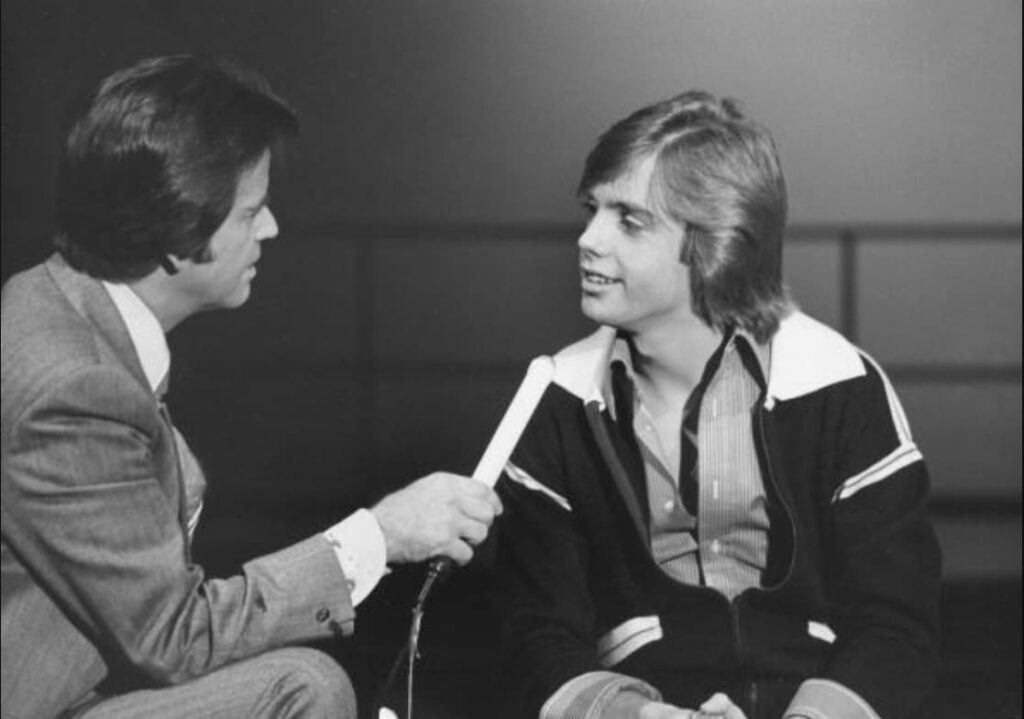
For those of us who recall the late 1970s, the transition from disco to punk and New Wave felt less like a musical shift and more like a seismic cultural upheaval. Suddenly, the clean-cut images of yesterday seemed laughably quaint, and no one felt that whiplash more acutely than the teen idols who had dominated the decade’s early years. Shaun Cassidy, the boy with the perfect smile and the massive-selling bubblegum hits, was one of those figures desperately trying to surf the breaking wave of the 1980s.
His fifth and final studio album, the 1980 release titled Wasp, was a fascinating, ambitious, and ultimately poignant attempt at reinvention. It was a conscious effort to shed the screams of his teen years—when his singles like “Da Doo Ron Ron” topped the charts—and embrace the cooler, sharper sound of New Wave. “Cool Fire,” a standout track from this period, perfectly encapsulates this musical transition.
“Cool Fire” was featured on the Wasp album, which was released in September 1980. The track itself was co-written by Shaun Cassidy with the album’s maverick producer, Todd Rundgren, and Rundgren’s Utopia bandmates, Roger Powell and John Wilcox. This collaborative effort—a world away from the slick, pop-factory production of his hits—signaled a deep commitment to artistic credibility. The track was also included as the B-side to the album’s more daring lead single, a cover of David Bowie’s “Rebel, Rebel,” released as a 7-inch single.
Critically, neither the song “Cool Fire” nor the album Wasp managed to achieve any notable chart position in the United States. The album, much like its immediate predecessor, Room Service, failed to register on the Billboard 200. This commercial failure sealed the fate of Shaun Cassidy’s pop career, effectively ending his recording tenure and pushing him toward a more mature, critically respected path in theater and television.
The irony of “Cool Fire” is woven into its very sound. The song pulses with a synthetic energy—it’s crisp, taut, and infused with the driving drum work and spacey synthesizers characteristic of early New Wave. Lyrically, the song speaks of a captivating, almost dangerous attraction, a passion that is both ‘cool’ (in the sense of controlled or modern) and a ‘fire’ (in the sense of burning desire). It’s the perfect metaphor for Cassidy’s own predicament: he was attempting to manage the cool, calculated reinvention required for the new decade, while trying to reignite the fiery passion that had been buried under the avalanche of his teenage fame.
Listening to “Cool Fire” today evokes a deep sense of nostalgia for that specific moment in musical history—that brief, vibrant crossroads where established artists wrestled with the rise of synthesizers and spiked hair. For those of us who watched Shaun Cassidy’s journey, the song isn’t just a track; it’s the sound of a young man fighting valiantly for his own artistic identity against the powerful tide of a fickle audience. It’s the sound of a pop star attempting to burn bright one last time, proving his commitment to music was more than just a fleeting teen dream. It’s a compelling, bittersweet echo of an era when the music business was ruthless in demanding reinvention, and Shaun Cassidy answered with a defiant, electric spark.