
“Downtown”: A Symphony of Urban Hope and Enduring Charm
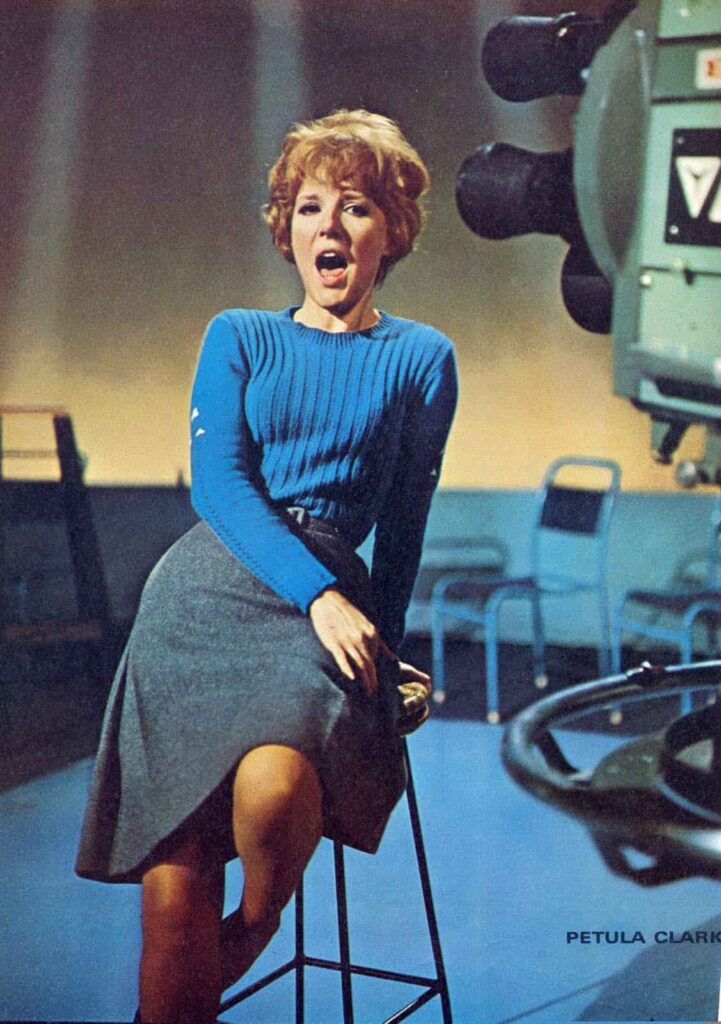
Ah, Petula Clark and her iconic anthem, “Downtown.” For those of us who remember the swinging sixties, the mere mention of that title instantly conjures images of bustling cityscapes, vibrant neon lights, and a hopeful optimism that seemed to define an era. It’s a song that transcended borders and generations, a musical postcard from a time when the urban core felt like the answer to every lonely heart.
Released in November 1964 in the UK, “Downtown” was a phenomenon. While it peaked at an admirable No. 2 on the UK Singles Chart, held off the top spot by The Beatles’ “I Feel Fine,” its true impact was felt across the Atlantic. In a remarkable ascent, it debuted at No. 87 on the US Billboard Hot 100 in mid-December 1964 and, defying the typical holiday lull for new hits, soared to No. 1 by January 23, 1965, holding that position for two weeks. It was a groundbreaking moment, marking Petula Clark as the first British female artist to achieve a No. 1 hit in the US during the rock and roll era. Beyond the UK and US, it was a chart-topper in Canada, Australia, New Zealand, and West Germany, becoming a truly international sensation.
The story behind “Downtown” is as charming as the song itself, deeply rooted in the vision of its brilliant writer and producer, Tony Hatch. Having worked with Petula Clark since 1961, Hatch was tasked with finding her a much-needed hit. In late 1964, he made his first trip to New York City, a place that would inspire the very essence of the song. Staying near Central Park, Hatch wandered down to Broadway and Times Square, mistakenly believing he was “downtown.” It was on the corner of 48th Street, as the neon signs flickered to life and the city’s energy enveloped him, that the melody for “Downtown” began to form. Initially, he imagined it as a doo-wop or R&B tune, perhaps even for the Drifters. However, a serendipitous meeting with Petula Clark in Paris changed its destiny. She was unimpressed with the other material Hatch presented, but when he reluctantly played a few bars of his unfinished New York inspiration, with the title word “Downtown” slipped in, her eyes lit up. “That’s the one I want to record,” she declared.
Hatch then hurried to complete the lyrics, even touching them up in the washroom of Pye Studios in Marble Arch just 30 minutes before the recording session on October 16, 1964. His genius extended to the arrangement, a masterful blend that made a “giant orchestra sound like a rock band.” The session itself was a grand affair, featuring eight violinists, two viola players, two cellists, four trumpeters, four trombonists, five woodwind players, percussionists, a bassist, and a pianist. Notably, guitar legends Vic Flick, Big Jim Sullivan, and a young Jimmy Page were among the session musicians, along with drummers Ronnie Verrell and Bobby Graham, and the vocal accompaniment of The Breakaways. This meticulous production created a sound that was both lush and exhilarating, capturing the vibrant pulse of a city alive.
The meaning of “Downtown” resonates deeply, especially for those who’ve experienced life’s quiet struggles. On the surface, it’s a joyous invitation to explore the city’s wonders, a place where “the lights are much brighter,” and “you can forget all your troubles, forget all your cares.” It paints a picture of escape and exhilaration, a remedy for loneliness in the hustle and bustle of urban life. Yet, as Petula Clark herself has noted, there’s a subtle undercurrent of melancholy, “a slight feeling of desperation” that adds a poignant layer to its apparent cheerfulness. It speaks to the universal human need for connection and belonging, a hope that in the anonymity of the crowd, one might find solace, or even love. For many older listeners, it wasn’t just about New York; it was about their downtown, the main street of their youth, where dreams felt within reach and the world brimmed with possibility.
“Downtown” wasn’t just a hit; it was a cultural touchstone. It perfectly encapsulated the optimism of the mid-1960s, a time of economic boom and evolving social landscapes. It offered a sonic escape from the mundane, a promise that adventure and excitement were just a short trip away. Even now, over half a century later, its infectious melody and uplifting message continue to charm, reminding us of a time when the city lights held a special magic, a beacon for all who sought to lose themselves, and perhaps find themselves, in the heart of the urban sprawl. It’s a song that remains etched in the collective memory, a beautiful echo of a bygone era, yet timeless in its appeal.