
The Soul’s Longing for Home, Even When the Road Is All You Know
Ah, the road. For many of us, it conjures images of freedom, adventure, and perhaps a youthful recklessness. But for some, like the enigmatic Blaze Foley, the road was less a choice and more a constant state of being, a backdrop against which a life of beautiful, often heartbreaking, solitude unfolded. It’s within this itinerant existence that we find the profound beauty of his signature song, “Clay Pigeons”. While it never graced the top of the charts during his tragically short lifetime—Foley was a cult figure, a troubadour of the underground, rather than a mainstream success—its resonance has only grown with time. Decades after his untimely death in 1989, shot trying to defend a friend, “Clay Pigeons” found its true audience, thanks in no small part to covers by admirers like John Prine and Merle Haggard (though Haggard’s most famous cover was of Foley’s other masterpiece, “If I Could Only Fly”). Prine’s rendition, released on his Grammy-winning 2005 album Fair & Square, truly cemented “Clay Pigeons” as a quiet classic, exposing it to a wider audience who instantly recognized its raw, aching honesty.
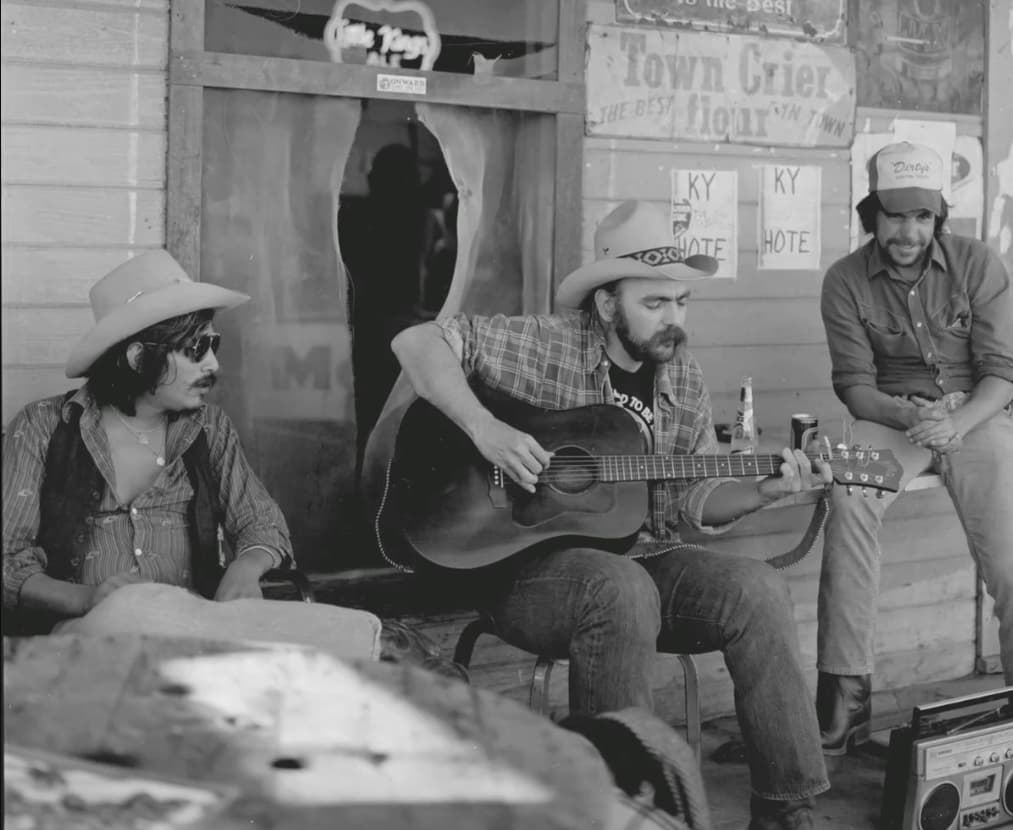
The story behind “Clay Pigeons” is as unvarnished and poignant as the song itself. It’s often said that Foley penned this gem while riding a Greyhound bus, a common mode of transport for him during his years as a drifter. Imagine the scene: a long, solitary journey, the hum of the engine, the fleeting landscapes outside the window, and within, a man wrestling with his past, his present, and a yearning for something more. Foley, born Michael David Fuller, was a man who lived on the fringes, known for his duct-tape adorned clothes and his often-homeless existence. He was a paradox—a gentle, sensitive soul beneath a sometimes-belligerent exterior, a champion of the underdog who himself struggled with the demons of alcoholism, inherited from his father, and the lasting physical effects of childhood polio. His life was a testament to survival, often fueled by the kindness of friends and the unyielding urge to create.
In “Clay Pigeons”, Foley offers a stark yet tender self-portrait of a man longing for stability, for connection, for a home that feels like more than just a temporary landing spot. The imagery is simple, yet incredibly evocative: “I’m going down to the Greyhound station, gonna buy a ticket to ride / I’m gonna find that lady with two or three kids, and sit down by her side.” It’s a yearning for domesticity, a quiet dream of a conventional life that was so far removed from his own chaotic reality. The “clay pigeons” themselves are a powerful metaphor. They are targets, something to be shot at and broken, but in Foley’s hands, they become a symbol of mundane, repetitive actions—like feeding pigeons in a park—that signify a desire for routine, for a quiet, settled existence. “Feed the pigeons some clay, turn the night into day,” he sings, a poignant wish to transform a restless, endless night into the calm predictability of a new dawn.
The beauty of “Clay Pigeons” lies in its universal relatability. Who among us hasn’t, at some point, felt adrift, longing for a fresh start, a reset? The song speaks to the fundamental human desire for belonging, for a place where one can finally “start talking again when I know what to say.” It’s about more than just physical travel; it’s a journey of the soul, an attempt to escape sorrow, to “get back in the saddle again,” and find a renewed sense of purpose. For many older listeners, this song strikes a particularly resonant chord. We’ve seen friends, and perhaps ourselves, take different paths, some winding, some straight, some ending in unexpected places. We understand the weight of regret and the enduring hope for redemption. We remember the youthful dreams that shaped us, and the quiet adjustments we made along the way.
Blaze Foley may have been largely overlooked in his lifetime, a true “songwriter’s songwriter” whose genius was often obscured by his struggles. Yet, through songs like “Clay Pigeons”, his voice echoes with an honesty that transcends time and genre. It’s a reminder that sometimes the most profound art emerges from the deepest struggles, and that even in the most broken of lives, there exists a persistent, fragile hope for peace and belonging. When you listen to “Clay Pigeons”, whether it’s Foley’s original raw recording or a cherished cover, you’re not just hearing a song; you’re hearing the whispered dreams of a man who dared to hope for a quiet life, a place to land, and the simple comfort of knowing what to say. It’s a testament to the enduring power of music to capture the very essence of the human spirit—its wanderings, its yearnings, and its unwavering search for home.