
A Timeless Lament: The Enduring Cry Against War and for Peace
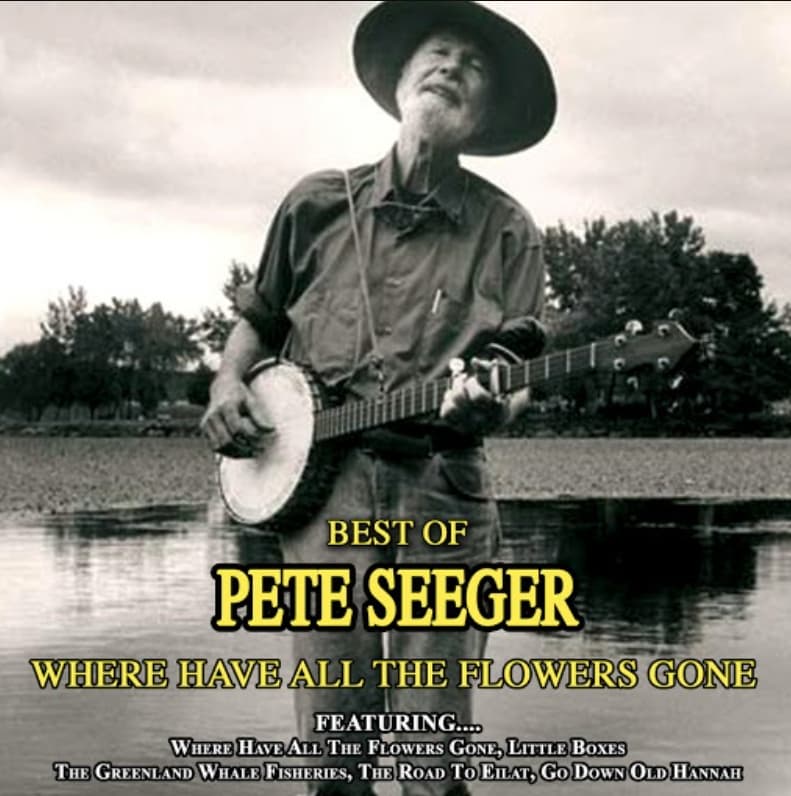
Ah, where does one even begin to speak of a song so deeply etched into the very fabric of our collective consciousness, a melody that resonates with the melancholic beauty of a bygone era yet remains chillingly relevant today? We’re talking, of course, about Pete Seeger‘s iconic folk anthem, “Where Have All the Flowers Gone?” This isn’t just a song; it’s a profound question, a lament, a protest, and a timeless elegy rolled into one. While exact chart positions for a folk song of its era are a little harder to pin down in the way we track pop hits today, its impact was immeasurable, quickly becoming a staple of the burgeoning folk revival and an unofficial anthem of the anti-war movement. Its resonance wasn’t measured in billboard numbers, but in the countless voices that joined in, in protests, in living rooms, and around campfires, spreading its powerful message far and wide.
For many of us who lived through the tumultuous decades of the mid-20th century, “Where Have All the Flowers Gone?” is more than just a tune; it’s a living, breathing memory. It evokes images of a world grappling with immense change, a generation finding its voice amidst the shadows of conflict. The story behind this song is as fascinating as its enduring legacy, rooted in the fertile ground of Pete Seeger‘s profound humanitarianism and his keen observation of the world around him. The inspiration, as is often recounted, came to Seeger in 1955 while he was on a plane to a concert. He was flipping through a Cossack folk songbook and came across a traditional Ukrainian folk song with the lines: “Where do all the flowers go? The girls have plucked them everyone. Where do all the girls go? They’ve all taken husbands. Where do all the young men go? They’re all in the army.” Seeger, with his masterful ability to distill complex emotions into simple, poignant lyrics, took this kernel of an idea and expanded upon it, transforming it into a universal statement on the cyclical nature of war and loss.
The meaning of “Where Have All the Flowers Gone?” is laid bare in its deceptively simple, repetitive structure, almost like a children’s rhyme, yet imbued with profound adult sorrow. It traces a devastating, never-ending cycle: flowers are picked by girls, who then marry and become wives, whose husbands go off to war, becoming soldiers, who are then buried under more flowers, perpetuating the very cycle the song decries. Each verse builds upon the last, adding another layer to the tragic progression: flowers to girls, girls to young men, young men to soldiers, soldiers to gravestones, and then, heartbreakingly, gravestones to flowers once more. This circular narrative highlights the futility and endless suffering caused by armed conflict. It’s a powerful anti-war statement that doesn’t preach or rage, but rather asks a series of increasingly mournful questions, inviting the listener to ponder the human cost of violence.
Beyond its immediate anti-war message, the song also carries a deeper, almost philosophical weight. It speaks to the transience of life, the beauty that is lost, and the enduring hope, however faint, for a better future. The quiet sorrow in Seeger‘s voice, whether in his original recordings or countless live performances, conveyed a universal grief for lost innocence and the casualties of human folly. It’s a song that crosses generations, transcending specific conflicts to become a timeless plea for peace and understanding. Its simplicity is its strength; anyone, anywhere, can understand the heart of its message. It reminds us of a time when folk music wasn’t just entertainment but a powerful vehicle for social commentary and change, a voice for the voiceless, and a mirror reflecting the hopes and anxieties of a troubled world. And as we listen to those familiar chords and that gentle, questioning melody, we can’t help but feel a pang of nostalgia for a time when songs truly had the power to move mountains, or at least, to stir the hearts of millions towards a common dream of peace.