
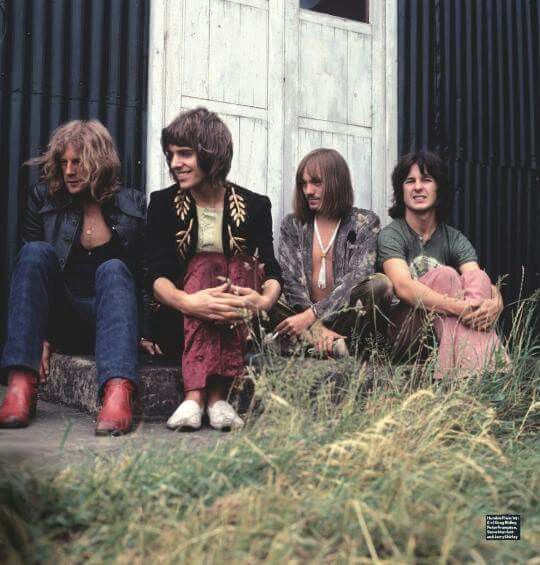
A Rowdy Ode to Confinement and Reckless Living
Ah, the early 70s. A time of raw energy, unbridled experimentation, and a certain gritty authenticity in rock and roll that, frankly, we don’t hear much of anymore. And nestled firmly in that era, like a well-worn leather jacket, is a track that perfectly encapsulates the spirit of the times: Humble Pie‘s “30 Days In The Hole.” While not a chart-topping sensation in the vein of some of their contemporaries, this blistering blues-rock anthem, released in 1972 on their album Smokin’, certainly found its home on album-oriented rock radio and became a beloved staple for fans. It’s the kind of song that, when it blasts through the speakers, immediately transports you back to hazy, smoke-filled rooms, the scent of cheap beer, and the feeling of living life just a little too fast.
The story behind “30 Days In The Hole” is as boisterous and unvarnished as the song itself, and it largely revolves around the legendary frontman, Steve Marriott. A true force of nature, Marriott had already left an indelible mark on music with The Small Faces before forming Humble Pie. His incredible vocal range, his soulful delivery, and his knack for crafting infectious hooks were unparalleled. “30 Days In The Hole” is a testament to his unique artistry, a semi-autobiographical romp through the consequences of a life lived on the edge. The “hole” in question isn’t some metaphorical pit of despair, but rather a literal holding cell. Marriott, known for his prodigious appetite for all things hedonistic, apparently found himself in a few such predicaments. The lyrics, delivered with a sneering conviction and a hint of weary resignation, paint a vivid picture of the transient nature of life on the road, the constant temptations, and the inevitable fallout. It’s a confessional, albeit a defiant one, acknowledging the excesses without necessarily apologizing for them.
The song’s meaning, then, is a fascinating blend of bravado and consequence. It’s a narrative of living hard and paying the price, but doing so with a certain devil-may-care attitude. The “liquor and drugs” explicitly mentioned are not just throwaway lines; they are central to the song’s narrative, painting a picture of a lifestyle that, while exhilarating, ultimately leads to confinement, both literal and metaphorical. For many, especially those of us who came of age during that era, it resonates with a shared sense of youthful indiscretion and the lessons learned (or sometimes, stubbornly ignored). It’s a reminder of a time when rock and roll was often seen as dangerous, a soundtrack to rebellion and self-discovery.
Beyond its lyrical content, the raw power of “30 Days In The Hole” is a masterclass in blues-infused hard rock. The driving riff, the thunderous rhythm section featuring the formidable Jerry Shirley on drums and Greg Ridley on bass, and the scorching guitar work of Peter Frampton (before his mega-stardom) all contribute to its enduring appeal. Each element locks together with an almost primal force, creating a sound that is both heavy and irresistibly groovy. It’s a song that demands to be played loud, to be felt in your bones, and to transport you back to a time when music was less about polish and more about pure, unadulterated energy. When you hear that opening riff, it’s like a bell ringing, pulling you back to those wilder days, perhaps a memory of a concert, or just a feeling of youthful abandon. “30 Days In The Hole” isn’t just a song; it’s an artifact from a bygone era, a vibrant snapshot of rock and roll at its most untamed, and a resonant echo of a lifestyle that, for better or worse, defined a generation.