
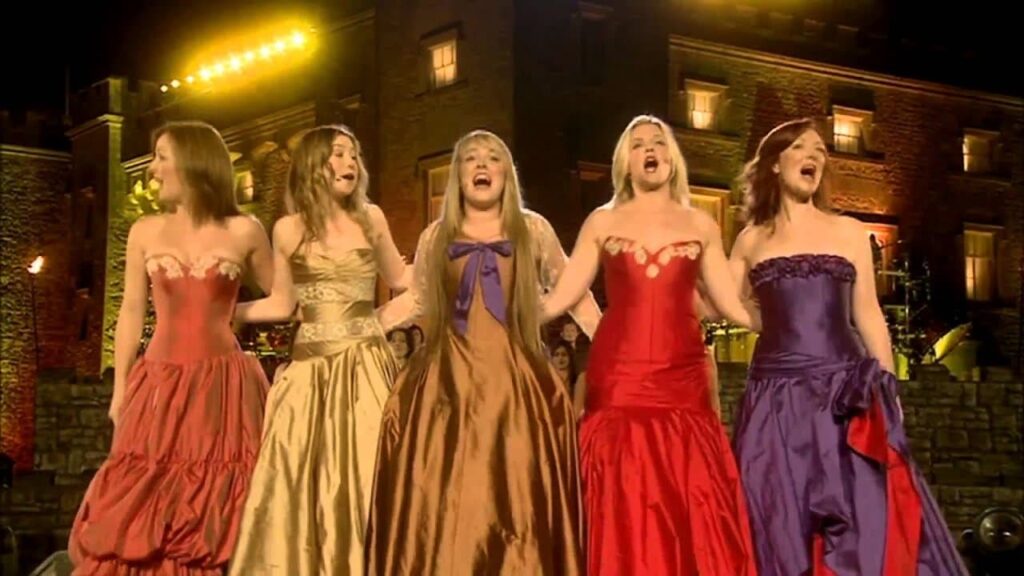
A Whisper from the Emerald Isle: Celtic Woman and the Enchanting Allure of Tír Na Nóg
Ah, yes, Celtic Woman… the very name conjures images of misty landscapes, ethereal voices blending in perfect harmony, and a timeless connection to the heart of Ireland. Their rendition of Tír Na Nóg is more than just a song; it’s an invitation, a gentle beckoning to a realm that resides in the collective memory of the Irish spirit, a place of eternal youth, beauty, and happiness. While Tír Na Nóg itself is a concept deeply rooted in ancient Celtic folklore rather than a contemporary chart-topping single in the traditional sense, the spirit of this mythical “Land of Youth” has resonated through countless artistic expressions, and Celtic Woman‘s interpretation undoubtedly captured the hearts of many, likely finding its place on various music charts and compilations celebrating Celtic and world music.
The story behind Tír Na Nóg is one woven into the very fabric of Irish mythology. It speaks of a paradise, often located across the western sea or deep within the earth, ruled by the Tuatha Dé Danann, a supernatural race of beings possessing magical abilities. The most famous tale associated with Tír Na Nóg is that of Oisín, the son of the legendary Fionn mac Cumhaill, and Niamh Chinn Óir, a beautiful maiden from this enchanted land. Niamh journeyed to the mortal realm and her captivating beauty and grace instantly charmed Oisín. He agreed to return with her to Tír Na Nóg, where they lived in blissful harmony for what seemed to Oisín to be merely a few years. However, time flowed differently in the mystical realm. When a wave of homesickness washed over him, Niamh reluctantly allowed him to return to Ireland, but with a stern warning: he must not dismount his magical horse, for if his feet touched the mortal soil, the centuries that had passed in his absence would instantly catch up with him.
Tragically, upon his return, Oisín found a land utterly transformed. His mighty father and his brave companions were long gone. While attempting to help some men move a heavy stone – a task that would have been effortless in his youth – he fell from his horse. In that instant, the weight of centuries descended upon him, and he withered into an old man, his vibrant life extinguished in the blink of an eye. This poignant tale serves as a reminder of the ephemeral nature of mortal life and the enduring allure of a world untouched by time and sorrow.
Celtic Woman‘s rendition of Tír Na Nóg, while not telling this specific narrative in its lyrics, beautifully encapsulates the essence of this mythical place. Their signature blend of soaring vocals, intricate harmonies, and evocative instrumentation paints a sonic landscape that feels both ancient and timeless. The melodies often carry a wistful quality, hinting at the longing for a place of perfect peace and beauty, a sanctuary from the trials and tribulations of the everyday world. The arrangements frequently incorporate traditional Irish instruments like the harp, fiddle, and tin whistle, their delicate sounds further enhancing the connection to the Emerald Isle and its rich cultural heritage.
For those of us who have journeyed through life’s seasons, Tír Na Nóg as interpreted by Celtic Woman can evoke a deep sense of nostalgia, a yearning for simpler times, for moments of unadulterated joy and tranquility. It reminds us of the stories we heard in our youth, the tales of magic and wonder that sparked our imaginations and perhaps even shaped our understanding of the world. The music washes over us like a gentle breeze, carrying with it the scent of distant shores and the echo of ancient voices. It’s a sonic balm for the soul, a reminder that even in the face of life’s inevitable changes, there’s still a place within our hearts that dreams of an eternal spring, a Tír Na Nóg of our own making, filled with cherished memories and the enduring beauty of the human spirit. Celtic Woman doesn’t just sing a song; they weave a spell, inviting us to close our eyes and for a fleeting moment, believe in the magic once more.