
A teenage pop revival that carried the echo of early-60s innocence—“Da Doo Ron Ron” became a bridge between generations, even as its shadowy creator, Phil Spector, left behind a far darker story.
When “Da Doo Ron Ron” returned to the top of the charts in 1977 through the bright, youthful voice of Shaun Cassidy, it felt like a song stepping out of another decade and walking comfortably into a new one. Released as a single from his debut album Shaun Cassidy in May 1977, the recording quickly became a cultural moment. By August of that year, Cassidy’s version climbed to No. 1 on the U.S. Billboard Hot 100, holding the top spot for one week and selling over a million copies. It also reached No. 1 in Canada and No. 3 on the UK Singles Chart, confirming that the young singer—already known from television and teen magazines—had crossed into genuine pop stardom.
Yet the story of Da Doo Ron Ron begins much earlier. The song was originally recorded in 1963 by The Crystals, produced by the legendary and controversial Phil Spector. Written by the famed songwriting team Jeff Barry, Ellie Greenwich, and Spector himself, the record became one of the defining examples of Spector’s “Wall of Sound.” With its pounding drums, echoing handclaps, and the joyous nonsense refrain—“da doo ron ron, da doo ron ron”—the song captured the carefree rush of teenage romance in just over two minutes. The original climbed to No. 3 on the Billboard Hot 100 in 1963, instantly becoming part of the golden age of American pop.
Fourteen years later, Cassidy’s revival arrived during an era when nostalgia for the early rock-and-roll period was quietly blooming again. His version did not attempt to replicate Spector’s dense orchestral production entirely. Instead, it polished the melody with a cleaner, late-70s pop sheen—lighter guitars, a more open mix, and Cassidy’s unmistakably youthful vocal delivery. It sounded fresh to young listeners, yet warmly familiar to anyone who remembered transistor radios and summer evenings in the early 1960s.
The meaning of the song itself is deceptively simple. At its heart, “Da Doo Ron Ron” celebrates that instant when attraction becomes certainty—the moment when someone walks by and suddenly the world seems to tilt toward possibility. Its lyrics tell the small but universal story of meeting someone who might change everything. The nonsense refrain, often mistaken for pure silliness, actually serves a deeper musical purpose: it mimics the breathless excitement of young love, that wordless feeling when emotions outrun language. Few pop songs capture that innocence as efficiently.
For Cassidy, the recording became more than just a hit single. It defined the early peak of his music career. In 1977 he was everywhere—television appearances, packed concert halls, magazine covers, and screaming audiences. “Da Doo Ron Ron” became his signature song, the one that audiences would always associate with that extraordinary year when a teenager with a bright smile briefly ruled the pop charts.
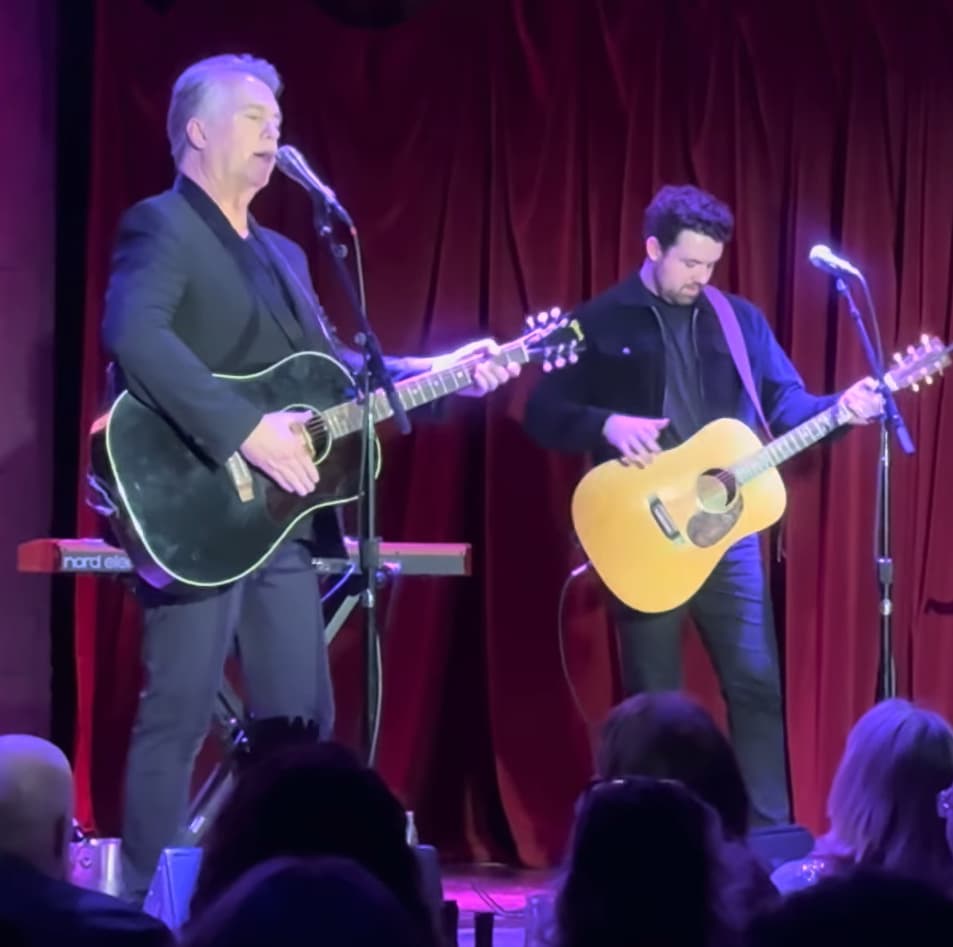
But the legacy of the song carries a strange and unsettling footnote. Years later, while telling stories during live appearances—including one memorable evening at City Winery Boston—Cassidy recalled a tense encounter with Phil Spector. According to Cassidy’s account, a meeting with the famously volatile producer turned unnerving when Spector produced a handgun during the conversation. Whether intended as intimidation or theatrical bravado, the moment left a lasting impression. Cassidy would recount the incident with a mix of disbelief and dark humor, as if still trying to understand how a song so innocent could be tied to such a complicated figure.
That contrast is what makes the history of “Da Doo Ron Ron” so fascinating. On one side stands the pure joy of the music itself: a melody that radiates youthful optimism and the thrill of new romance. On the other stands the unpredictable personality of the producer who helped shape its original sound.
And yet, when the opening drumbeat begins and the chorus arrives—“Da doo ron ron, da doo ron ron…”—none of that darkness is what listeners feel first. What returns instead is the bright echo of a simpler pop moment, carried forward by Shaun Cassidy’s voice and preserved in a melody that refuses to grow old.