
A Cajun Celebration Wrapped In Friendship, Memory, And The Joy Of Keeping Old Songs Alive
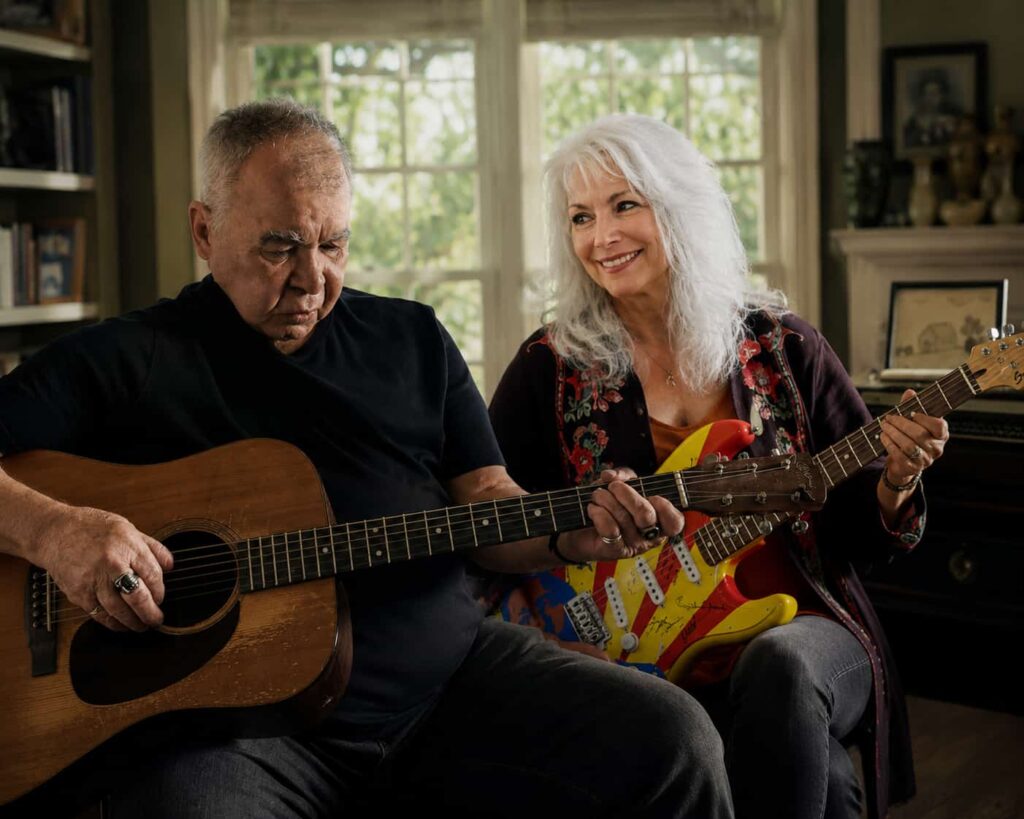
Some recordings do not try to reinvent music history — they simply remind us why certain songs never leave us. “Jambalaya (On the Bayou)” by John Prine and Emmylou Harris is one of those moments: warm, playful, deeply human, and filled with the kind of musical chemistry that feels less like a studio session and more like old friends singing on a front porch long after midnight.
When John Prine and Emmylou Harris performed “Jambalaya”, they were stepping into the long shadow of one of country music’s most beloved classics. The song itself was originally written and recorded by Hank Williams in 1952, becoming one of the defining crossover country hits of its era. Williams’ version reached No. 1 on the Billboard Country chart in 1952 and stayed there for an astonishing fourteen weeks, later becoming one of the most recognizable American country songs worldwide. Hank Williams
By the time Prine and Harris revisited the song decades later, “Jambalaya” was already woven into the cultural fabric of American music — a song associated with Louisiana bayous, Cajun cooking, dance halls, fishing boats, and simple celebrations of life. Yet what makes their interpretation so memorable is not chart success or commercial ambition. In fact, their rendition was never designed as a major radio single chasing pop rankings. Its lasting appeal comes from something much rarer: sincerity.


There was always something beautifully unforced about John Prine’s music. Unlike performers who depended on vocal power or dramatic showmanship, Prine sang like a storyteller sitting beside you at the kitchen table. His voice carried weather, humor, scars, and wisdom all at once. Pairing that voice with the graceful harmony of Emmylou Harris created a balance that felt almost timeless. Harris brought elegance and emotional softness; Prine brought earthiness and wit. Together, they turned “Jambalaya” into less of a party song and more of a memory shared between companions.
What many listeners forget is that “Jambalaya” itself was already nostalgic even in the 1950s. Hank Williams borrowed heavily from Cajun melodies and French Louisiana traditions, particularly from the Cajun song “Grand Texas.” But Williams simplified the language and transformed it into something broader and universally accessible. Suddenly, people far beyond Louisiana could picture the bayou life: shrimp boats drifting at sunset, accordions echoing through dance halls, homemade food steaming on crowded tables, and couples dancing without hurry because tomorrow could wait.
That imagery remained powerful decades later when Prine and Harris embraced the song. Their version feels less polished than many modern country recordings, and that is precisely why it works. There is room to breathe in the performance. Room for laughter between lines. Room for imperfections that make music feel alive rather than manufactured.
For listeners who grew up during the golden decades of country and folk music, performances like this carry an emotional weight difficult to explain to younger audiences. They recall an era when songs traveled through family radios, jukeboxes, local bars, and Sunday afternoons rather than algorithms. John Prine belonged to that disappearing tradition of songwriters who understood ordinary people deeply — factory workers, lonely travelers, aging dreamers, forgotten veterans, small-town lovers. Even in a cheerful song like “Jambalaya,” his humanity comes through unmistakably.
And then there is Emmylou Harris, whose harmonies have long been described as almost ghostlike in their beauty. Few artists in country music history possessed her ability to make another singer sound even more truthful. She never overwhelms Prine here; instead, she lifts the performance gently, like a soft southern wind moving through an old screen door on a summer evening.


The deeper meaning of “Jambalaya” has never really been about food or dancing alone. Beneath its cheerful rhythm lies a celebration of belonging. The lyrics describe community, music, romance, and shared traditions — the small pleasures that give ordinary life its dignity. That message becomes even more moving when sung by older artists who understood how quickly time passes. In the voices of Prine and Harris, the song quietly transforms into a reminder not to lose touch with joy, friendship, and the places that shaped us.
After John Prine’s passing in 2020, many listeners returned to recordings like this with renewed emotion. Suddenly, the warmth in his singing carried an almost heartbreaking tenderness. His music had always sounded human, but absence gave it even greater depth. Songs like “Jambalaya” became more than entertainment; they became echoes of an America — and a style of music-making — that many fear is slowly fading away.
Yet perhaps that is why this performance continues to endure. It reminds people that great music does not always need grandeur. Sometimes all it takes is two honest voices, a timeless melody, and a song old enough to carry generations inside it.