
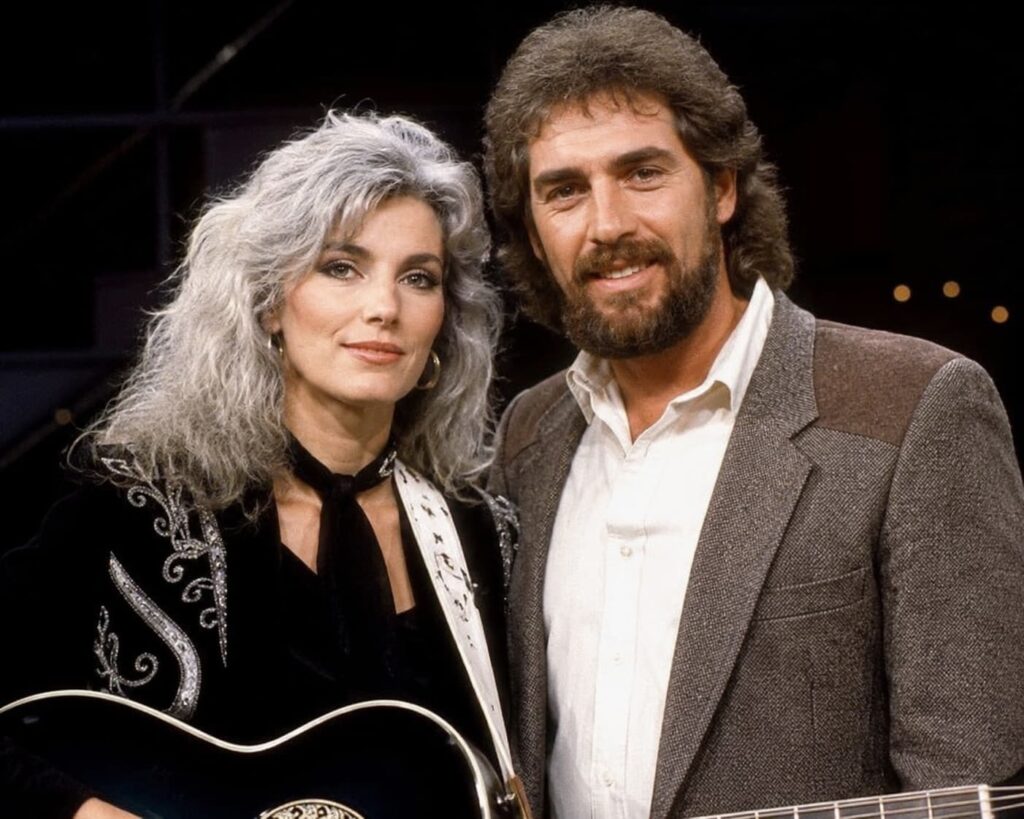
A tender country duet about holding onto hope when love has already weathered heartbreak, distance, and the quiet passage of time.
When “We Believe in Happy Endings” was released in 1988, it felt less like a modern country hit and more like an old letter rediscovered in a wooden drawer — soft around the edges, deeply human, and filled with the kind of wisdom that only comes after disappointment. Sung by Emmylou Harris and Earl Thomas Conley, the song climbed to No. 1 on the Billboard Hot Country Singles chart in late 1988, becoming one of the most emotionally mature duets of its era. It was not loud, dramatic, or desperate for attention. Instead, it spoke quietly — and perhaps because of that, it stayed with listeners for decades.
The song originally appeared on Earl Thomas Conley’s album The Heart of It All, an album that reflected Conley’s gift for blending traditional country emotion with the smoother country-pop textures that defined much of late-1980s Nashville. By then, Conley had already established himself as one of country music’s most distinctive male voices. There was always a worn sincerity in his singing — a sense that every line had been lived before it was recorded. Pairing him with Emmylou Harris, whose voice carried grace, loneliness, and compassion in equal measure, turned the song into something far deeper than a standard duet.
At its heart, “We Believe in Happy Endings” is about two people who have already seen life unravel a few times. These are not young dreamers singing about fantasy romance. They sound like adults who know exactly how fragile love can be — and who still choose to believe in it anyway. That is what gives the song its unusual emotional power. The lyrics do not deny heartbreak. In fact, they almost expect it. Yet beneath every verse is a quiet insistence that tenderness is still worth risking.
There is something profoundly moving about the way Emmylou Harris approaches the song vocally. She does not overpower it with technical flourishes. Instead, she sings with restraint, almost as if she is protecting the memories inside the lyrics. Her harmonies with Earl Thomas Conley feel natural and lived-in, like conversations between two people sitting on a porch long after the party has ended and the night has grown still. That chemistry is one reason the duet became so beloved among country audiences of the time.
And perhaps that is why the song continues to resonate with listeners who grew up during country music’s golden decades. It reminds many people of an era when songs were patient. Back then, country music often allowed silence, reflection, and emotional ambiguity to exist inside a melody. “We Believe in Happy Endings” does not rush toward triumph. It simply offers reassurance — the kind that arrives slowly after years of experience.
There is also an interesting contrast between the two artists themselves. Earl Thomas Conley was known for his modern country sound and string of chart-topping hits throughout the 1980s, while Emmylou Harris had long been admired for her connection to folk, country-rock, and Americana traditions. Bringing those two musical worlds together created a rare balance: polished enough for country radio, but emotionally rooted in something older and more timeless.
By the late 1980s, country music was changing rapidly. Production styles were becoming slicker, and many artists leaned heavily into crossover appeal. Yet this duet managed to succeed without losing emotional authenticity. That may explain why it reached No. 1 while still feeling deeply intimate. Listeners heard something truthful inside it — not perfection, but resilience.
The title itself, “We Believe in Happy Endings,” carries more weight than it first appears to. It is not naïve optimism. It is hard-earned faith. The song understands disappointment, loneliness, and emotional scars, yet it refuses to become cynical. In many ways, that message reflected the lives of countless listeners who had already learned that happiness is rarely simple or permanent. Sometimes a “happy ending” is not a fairy tale at all — sometimes it is simply finding someone willing to stay gentle in a difficult world.
Years later, the song remains one of the finest examples of how country duets can express vulnerability without sentimentality. It stands alongside the quieter emotional classics of its era, remembered not because it shouted the loudest, but because it understood something essential about human connection.
And when those final harmonies fade away, what lingers is not sadness — but comfort. The comforting thought that even after all life’s detours, broken promises, and long winters of the heart, some people still dare to believe that love can end kindly.