
A Quiet Night in Austin When John Prine Reminded Everyone Why Simple Songs Last Forever
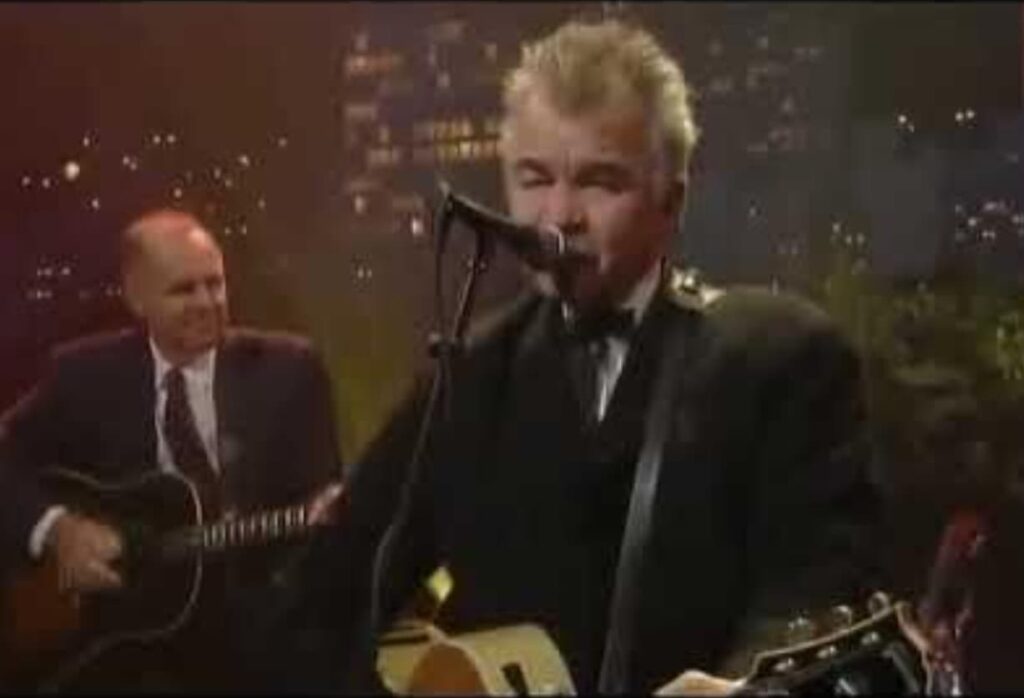
On June 20, 2005, when John Prine stepped onto the stage of Austin City Limits, it did not feel like a performer trying to impress an audience. It felt like an old friend walking back into a familiar room, carrying decades of stories in his voice. By then, Prine had already survived changing musical eras, personal hardships, and even cancer surgery that permanently altered his singing voice. Yet somehow, that roughened voice only made the songs feel more human. The performance became one of those rare television moments where music stopped sounding like entertainment and started sounding like memory itself.
The 2005 appearance on Austin City Limits came during an important late-career resurgence for Prine. A few months earlier, he had released the acclaimed album Fair & Square, which would eventually win the Grammy Award for Best Contemporary Folk Album in 2005. The record did not chase radio trends or modern production styles. Instead, it leaned into everything that made Prine beloved for decades: quiet wisdom, dry humor, heartbreak hidden behind ordinary language, and characters who sounded like people one might actually know.
Unlike mainstream country stars dominating the charts at the time, John Prine occupied a very different place in American music. He was never built around commercial spectacle. In fact, his greatest strength was how unassuming he seemed. While many singers tried to sound larger than life, Prine sounded wonderfully mortal. That is precisely why so many listeners trusted him. His songs were filled with aging veterans, lonely dreamers, broken marriages, small-town reflections, and people trying to hold onto dignity while life slowly changed around them.
By 2005, Prine’s legend had already been firmly established. His self-titled debut album John Prine (1971) had introduced classics like “Sam Stone,” “Hello in There,” and “Angel from Montgomery.” Those songs were never massive pop-chart hits in the traditional sense, yet they became deeply respected standards among songwriters. Artists such as Johnny Cash, Bonnie Raitt, Kris Kristofferson, Bette Midler, and Joan Baez recorded his material because they recognized something timeless in his writing.
That is part of what made the Austin City Limits performance so meaningful. The audience was not simply watching a concert. They were witnessing a songwriter who had quietly influenced generations of musicians without ever losing his humility. There was no theatrical production, no flashy stage design, and no attempt to modernize his image. Just a guitar, a voice weathered by life, and songs that carried emotional truths many people rarely say aloud.
One of the most remarkable things about John Prine was his ability to balance sadness with warmth. Songs like “Hello in There” explored loneliness and aging with devastating honesty, yet never became bitter. Even his darker songs carried compassion. He could write about heartbreak, addiction, or regret without sounding cynical. That emotional balance became especially powerful after his battle with throat cancer in the late 1990s. Doctors warned that surgery might permanently affect his singing, and it did. But instead of weakening the emotional impact of his music, the changed voice gave it even more gravity. Every lyric sounded lived-in.
The atmosphere of Austin City Limits suited him perfectly. The program had long been known for preserving authentic American songwriting rather than chasing commercial hype. In many ways, Prine represented the very spirit the show was built upon. Watching him there in 2005 felt almost like seeing the final chapter of a long American musical tradition — folk storytelling passed from one generation to another through honesty instead of glamour.
There is also something deeply comforting about revisiting performances like this today. Modern music often moves quickly, constantly searching for novelty. But John Prine belonged to a tradition where songs were meant to age alongside the listener. His music did not depend on youth, trends, or production tricks. It depended on emotional recognition. A line about old friends drifting away or quiet evenings at home somehow became universal in his hands.
Many viewers who first watched the 2005 broadcast likely already carried decades of memories attached to Prine’s songs. Some had discovered him during the early 1970s folk revival. Others found him later through artists who admired him. But nearly everyone understood they were listening to someone rare — a writer who never seemed interested in fame as much as truth.
And perhaps that is why the performance continues to resonate so strongly years later. John Prine never tried to sound heroic. He sounded human. In a world increasingly filled with noise, that honesty became unforgettable.
Long after the applause faded inside the studio that June night in Austin, the songs remained — quiet, reflective, wounded, funny, and profoundly alive.