
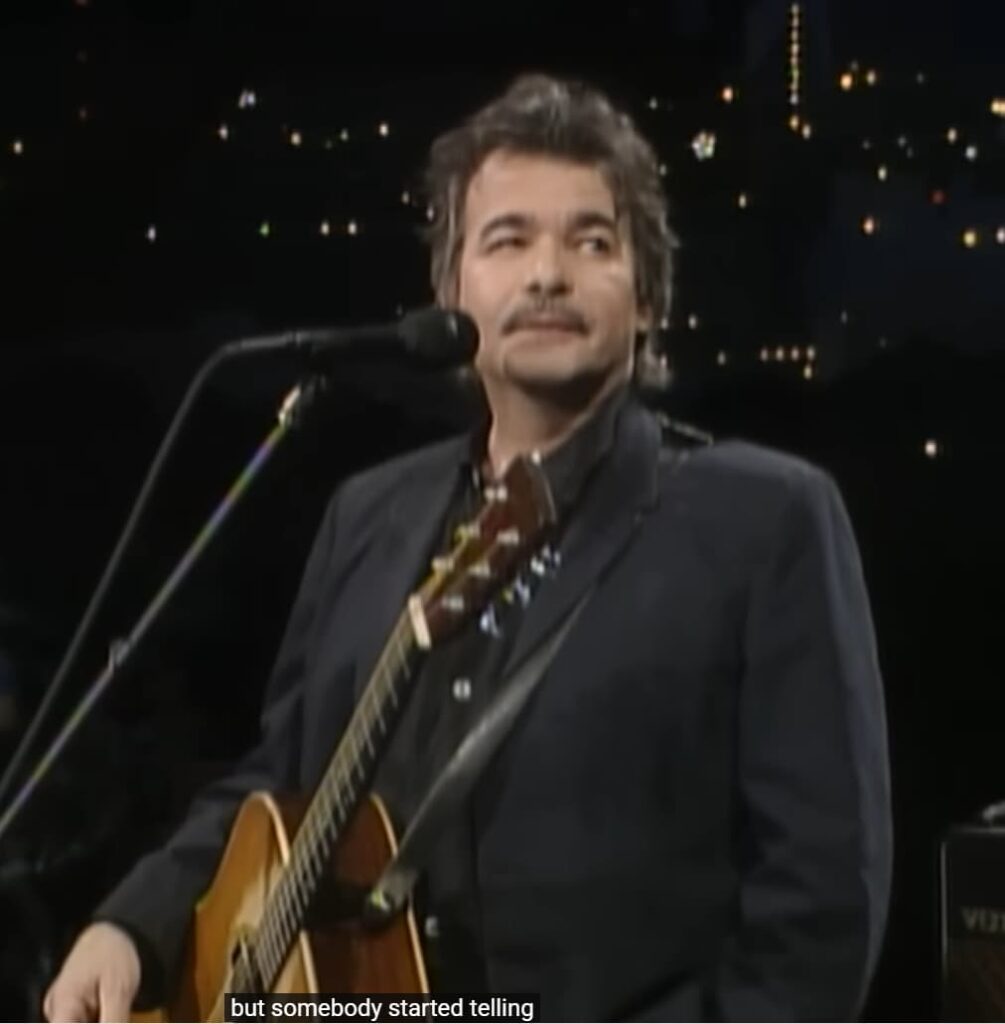
A Tenderly Humorous Reflection on Faith, Humanity, and the Years We Never Saw
When John Prine released “Jesus: The Missing Years” in 1991 as part of his Grammy-winning album The Missing Years, he offered listeners something rare: a song that was at once playful, irreverent, and deeply humane. The album itself went on to win the Grammy Award for Best Contemporary Folk Album, cementing its place as one of Prine’s most celebrated works. Although the song was not released as a major charting single and therefore did not achieve notable positions on the Billboard Hot 100, its cultural resonance has endured far beyond conventional chart success—living instead in the hearts of listeners who appreciate storytelling at its most imaginative.
The premise of “Jesus: The Missing Years” is deceptively simple: what happened during the undocumented years of Jesus Christ’s life, between childhood and adulthood? Rather than approaching the subject with solemnity, Prine leans into his trademark wit and curiosity. He imagines Jesus traveling the world—learning trades, encountering different cultures, even dabbling in everyday human experiences. It’s a narrative that gently demystifies a sacred figure without diminishing his significance, allowing listeners to see spirituality through a more relatable, almost conversational lens.
Behind the song lies Prine’s unique ability to balance humor with empathy. Known for classics like “Angel from Montgomery,” he had long established himself as a songwriter who could find poetry in the ordinary. Here, however, he ventures into philosophical territory, asking questions that many have quietly wondered but rarely voiced. The “missing years” become a metaphor—not just for gaps in religious history, but for the unknown chapters in all our lives. It’s this universality that gives the song its quiet power.
Musically, the track is understated, carried by a gentle acoustic arrangement that allows the lyrics to breathe. Prine’s voice—weathered, warm, and unmistakably sincere—guides the listener like an old friend recounting a story by the fireside. There’s no grand production, no dramatic crescendos; instead, the song relies on pacing and phrasing, letting each line settle before moving on. It’s a style that reflects the folk tradition at its finest: storytelling as an intimate exchange rather than a performance.
One of the most compelling aspects of the song is its tone. Prine does not mock or challenge faith; rather, he explores it with curiosity and affection. Lines that might seem humorous at first glance often carry a deeper sense of longing—the desire to understand the human side of divinity. In doing so, he bridges the gap between the sacred and the everyday, suggesting that perhaps the two are not so far apart after all.
The broader success of The Missing Years album also marked a significant moment in Prine’s career. After years of being regarded as a “songwriter’s songwriter,” this release brought him renewed recognition in the early 1990s, introducing his work to a new generation while reaffirming his place among the great American storytellers. The album’s critical acclaim, including its Grammy win, highlighted the enduring relevance of his voice in a rapidly changing musical landscape.
There is also a quiet courage in a song like this. To approach such a revered subject with humor requires not only skill but also a deep respect for the audience. Prine trusted listeners to understand the spirit of his storytelling—to recognize that beneath the playful surface lay genuine reflection. And indeed, for many, the song becomes less about theology and more about imagination, empathy, and the shared human experience.
Listening to “Jesus: The Missing Years” today feels like opening a well-worn book—one filled with margin notes, gentle laughter, and moments of unexpected insight. It invites us to wonder, to question, and perhaps most importantly, to smile. In a world that often demands certainty, Prine offers something softer: the comfort of not knowing, and the beauty of imagining what might have been.
And in that quiet space between fact and fiction, he leaves us with something enduring—a reminder that even the greatest stories have room for a little mystery.