
A Quiet but Unyielding Protest: “I Ain’t Marching Anymore” and the Voice of Conscience in the 1960s
Few songs from the turbulent 1960s carry the moral clarity and quiet defiance of “I Ain’t Marching Anymore” by Phil Ochs. Released in 1965 as the title track of his second album, I Ain’t Marching Anymore, the song stands today as one of the most powerful anti-war statements ever written in the American folk tradition. Unlike the chart-topping pop hits of its era, this song did not climb the commercial rankings—it did not enter the Billboard Hot 100—but its influence traveled far beyond record sales. It became a defining anthem of the anti-war movement during the Vietnam War, sung in college halls, protest marches, and folk clubs across America.
At the time of its release, Phil Ochs was emerging as one of the most politically outspoken voices in the folk revival, often mentioned in the same breath as Bob Dylan, though the two artists eventually took very different artistic paths. Where Dylan drifted toward poetic symbolism and electric experimentation, Ochs remained fiercely committed to topical songwriting—songs that confronted politics, injustice, and war directly.
The album I Ain’t Marching Anymore, released in 1965 by Elektra Records, became his most celebrated work. While it never achieved the commercial heights of mainstream folk releases of the era, it gained immense respect among critics and activists. Over time, the album has come to be recognized as one of the most important protest records of the 1960s.
The song itself unfolds like a solemn walk through American history. “I Ain’t Marching Anymore” is written from the perspective of a soldier who has fought in nearly every major American conflict—from the War of 1812 to the Civil War, through World War I, World War II, and ultimately the conflict in Vietnam. The narrator speaks as though he has been reborn generation after generation, endlessly called to fight. But by the end of the song, the voice finally refuses.
The line that defines the entire piece arrives with stark finality:
“It’s always the old who lead us to the war,
It’s always the young to fall.”
With those few words, Phil Ochs captured a universal truth that echoes far beyond the politics of the 1960s.
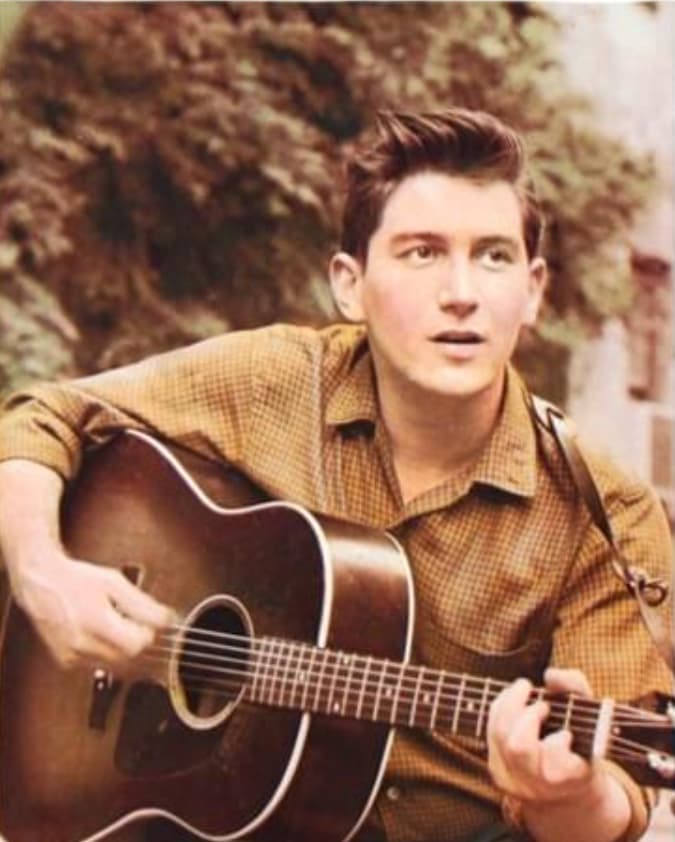
Musically, the arrangement is strikingly simple—just acoustic guitar and Ochs’ steady voice. This restraint is deliberate. The song does not need orchestration or dramatic production. Its power lies in the clarity of its storytelling. The melody moves forward like a steady march, almost mimicking the rhythm of soldiers’ footsteps, until the final declaration breaks the cycle.
The song gained particular historical significance on October 21, 1967, during the famous March on the Pentagon, one of the largest anti-Vietnam War demonstrations in American history. That day, Phil Ochs stood before thousands of protesters and sang “I Ain’t Marching Anymore.” As he performed, many soldiers guarding the Pentagon reportedly lowered their rifles or quietly listened. It became one of the most symbolic musical moments of the protest era.
Unlike many protest songs that feel tied to a specific political moment, “I Ain’t Marching Anymore” carries a timeless quality. Its message is not only about one war or one generation. It is about the long, repeating cycle of conflict that stretches through human history.
There is also something deeply personal in the way Ochs delivers the song. His voice does not shout or rage. Instead, it sounds thoughtful, almost weary—as if the singer has already seen too much. That quiet resignation gives the song a haunting emotional weight.
In later years, the song was recorded by several folk artists and frequently performed at commemorations of the protest movement. Yet Phil Ochs’ original recording remains unmatched, precisely because of its simplicity and sincerity.
Looking back today, “I Ain’t Marching Anymore” feels less like a protest slogan and more like a reflection on the human cost of history itself. It reminds listeners that behind every war statistic lies a generation of lives interrupted.
More than half a century later, the song still resonates with the same quiet power. When the final line arrives—“It’s always the old who lead us to the war…”—one cannot help but pause and reflect.
And perhaps that pause, that moment of reflection, was exactly what Phil Ochs hoped his music would inspire.