
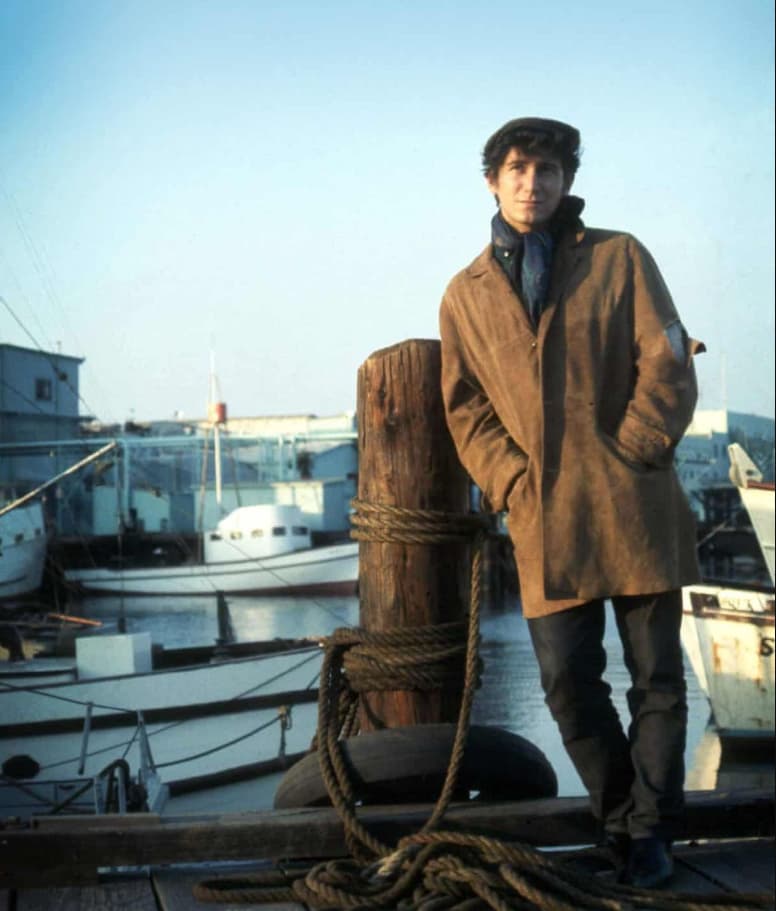
A Bitterly Playful Protest Against War and Moral Evasion
When speaking of the great protest voices of the 1960s, few names resonate with the same sharp wit and uncompromising honesty as Phil Ochs. Among his most striking compositions, “Draft Dodger Rag” stands as a brilliant example of satire wrapped in folk simplicity—a song that manages to provoke laughter while quietly delivering a devastating critique of war and personal integrity.
Released in 1965 on the album “I Ain’t Marching Anymore”, the song emerged at a time when the United States was deepening its involvement in the Vietnam War. Unlike mainstream chart-toppers of the era, “Draft Dodger Rag” did not achieve a notable position on the Billboard Hot 100. However, its impact cannot be measured by chart rankings alone. It became a staple within the folk and protest music circles, frequently performed at rallies, campuses, and gatherings where questions about war and conscience were being openly debated.
What makes “Draft Dodger Rag” so unforgettable is its clever narrative structure. The song is delivered from the perspective of a young man desperately listing excuses to avoid being drafted into military service. At first listen, the tone feels almost comedic—he claims everything from poor eyesight to psychological instability. Yet beneath the humor lies a deeply uncomfortable truth: the character is not driven by principled opposition to war, but by fear and self-preservation. In this way, Phil Ochs turns the mirror toward society, asking listeners to reflect on the difference between genuine conviction and convenient avoidance.
The story behind the song reflects Ochs’ own position during the 1960s. While many artists wrote broadly about peace, he was known for his direct, often confrontational style. He believed in using music as a form of journalism—documenting the moral contradictions of his time. With “Draft Dodger Rag”, he chose satire instead of solemnity, perhaps understanding that irony can sometimes cut deeper than anger. It is worth noting that Ochs himself was not drafted, but he consistently aligned himself with the anti-war movement, performing at countless events and becoming a defining voice of dissent.
Musically, the song carries a deceptively light arrangement. The upbeat rhythm and almost sing-along melody create a contrast with the gravity of its subject. This juxtaposition is key to its effectiveness. The listener is drawn in by its charm, only to realize, line by line, that the humor masks a serious moral dilemma. In the broader context of 1960s folk music—alongside contemporaries like Bob Dylan—Phil Ochs carved out a unique space where satire and sincerity coexisted.
The meaning of “Draft Dodger Rag” extends beyond its historical moment. It is not simply a song about avoiding military service; it is about the human tendency to rationalize difficult choices. It asks a timeless question: when faced with injustice, do we stand firm in our beliefs, or do we search for the easiest way out? The protagonist’s endless list of excuses becomes symbolic of a broader societal habit—one that transcends generations and circumstances.
Listening to the song today, one cannot help but feel a sense of bittersweet nostalgia. It recalls an era when music was deeply intertwined with political and social consciousness, when a simple acoustic guitar could carry the weight of national debate. Yet it also feels strikingly relevant, as its themes of accountability and moral courage continue to echo in modern times.
In the end, “Draft Dodger Rag” is more than a protest song. It is a quietly powerful reflection on character, delivered with a smile that lingers long after the music fades. Through humor and honesty, Phil Ochs reminds us that sometimes the most uncomfortable truths are the ones we laugh at first—only to ponder much later, in silence.