
A Gentle Dawn of Conscience: How “Early in the Morning” Turned a Simple Folk Tune into a Quiet Cry for Justice
Few songs from the early 1960s capture the moral clarity and reflective spirit of the American folk revival quite like “Early in the Morning” by Peter, Paul & Mary. Released in 1962 on their landmark debut album Peter, Paul and Mary, the song became one of the trio’s early signature performances. While it was not released as a major standalone commercial single like “Lemon Tree” or “If I Had a Hammer”, the recording gained wide recognition through radio play and live performances, helping the album reach No. 1 on the Billboard 200 in 1962 and remain on the chart for an extraordinary over 10 months. The album itself became one of the defining folk records of the decade and introduced millions of listeners to the thoughtful harmonies and social awareness that would characterize the trio’s music.
At first glance, “Early in the Morning” sounds almost disarmingly simple. The melody carries the relaxed rhythm of traditional American folk music, and the lyrics unfold like a conversation at the break of day. Yet beneath that calm surface lies a subtle but unmistakable commentary on racial injustice and segregation in the United States—a topic that was becoming increasingly impossible to ignore in the early years of the Civil Rights Movement.
The song was written by Noel “Paul” Stookey, one third of Peter, Paul & Mary, who was deeply influenced by the atmosphere of social change sweeping across America at the time. Though Stookey later explained that he originally conceived the song almost playfully, its lyrics evolved into something far more pointed. Lines referring to “different colors of the rainbow” were widely interpreted as a metaphor for racial equality, reflecting the hope that people of all backgrounds could live together with dignity and fairness.
In 1962, when Peter, Paul and Mary was released, the United States was in the midst of profound transformation. The Freedom Rides, the growing protests against segregation, and the rising voices of leaders such as Martin Luther King Jr. had begun reshaping the national conversation. Folk music, long rooted in storytelling and protest, became a natural vehicle for these ideas. Within that context, “Early in the Morning” fit seamlessly into the trio’s emerging identity: music that sounded gentle but carried conviction.
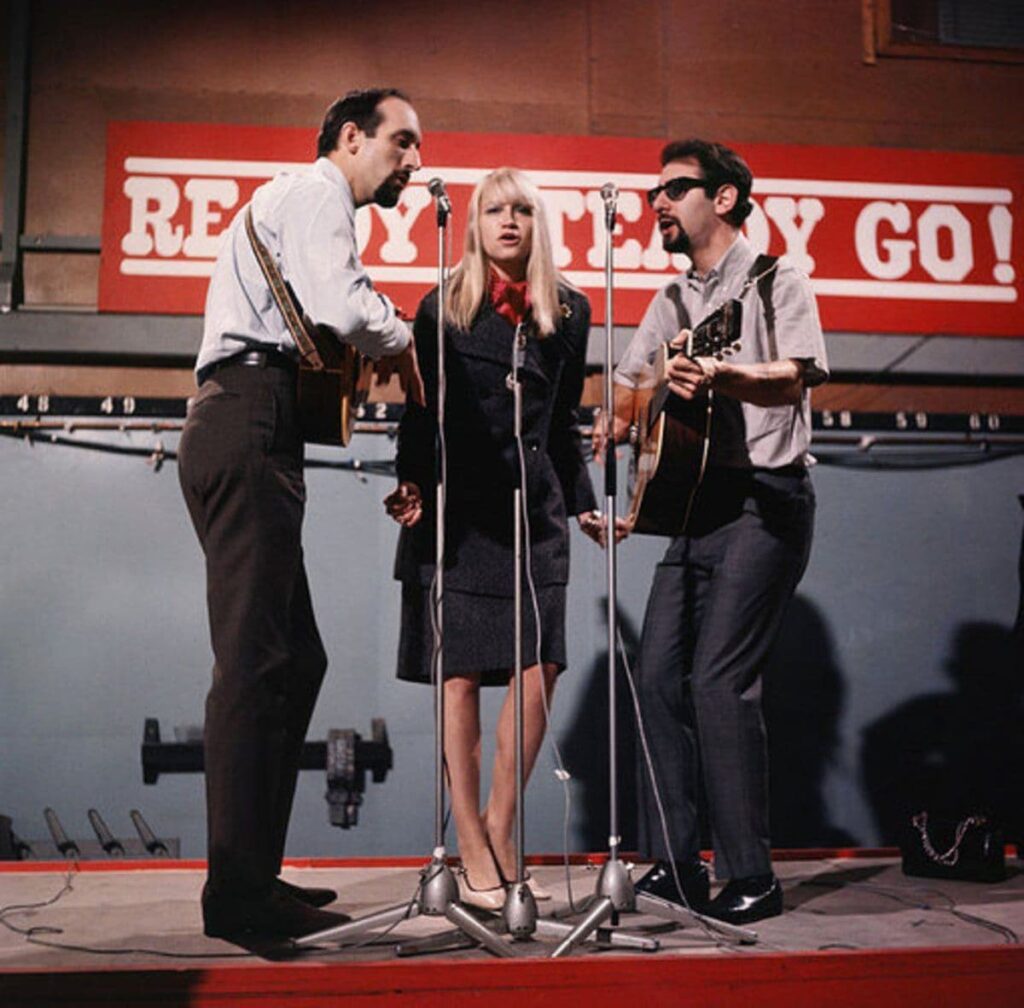
What made the performance particularly powerful was the unmistakable blend of voices that defined Peter, Paul & Mary—Peter Yarrow, Paul Stookey, and Mary Travers. Their harmonies were warm yet disciplined, never overpowering the message of the song. Mary Travers’s clear, resonant voice gave the lyrics a human sincerity, while the two male voices framed the melody with a reassuring steadiness. Together they created the sense that the song was not merely being performed, but shared.
Listeners who encountered “Early in the Morning” in the early 1960s often experienced it as part of a larger awakening. Folk music clubs in cities like New York and Boston were filled with young musicians and attentive audiences who believed that songs could still shape the moral atmosphere of the country. Peter, Paul & Mary stood at the center of that movement, bridging the intimacy of coffeehouse folk with the reach of mainstream radio.
The trio would go on to achieve enormous success with songs such as “Puff, the Magic Dragon” and their famous 1963 recording of Bob Dylan’s “Blowin’ in the Wind.” Yet “Early in the Morning” remains a fascinating early statement of their artistic identity. It is less famous than some of their later hits, but in many ways it reveals the heart of what they were trying to do: to combine melody, conscience, and quiet optimism.
Listening to the song today feels a bit like opening a window to another era. The arrangement is sparse—just acoustic guitars and voices—but that simplicity allows the message to breathe. There is no anger in the delivery, only a calm insistence that the world can, and should, become more just.
Perhaps that is the lasting beauty of “Early in the Morning.” It does not shout. It does not accuse. Instead, it rises slowly like sunlight at dawn, reminding us that some of the most meaningful songs in history were not the loudest ones—but the ones that spoke gently, and were heard clearly by those willing to listen.