
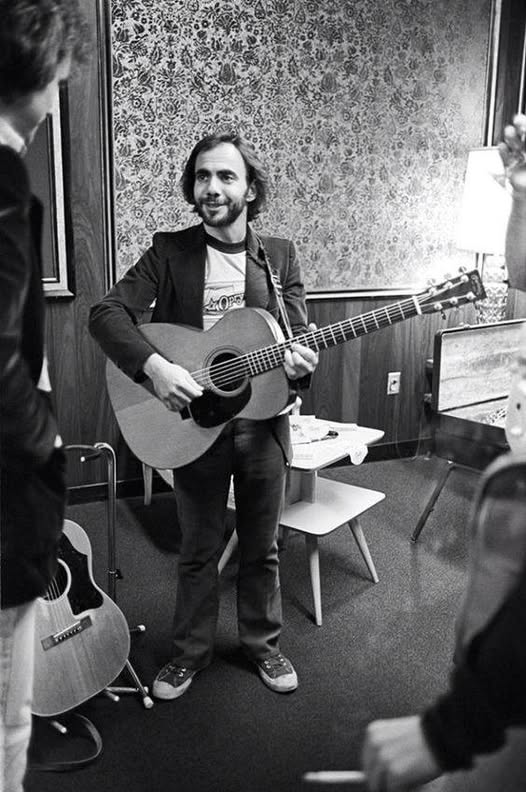
A quiet, wry meditation on chance, loss, and the gambler’s illusion of control—where humor masks a deeper resignation to life’s unpredictability.
When “Eight Ball Blues” by Steve Goodman first found its way into the world in the early 1970s, it did so without the thunder of chart-topping success or commercial fanfare. Released on his self-titled debut album “Steve Goodman” in 1971, the song did not register on major charts like the Billboard Hot 100. Yet, to measure its impact by numbers alone would be to misunderstand the quiet, enduring power of Goodman’s craft. This was never music built for fleeting popularity—it was music meant to sit with you, to linger long after the needle lifted from the vinyl.
Steve Goodman, often remembered for his deeply human storytelling and wry, understated humor, had a rare ability to transform ordinary lives into something quietly profound. Though many know him best for “City of New Orleans”, immortalized later by Arlo Guthrie, songs like “Eight Ball Blues” reveal another side of his artistry—more intimate, more reflective, and perhaps more revealing of the man himself.
At first glance, “Eight Ball Blues” feels light, almost playful. The imagery of pool halls, missed shots, and the unpredictable roll of the eight ball paints a familiar, almost cinematic picture. But beneath that surface lies something more contemplative. The game becomes a metaphor—life reduced to angles, chances, and moments where control slips just out of reach. Goodman doesn’t preach; he observes. And in that observation, there’s a quiet recognition of how often people convince themselves they’re in charge, even as the outcome is governed by forces far beyond their grasp.
There’s also an unmistakable sense of companionship in the song—those late nights, perhaps shared with friends or strangers who become friends for a few fleeting hours. The pool table becomes a gathering place, a stage where small victories and quiet defeats unfold. Goodman captures that atmosphere with remarkable tenderness, as though he understands that these seemingly insignificant moments are, in truth, where much of life happens.
The early 1970s folk scene, shaped by voices like John Prine and Kris Kristofferson, was rich with storytellers who blurred the line between the personal and the universal. Goodman belonged naturally among them, yet he never quite occupied the same spotlight. Perhaps that’s part of why his songs feel so genuine—there’s no sense of performance for acclaim, only a desire to tell the truth as he saw it.
In “Eight Ball Blues,” that truth is delivered with a gentle shrug rather than a grand statement. There’s humor, certainly, but it’s the kind that comes from experience—the kind that knows life rarely unfolds according to plan. The missed shot isn’t just a missed shot; it’s every moment when things didn’t go the way they were supposed to, every time expectation met reality and quietly lost.
What makes the song endure is its restraint. Goodman doesn’t force emotion; he allows it to surface naturally, like a memory you didn’t realize you were holding onto. Listening to it now, decades later, it carries a different weight. The pool hall may fade, the faces may blur, but the feeling remains—the understanding that life, like a game of billiards, is a delicate balance of skill, luck, and acceptance.
In the end, “Eight Ball Blues” isn’t about winning or losing. It’s about recognizing the game for what it is—and perhaps, finding a certain peace in letting go of the need to control the final shot.