
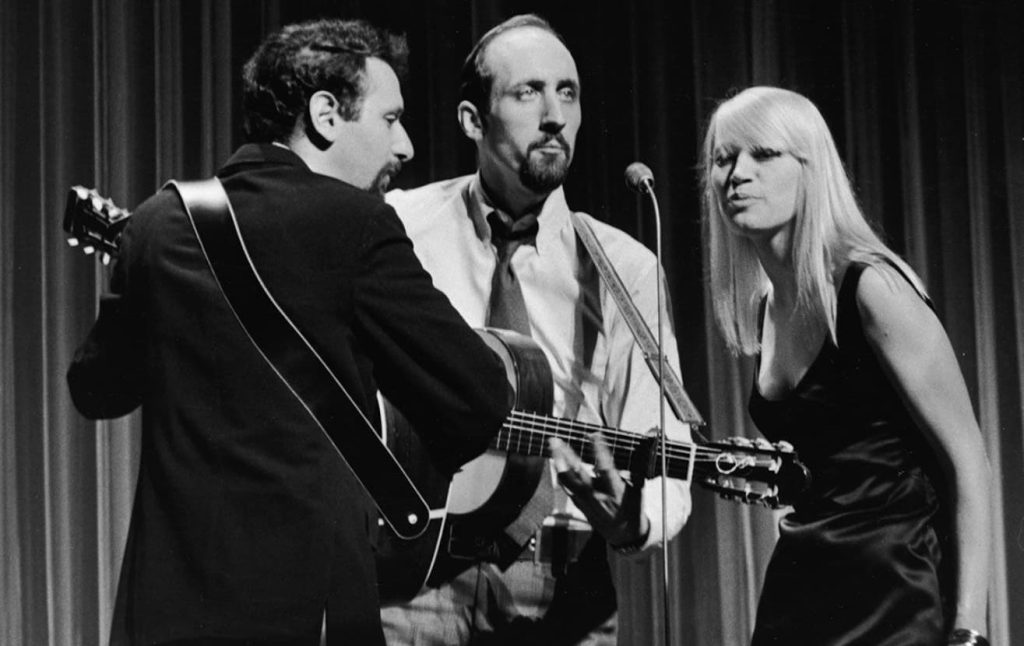
Peter, Paul & Mary and Blowin’ in the Wind Continue to Echo Across Generations
Some songs never lose their ability to speak to the human spirit. Among them is Blowin’ in the Wind, the timeless composition written by Bob Dylan in 1962 and released on The Freewheelin’ Bob Dylan in 1963. Through a series of simple yet profound questions about peace, war, justice, and freedom, the song became one of the defining works of the folk revival. Its unforgettable refrain suggests that the answers to humanity’s greatest struggles are always present, even if they remain difficult to grasp.
The song gained even greater prominence when Peter, Paul & Mary recorded their celebrated version in 1963. Their heartfelt harmonies transformed Dylan’s words into a powerful anthem that reached an even broader audience during a period of social change in the United States. Their interpretation remains one of the most beloved recordings in folk music history and continues to symbolize hope, compassion, and the pursuit of a more just world.
The enduring importance of Blowin’ in the Wind has been recognized through numerous honors. It was inducted into the Grammy Hall of Fame in 1999, and in 2004 it earned the number fourteen position on Rolling Stone magazine’s list of the 500 Greatest Songs of All Time. These achievements reflect not only its artistic excellence but also its lasting cultural significance.
Peter, Paul & Mary became one of the defining voices of American folk music. The trio, made up of Peter Yarrow, Paul Stookey, and Mary Travers, built a remarkable career that spanned nearly five decades. Their music carried forward the tradition of folk artists who used songs to explore social issues, inspired by figures such as Woody Guthrie, Pete Seeger, and The Weavers. Following the passing of Mary Travers in 2009, Peter Yarrow and Paul Stookey continued performing together under their own names, preserving the legacy they had created.
At the heart of the performance was Mary Travers, whose graceful presence and expressive voice gave the trio a distinctive emotional balance. Her warm delivery blended beautifully with the harmonies of Peter and Paul, creating performances filled with sincerity, tenderness, and quiet strength. Her facial expressions and gentle stage presence conveyed a longing for kindness and understanding that perfectly matched the spirit of the music.
One lyric continues to resonate with exceptional force: “How many years can some people exist before they’re allowed to be free?” It remains one of the song’s most unforgettable moments, expressing a universal desire for dignity and equality. Decades after it was first written, the question still carries emotional weight.
More than sixty years after its creation, Blowin’ in the Wind continues to stand as a remarkable reminder that music can inspire reflection, preserve hope, and unite generations through its timeless message of humanity, freedom, and compassion.