
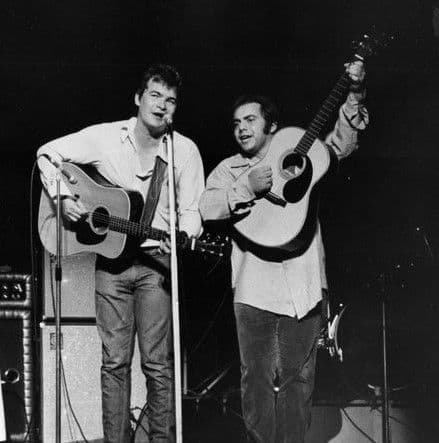
Steve Goodman’s “City of New Orleans” Endures as a Timeless Portrait of America
More than five decades after it was first recorded, Steve Goodman’s “City of New Orleans” remains one of the most cherished songs in American folk music, a work whose influence continues to grow long after its creator’s passing. A recently shared performance of the song has once again highlighted the extraordinary depth of Goodman’s songwriting and the lasting significance of a composition that many regard as one of the great cultural achievements of postwar America. Written by Goodman and first released on his 1971 self titled album, “City of New Orleans” was inspired by a journey aboard the Illinois Central Railroad train of the same name, traveling between Chicago and New Orleans. The song captures the beauty, loneliness, and quiet dignity of rail travel while documenting a way of life that was already beginning to fade from the American landscape.
What has always distinguished the song is its remarkable attention to detail. References to railroad workers, Pullman porters, engineers, and the rhythms of life along the tracks give the lyrics an authenticity that resonates deeply with those familiar with America’s railway heritage. The song does not merely describe a train ride. It preserves a chapter of American history through vivid storytelling and poetic observation. Although the song became a major hit for Arlo Guthrie after he recorded it for his 1972 album Hobo’s Lullaby, many listeners continue to view Goodman’s own performances as the definitive interpretation. His delivery carries an intimacy and sincerity that reflects a songwriter personally connected to every image and emotion contained within the lyrics.
Goodman’s life story adds another layer of meaning to the song’s legacy. Despite battling leukemia for much of his adult life, he maintained a prolific career and became one of the most respected songwriters of his generation. Following his death in 1984, he received a posthumous Grammy Award for Best Country Song when Willie Nelson took “City of New Orleans” to the top of the country charts. Today, the song stands as far more than a folk standard. It is celebrated as a uniquely American work that blends music, poetry, history, and cultural memory into a single enduring narrative. Admirers often place Goodman alongside legendary songwriters whose work helped define the American experience, noting that his contribution extends well beyond commercial success. As new generations continue to discover “City of New Orleans,” the song remains a testament to Steve Goodman’s rare ability to transform an ordinary journey into a universal story. More than fifty years after its creation, its imagery still feels alive, its emotions still ring true, and its place in the American musical canon appears more secure than ever.