
City of New Orleans — a bittersweet portrait of America’s heartbeat, carried by two friends who understood its soul
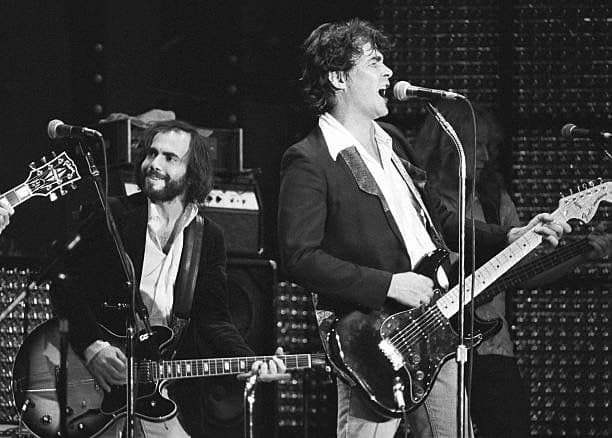
There is a certain warmth that washes over you the moment “City of New Orleans” begins — a warmth woven from rails, small towns rolling past like old photographs, and the quiet poetry of everyday lives. When John Prine and Steve Goodman performed this song together, it felt less like a duet and more like two storytellers sharing a memory etched into the American landscape.
Before anything else, the important facts deserve their place:
- “City of New Orleans” was written in 1970 by Steve Goodman.
- The first major release was Arlo Guthrie’s 1972 recording, which reached No. 18 on the Billboard Hot 100.
- John Prine never released a major charting version, but he performed it often with Goodman — and their live renditions are beloved for their intimacy, humor, and deep affection for the song’s spirit.
- In 1984, Willie Nelson’s cover reached No. 1 on the Billboard Hot Country chart, bringing the song’s legacy full circle.
But the story behind the song is where its heart truly beats. Goodman wrote it after taking the Illinois Central train from Chicago to New Orleans. He wandered through the cars, notebook in hand, absorbing the quiet sadness of fading railroads and the simple heroism of the workers who kept them running. At the time, passenger trains were disappearing, towns were changing, and the steady rhythm of the American Midwest felt like it was slipping into memory.
Goodman brought the song to John Prine first, playing it in a Chicago club, but Prine jokingly brushed him off because he was mid-conversation. So Goodman tried again — this time playing it for Arlo Guthrie, who instantly recognized its brilliance. Yet in the years that followed, the Prine–Goodman performances became legendary, not because they were polished, but because they carried the weight of friendship.
For listeners who have traveled long distances or watched the world change in slow, quiet ways, the song’s meaning runs deep. It is not simply a travel tune; it is a portrait of a country told through the small things — old men in the club car, mothers with children, the gentle clatter of wheels that once carried dreams from one state to another. Through Goodman’s writing and Prine’s weathered voice, the train becomes a symbol of a life’s journey, where everything moves forward yet somehow feels like it’s passing away.
When Prine joins Goodman on stage, something special happens. Their voices are different — Goodman bright and eager, Prine earthy and worn — but together they create a harmony that feels lived-in, like two old friends watching the same sunset from different sides of the porch. They don’t just sing the line “Good morning America, how are ya?” — they mean it. It is a greeting to a country they knew deeply: its humor, its heartbreak, its quiet corners, and its unstoppable forward motion.
And for older listeners, the song stirs something familiar. Perhaps memories of long railroad trips, the distant whistle echoing through small towns, or the era when America still felt wide open and full of promise. Perhaps it evokes the gentle sorrow of watching things fade — businesses closing, people leaving, trains replaced by highways.
What remains is feeling. Kind, nostalgic, steady.
“City of New Orleans” is more than a folk song; it is a tender preservation of a country’s soul, written by a young man wise beyond his years and carried forward by a friend who understood exactly how precious that vision was. Through Prine and Goodman, the journey continues — slow, rhythmic, and filled with grace — reminding us that even as the world changes, some melodies keep moving down the line, waving to us from the windows of memory.