
A Ballad of Quiet Devotion and Western Loneliness: “Darcy Farrow” and the Gentle Tragedy of the American Frontier
Few folk songs capture the stillness of the American West and the fragile tenderness of young love quite like “Darcy Farrow.” Recorded by the Canadian folk duo Ian & Sylvia, the song stands as one of the most hauntingly beautiful ballads to emerge from the North American folk revival of the 1960s. When it appeared on the album Early Morning Rain in 1965, the recording did not storm the pop charts in the way mainstream hits did, yet it quietly found its way into the hearts of folk audiences across the United States and Canada. Over time, “Darcy Farrow” became something of a modern folk standard—performed, recorded, and cherished by countless artists who recognized the song’s rare emotional sincerity.
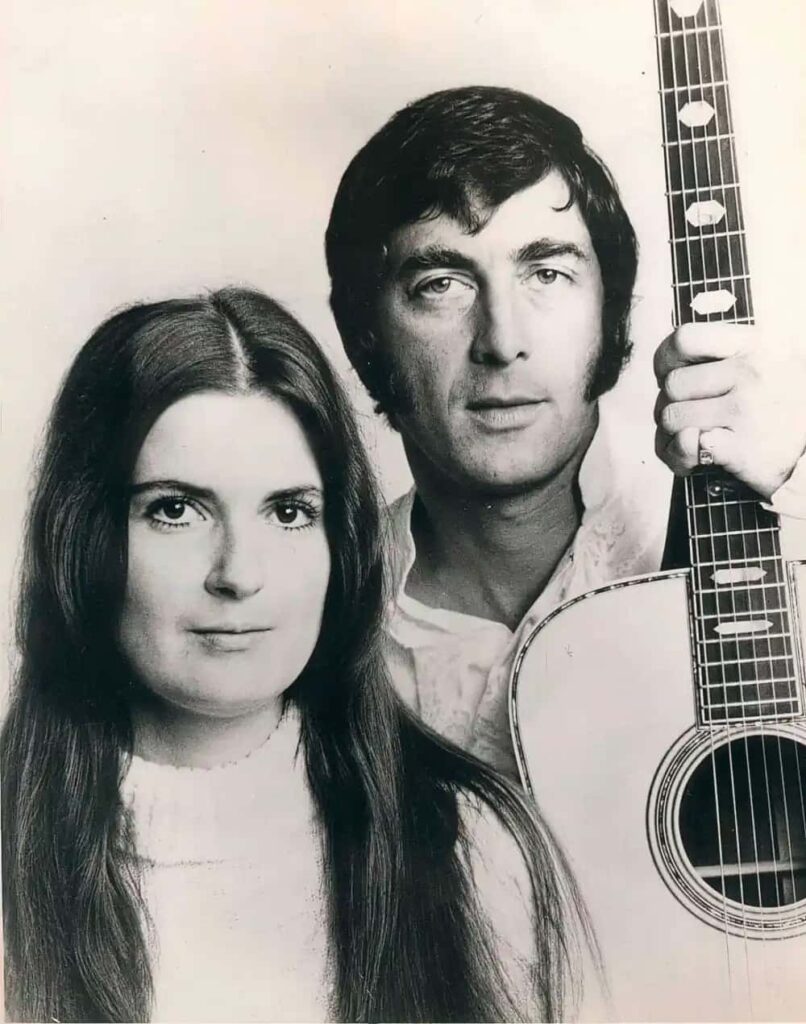
At the center of this story are Ian Tyson and Sylvia Tyson, the married musical partners known to the world as Ian & Sylvia. During the mid-1960s they were among the most respected voices in the folk movement, standing alongside artists such as Bob Dylan, Joan Baez, and Peter, Paul and Mary. Their music bridged traditional folk storytelling and contemporary songwriting, often drawing inspiration from the landscapes and histories of the American West.
But “Darcy Farrow” itself did not originate with the duo. The song was written by Steve Gillette and Tom Campbell, two young songwriters deeply influenced by traditional cowboy ballads and Western storytelling. According to Gillette, the idea for the song came during conversations about real locations in Nevada, particularly the small mining town of Virginia City and the nearby Truckee River Valley. The writers imagined a fictional young woman—Darcy Farrow—whose life and tragic fate would echo the loneliness and quiet hardships of frontier life.
The lyrics unfold like an old campfire story. Darcy Farrow is introduced as a beautiful young woman living in the valley. A young cowboy falls deeply in love with her, and the two plan to marry. Yet fate intervenes. In one of the song’s most poignant moments, Darcy falls to her death from the mountainside—“from the wild hills she vanished away.” The young cowboy, overcome with grief, vows never to love again.
There is something timeless about the way the story is told. The language is simple, almost understated, but the emotional weight is immense. Ian & Sylvia’s recording captures that mood perfectly. Ian Tyson’s calm, steady voice carries the narrative with a quiet dignity, while Sylvia Tyson’s harmony adds warmth and tenderness. The arrangement is spare—primarily acoustic guitar—allowing the story itself to take center stage.
The success of “Darcy Farrow” was not measured by chart positions but by its endurance. Folk clubs across North America embraced the song almost immediately. In time it was recorded by many respected artists, including John Denver, whose version in the early 1970s introduced the ballad to an even wider audience. Denver often spoke of his admiration for the song’s storytelling, and his recording helped ensure that “Darcy Farrow” would live far beyond the folk revival era.
What makes the song so powerful is the way it evokes place. The mention of Virginia City, the Carson Valley, and the surrounding mountains grounds the story in a real landscape. For listeners, those images conjure a vast, quiet West—rolling valleys, cold mountain winds, and small communities where every joy and sorrow is deeply felt.
Yet beneath the Western imagery lies a universal theme: the fragility of happiness. The young cowboy in the song experiences love that feels eternal, only to lose it suddenly and without warning. The grief that follows is not expressed with dramatic outbursts. Instead, it lingers in a quiet promise—he will never love another.
In that restraint lies the song’s deepest emotional power. The tragedy is not shouted; it is remembered. And perhaps that is why “Darcy Farrow” continues to resonate decades after Ian & Sylvia first recorded it in 1965. It reminds us of the kinds of stories that once traveled from voice to voice, from campfire to campfire—stories of love, loss, and the wide open spaces where human lives unfold.
Listening today, the song feels like a faded photograph from another time. The voices of Ian & Sylvia, gentle and unhurried, carry us back to the era when folk music was less about spectacle and more about storytelling. And in the quiet echo of that melody, “Darcy Farrow” remains exactly what it was meant to be: a simple ballad, filled with beauty, sorrow, and the enduring memory of a love that ended too soon.