
Three Dog Night’s “Black and White” Remains a Powerful Anthem of Unity and Hope
Few songs from the early 1970s continue to resonate with such clarity and purpose as Black and White by Three Dog Night. Captured in a performance that reflects both the spirit of the era and the enduring appeal of the band, the song stands as a reminder of music’s ability to transcend divisions and celebrate common humanity.
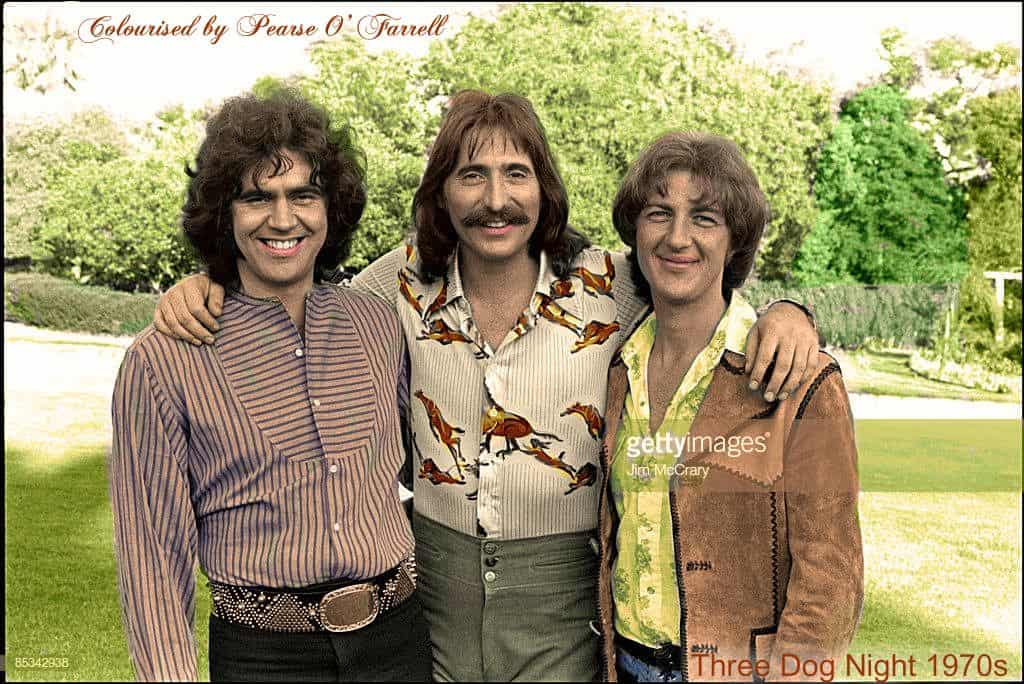
By the time Black and White became a hit, Three Dog Night had already established itself as one of America’s most successful rock groups. Formed in 1968 by Danny Hutton, the band was built around a distinctive concept: three lead singers who could also blend their voices in rich harmonies. Alongside Hutton, Cory Wells and Chuck Negron helped create a sound that would earn the group an extraordinary run of success throughout the late 1960s and early 1970s.
Rather than focusing exclusively on their own compositions, Three Dog Night developed a reputation for identifying exceptional songs from talented writers and transforming them into major hits. Their approach proved remarkably successful, leading to fourteen gold albums, nine gold singles, and sales exceeding forty million records worldwide.
The performance of Black and White captures many of the qualities that made the band so beloved. Strong vocal delivery, tight harmonies, and an uplifting message combine to create a recording that remains relevant decades after its release. The song’s central theme is simple yet profound: people are fundamentally equal regardless of race or background.
That message continues to carry emotional weight. The performance evokes memories of a period when optimism, community, and shared values were often expressed through popular music. There is a sense of warmth and inclusiveness that runs throughout the song, reflecting a vision of society built on mutual respect and understanding.
Three Dog Night’s history also adds depth to the significance of the recording. After years of relentless touring and unprecedented success, the group stepped away from the spotlight in the mid 1970s rather than prolonging its career for commercial gain. As Cory Wells later explained, the members wanted to leave with dignity and avoid exploiting their audience. Their eventual return allowed new generations to experience the music while preserving the integrity that had defined the band from the beginning.
Today, Black and White remains more than a classic pop rock hit. It is a timeless statement about unity, acceptance, and the belief that human beings share far more similarities than differences. In an era still marked by social divisions, the song’s message feels every bit as meaningful as it did when Three Dog Night first brought it to the world.