
A Daughter’s Tribute to a Song That Became the Sound of America’s Lonely Roads
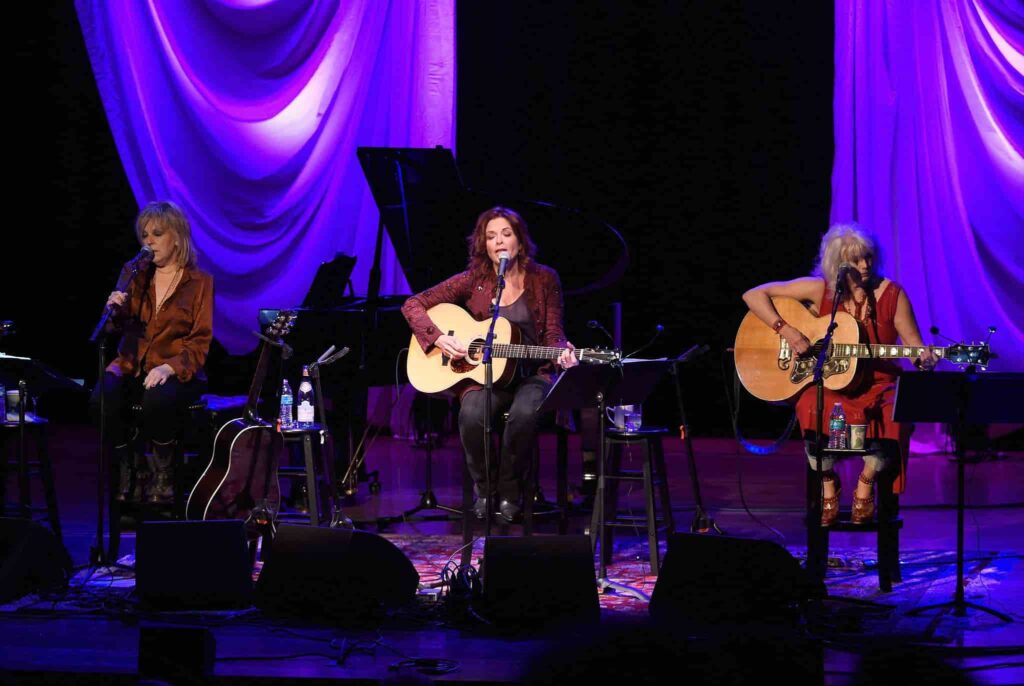
When Rosanne Cash stood beneath the lights of the 1996 Kennedy Center Honors and joined a gathering of legendary voices to perform “Folsom Prison Blues Medley” in tribute to her father, Johnny Cash, it became far more than a ceremonial performance. It felt like a family memory unfolding in public — part celebration, part reckoning, and part farewell to an era when country music still carried the dust of railroad tracks, prison walls, and hard-lived American truths.
Originally written and recorded by Johnny Cash in 1955 for his debut album Johnny Cash with His Hot and Blue Guitar!, “Folsom Prison Blues” was already legendary long before that emotional 1996 tribute. The song reached No. 4 on the Billboard country chart during its original release, but its true explosion came later with the immortal live version from At Folsom Prison in 1968. That recording climbed to No. 1 on the country chart and crossed into the pop world, helping transform Cash from respected country singer into a towering American cultural figure.
By the time the Kennedy Center Honors arrived in 1996, Johnny Cash was no longer merely a country star. He had become something larger — a symbol of endurance, rebellion, faith, regret, and redemption. His black clothing, deep baritone voice, and unwavering empathy for society’s forgotten people had given him the nickname “The Man in Black,” but beneath the image was a deeply complicated man who carried both tenderness and darkness in equal measure.
That is precisely why the tribute struck such a powerful emotional chord.
Watching Rosanne Cash sing her father’s music that evening carried a weight impossible to manufacture. She was not simply honoring a famous performer. She was revisiting the soundtrack of her own life. There was something hauntingly intimate in the way she approached the song — not with theatrical grandeur, but with the quiet understanding of someone who had lived inside the echoes of that voice since childhood.
The performance itself blended pieces of “Folsom Prison Blues” with the spirit of Johnny Cash’s broader musical legacy. Surrounded by guest performers, Rosanne helped transform the song from a prison ballad into a meditation on memory, consequence, and American identity. The arrangement retained the famous locomotive rhythm — that unmistakable “boom-chicka-boom” sound pioneered by Cash and guitarist Luther Perkins — but there was also a reflective sadness lingering beneath it, as though the years themselves were singing along.
And perhaps no line in country music history has carried more enduring shock than:
“I shot a man in Reno just to watch him die.”
Even decades later, the lyric still lands with unsettling force. Yet Johnny Cash never sang it with celebration. That line represented alienation, guilt, and emotional emptiness. It was the confession of a narrator already spiritually imprisoned long before the prison bars appeared. Cash understood something many songwriters only imitate: that darkness in music only matters when it reveals humanity.
Part of the reason “Folsom Prison Blues” became timeless was because it emerged during a period when country music still spoke directly to working-class loneliness. In the 1950s and 1960s, America was changing rapidly — highways stretching farther, factories growing louder, families moving more often, and emotional isolation quietly spreading beneath postwar optimism. Cash’s songs gave voice to people who often felt invisible.
The story behind the song is equally fascinating. Johnny Cash reportedly drew inspiration after hearing Gordon Jenkins’ 1953 song “Crescent City Blues.” The melody and structure influenced Cash enough that legal disputes later resulted in a settlement and songwriting credit acknowledgment. Yet Cash transformed the concept entirely. What Jenkins delivered as melancholy sophistication, Cash turned into raw American folklore.
The 1968 live recording at Folsom State Prison remains one of the most important live albums ever made. Cash insisted on performing for inmates because he genuinely believed music should reach those abandoned by society. He knew addiction, shame, and spiritual struggle personally. That authenticity could not be faked, and prisoners immediately recognized it. When the audience erupted in cheers during the famous Reno lyric, the moment captured a truth rarely admitted openly in popular entertainment: people sometimes connect most deeply through shared brokenness.
By 1996, hearing the song performed by Rosanne and the assembled guests added another layer entirely — legacy. It reminded audiences that great songs do not belong to one decade. They pass from parent to child, from vinyl records to memory, from old television broadcasts to late-night reflections decades later.
The tribute also arrived during an unexpected late-career renaissance for Johnny Cash. His collaboration with producer Rick Rubin on the American Recordings series had introduced him to younger listeners while reconnecting older audiences to the emotional gravity of his voice. Cash no longer needed commercial hits to matter. Time itself had become part of the music.
That is why the 1996 Kennedy Center Honors performance remains so moving today. It captured a rare moment where music, family history, and national memory all met in the same room. One could hear not only the song itself, but the years behind it — the tours, the mistakes, the redemption, the aging voice, the surviving daughter, and the enduring shadow of American country music’s most human storyteller.
And perhaps that is the lasting power of “Folsom Prison Blues.” It was never truly about prison walls. It was about longing for freedom while carrying the heavy knowledge that some chains are built inside the heart itself.