
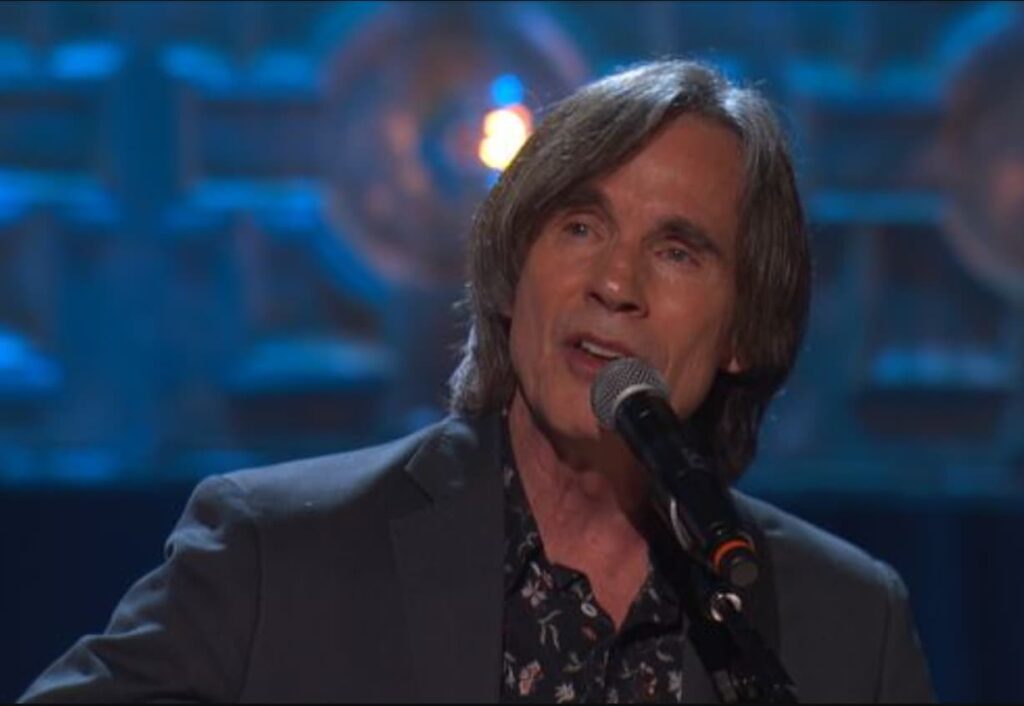
Fountain of Sorrow — when love becomes memory, and memory quietly reshapes the soul
There are songs that tell stories, and then there are songs that remember. “Fountain of Sorrow” by Jackson Browne belongs firmly to the latter. Released in 1974 on the album Late for the Sky, the song reached No. 21 on the Billboard Hot 100, while the album itself climbed to No. 14 on the Billboard 200. These numbers matter, but only as markers in time. What has truly endured is the song’s emotional weight — a slow, reflective meditation on love that has slipped into memory, leaving behind both wisdom and regret.
From its opening lines, “Fountain of Sorrow” signals that this is not a song about anger or betrayal, but about the quiet aftermath of love. Browne does not accuse. He observes. He looks back with a calm sadness, the kind that comes only after distance has softened the sharp edges of loss. The “fountain” in the title is not dramatic heartbreak; it is the steady, unending flow of remembrance — sorrow that doesn’t overwhelm, but never quite stops.
The song was written during a period when Jackson Browne was emerging as one of the most introspective voices of the early 1970s singer-songwriter movement. By the time Late for the Sky was released, Browne had already established himself as a chronicler of inner lives — people standing at emotional crossroads, trying to understand what time had taken from them and what it had quietly given in return. “Fountain of Sorrow” is perhaps the purest distillation of that gift.
Musically, the song unfolds with patience. There is no rush, no obvious hook designed to seize attention. Instead, the melody drifts like thought itself, carried by gentle acoustic textures and Browne’s measured, reflective voice. It feels as though the song is thinking out loud, allowing each image to surface naturally. This pacing mirrors the emotional content: reflection takes time, and Browne gives it space.
Lyrically, the song is filled with images that resonate deeply — mirrors, photographs, dreams, the passage of years. When Browne sings about “the only thing that’s left us now is the memories we share,” he is not lamenting their existence; he is acknowledging their power. Memory becomes both comfort and burden. It keeps love alive, but it also prevents complete release. This tension runs through the entire song, making it profoundly relatable to anyone who has ever looked back and realized that what once felt permanent was, in truth, fragile.
There is also a striking sense of emotional maturity here. Browne does not portray himself as innocent or wronged. Instead, he recognizes how both people changed, how love evolved — and perhaps dissolved — under the quiet pressure of time. This refusal to simplify the past gives the song its depth. “Fountain of Sorrow” understands that love rarely ends in a single moment; it fades, shifts, transforms, leaving behind echoes that linger longer than expected.
Within the context of Late for the Sky, the song feels central. The album as a whole explores disillusionment, longing, and the loss of idealism — themes that resonated deeply with listeners navigating adulthood after the optimism of the 1960s. “Fountain of Sorrow” stands as one of its emotional pillars, a moment where personal reflection becomes universal truth.
What makes the song especially powerful today is how gently it speaks. There is no attempt to sound wise or profound. Browne simply tells the truth as he sees it, trusting that honesty will find its way to the listener. And it does. Over the years, the song has grown into a companion piece for reflection — something to return to during quiet evenings, when memories surface uninvited and demand to be felt rather than dismissed.