
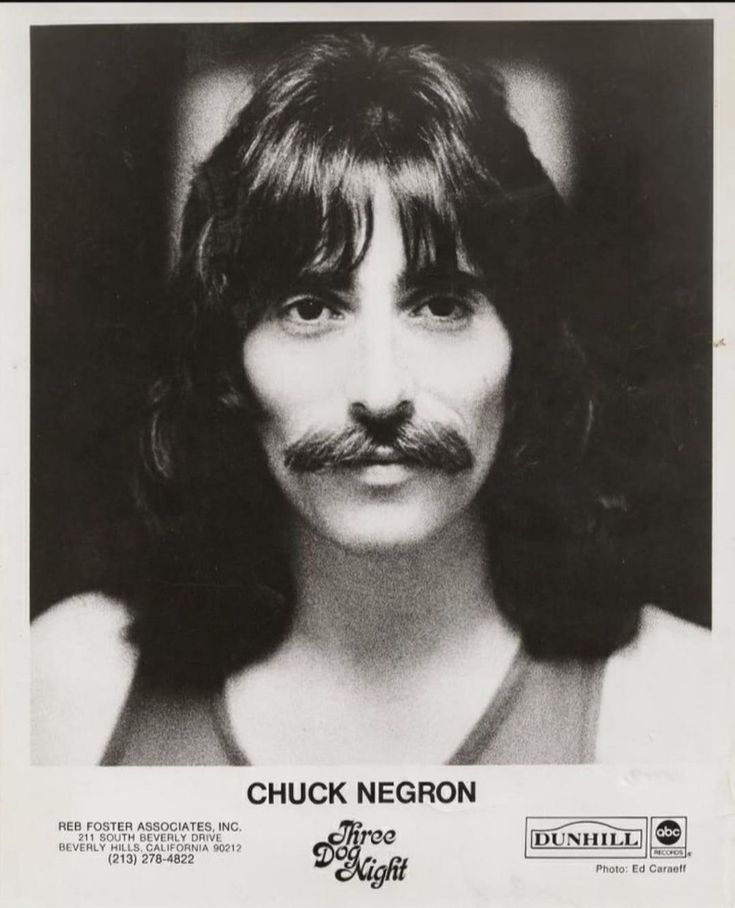
A Sacred Voice in a Timeless Carol: Chuck Negron’s Reverent Interpretation of “O Holy Night”
Few Christmas hymns carry the emotional gravity and spiritual grandeur of “O Holy Night.” When Chuck Negron, best known as the powerful lead voice of Three Dog Night, lends his unmistakable tenor to this sacred classic, the result is not simply another holiday recording—it becomes a deeply reflective performance that bridges the worlds of rock-era nostalgia and traditional reverence. Known for his soaring vocal presence on hits like “Joy to the World” and “One,” Negron brings a lifetime of musical experience and personal redemption into his interpretation of this beloved hymn.
Originally composed in 1847 by Adolphe Adam, with lyrics derived from the French poem “Minuit, chrétiens” by Placide Cappeau, “O Holy Night” has long been regarded as one of the most technically demanding and emotionally stirring Christmas songs ever written. The English lyrics most widely sung today were translated by John Sullivan Dwight in the mid-19th century. Over the decades, the hymn has been performed by a remarkable range of artists—from operatic voices to pop legends—yet every interpretation inevitably carries the singer’s own spirit. In the case of Chuck Negron, that spirit is unmistakably shaped by both triumph and hardship.
Negron’s version appeared on his holiday recordings during his later solo career, long after his era with Three Dog Night, the group that dominated American radio during the late 1960s and early 1970s. Although “O Holy Night” itself is a traditional hymn and therefore does not have a definitive “chart debut” in the modern sense, Negron’s recording belongs to a lineage of holiday interpretations that continue to circulate each season across radio playlists and digital platforms. The hymn itself has charted multiple times historically when recorded by major artists—for instance, Celine Dion’s 1998 recording gained significant seasonal airplay and entered holiday charts in North America. But Negron’s rendition stands apart not because of chart placement, but because of the sincerity of its delivery.
To fully appreciate Negron singing “O Holy Night,” one must remember the arc of his life story. As the principal vocalist on several Three Dog Night classics—including “Joy to the World,” which reached No. 1 on the Billboard Hot 100 in 1971—Negron experienced enormous success at a young age. Yet the pressures of fame led him through a long and painful struggle with addiction. After eventually overcoming those personal battles, Negron devoted much of his later career not only to music but also to sharing a message of hope and recovery.
This background lends a profound emotional resonance to his interpretation of “O Holy Night.” The hymn itself speaks of redemption, of a weary world rejoicing at the arrival of hope. Lines such as “A thrill of hope, the weary world rejoices” seem almost autobiographical when sung by someone who has lived through both the dazzling lights of fame and the darkness of personal struggle. In Negron’s voice, these words do not feel ceremonial or distant—they feel lived.
Musically, Negron approaches the song with the kind of dynamic control that made him famous decades earlier. The verses are delivered with restraint, allowing the narrative of the Nativity to unfold gently. But when the melody climbs toward the climactic declaration—“Fall on your knees!”—his voice expands with the same dramatic intensity that once filled arenas during Three Dog Night’s peak touring years. It is a reminder that great vocalists do not lose their power with time; they simply learn how to channel it with greater purpose.
Another remarkable aspect of Negron’s version is its simplicity. Rather than burying the hymn under elaborate production, the arrangement allows space for the melody to breathe. The focus remains firmly on the vocal line and the emotional truth behind it. That choice mirrors the song’s original spirit: a moment of quiet awe before something larger than human experience.
For listeners who grew up hearing Negron dominate the airwaves with rock classics, hearing him sing “O Holy Night” can feel like opening an old photograph album—familiar yet newly meaningful. The voice may carry more depth now, perhaps a hint of age around the edges, but that only strengthens the message. The performance feels less like a showcase and more like a confession of gratitude.
In the end, Chuck Negron’s interpretation of “O Holy Night” reminds us why certain songs endure across generations. They survive not merely because of their melodies, but because each new voice brings another human story into the music. And when that voice belongs to someone who has walked through darkness and returned with wisdom, the hymn’s message of hope shines even brighter.