
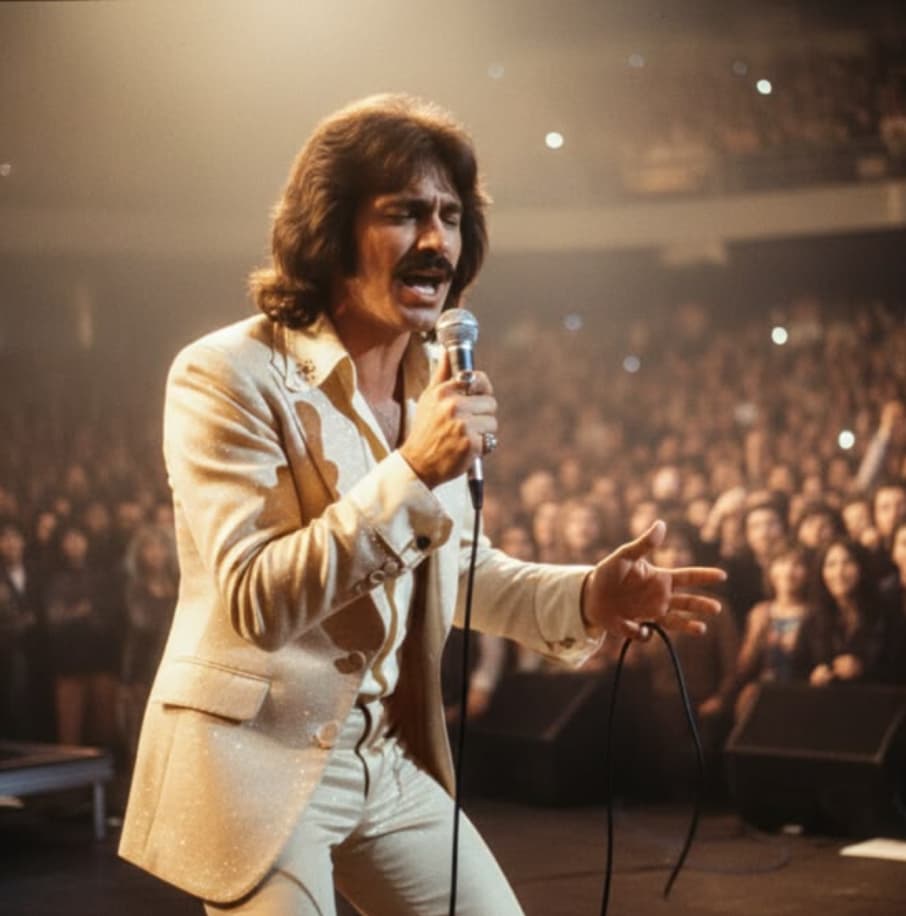
A Tender Prayer for a Better World – When “Grown-Up Christmas List” Becomes a Quiet Wish from the Heart
When Chuck Negron, once the soaring tenor voice of Three Dog Night, recorded “Grown-Up Christmas List”, he was not merely covering a holiday song. He was, in many ways, reclaiming a prayer. Originally written by David Foster and Linda Thompson Jenner, the song first appeared in 1990 and was recorded by Natalie Cole for the album Unforgettable… with Love sessions period (though it was issued separately as a Christmas single). Natalie Cole’s version reached No. 7 on the Billboard Adult Contemporary chart in 1991, establishing the song as a modern Christmas standard. Over the years, it has been interpreted by artists such as Amy Grant, Monica, and Michael Bublé, each bringing a different emotional shade to its quiet plea for peace.
But when Chuck Negron approached the song decades later, it carried a deeper resonance. Known for powerhouse hits like “Joy to the World” and “One”, both of which topped the Billboard Hot 100 in the early 1970s with Three Dog Night, Negron’s voice had once symbolized youthful energy, chart dominance, and radio ubiquity. His return to a contemplative Christmas ballad revealed something else entirely: vulnerability, reflection, and a man who had lived long enough to understand the weight of the lyrics.
The song itself was born from a simple but profound idea. Instead of asking for toys or material gifts, the narrator makes a “grown-up” list: no more lives torn apart, that wars would never start, and time would heal all hearts. Written at the end of the Cold War era, it reflected a world cautiously hopeful yet painfully aware of division. David Foster’s elegant melody, built on sweeping orchestration and restrained crescendos, allowed the lyric’s sincerity to shine without sentimentality. Linda Thompson’s words are disarmingly direct. They read almost like a child’s letter—until one realizes the requests are impossibly large.
Chuck Negron’s interpretation stands apart because of his life story. After struggling publicly with addiction and personal turmoil in the late 1970s and 1980s, he experienced a profound personal transformation. By the time he recorded “Grown-Up Christmas List,” he was singing not from the peak of fame, but from the perspective of redemption. That biographical arc matters. When he sings, “This is my grown-up Christmas list,” it does not sound like a seasonal refrain—it feels like testimony.
Musically, Negron’s rendition leans into warmth rather than grandeur. Unlike the pristine pop polish of Natalie Cole’s original, Negron’s voice carries a slightly weathered texture, a timbre that suits the song’s longing. His phrasing is less ornate, more conversational. There is space between the lines, as if he is considering each word carefully. For listeners who remember the explosive choruses of Three Dog Night, hearing him deliver a restrained, almost prayerful performance can be unexpectedly moving.
The broader cultural journey of “Grown-Up Christmas List” is also worth noting. Though never a No. 1 pop hit, it became a perennial favorite on Adult Contemporary and holiday radio formats. It has been included in numerous Christmas compilations and remains one of David Foster’s most enduring compositions. Unlike novelty holiday songs, it does not rely on nostalgia for snow or Santa; instead, it addresses something universal—the enduring human desire for peace, healing, and unity.
In retrospect, the song feels timeless because the world it describes has never quite achieved the peace it requests. Each generation hears it anew, recognizing its relevance. And perhaps that is why Chuck Negron’s version resonates so deeply. Having once stood at the top of the charts, he now stands as a witness to time. His performance carries the understanding that some wishes remain unfulfilled—but are still worth voicing.
There is something profoundly moving about hearing a voice once associated with rock triumph turn toward quiet hope. It reminds us that music is not only about chart positions or gold records, though those matter and shape legacies. It is also about the seasons of life—about how a song can evolve as we do.
In the end, “Grown-Up Christmas List” is less about Christmas morning and more about conscience. And in Chuck Negron’s hands, it becomes not just a holiday standard, but a deeply personal statement—one that lingers long after the decorations are put away, echoing like a gentle, persistent prayer for a better world.