
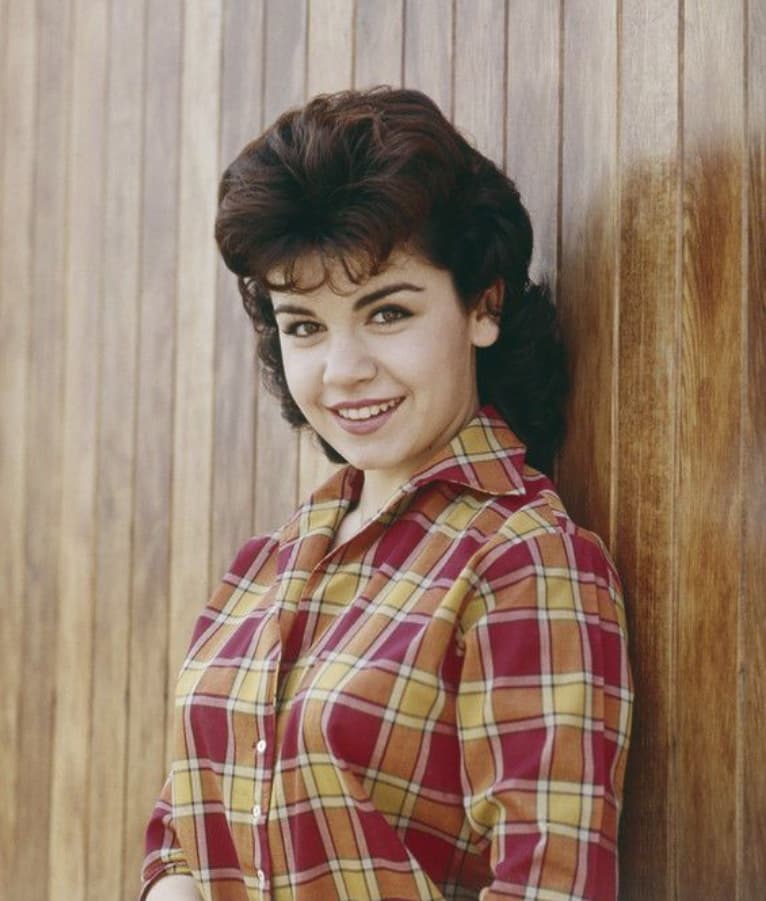
A sunlit fantasy of love and innocence wrapped in Hawaiian dreams, where Pineapple Princess becomes a playful escape from everyday longing
Released in 1960, Pineapple Princess stands as one of the most charming and enduring entries in the early pop career of Annette Funicello, a performer who helped define the sound and innocence of American teen pop in the late 1950s and early 1960s. At the time of its release, the single climbed to a respectable No. 11 on the Billboard Hot 100, marking one of her most commercially successful recordings and solidifying her presence beyond television fame into the world of mainstream music.
There is something unmistakably gentle about Pineapple Princess—a song that feels like a postcard from a world that never truly existed, yet somehow feels familiar. Written during a period when American popular culture was captivated by the romance of Hawaii and the broader “exotica” trend, the song captures a stylized, idealized vision of island life. It is not realism that gives the track its lasting appeal, but rather its carefully constructed innocence: a musical daydream painted in bright, simple colors.
At its core, the song tells the story of a young girl imagined as the “pineapple princess,” a figure of sweetness, admiration, and lighthearted romance. The lyrics, whimsical and uncomplicated, reflect a cultural moment when pop music often leaned toward innocence rather than complexity. There is no cynicism in its storytelling—only the soft glow of admiration and youthful affection. In many ways, Pineapple Princess belongs to a musical world where emotions were presented directly, without irony, as if love itself could be as simple as a melody carried by ocean breeze.
The production mirrors this spirit perfectly. The arrangement is bright and buoyant, with gentle percussion, choral backing, and a ukulele-inspired rhythm that evokes an imagined Hawaii rather than a documentary depiction of it. It is music designed not to challenge, but to comfort—to invite listeners into a space where time feels slower and life feels lighter. This aesthetic was deeply tied to the early 1960s pop landscape, when labels and producers carefully crafted songs that balanced radio-friendly simplicity with emotional accessibility.
Annette Funicello, already widely known as one of the original Mickey Mouse Club performers, brought a unique authenticity to the song. Her voice does not attempt vocal grandeur or technical complexity; instead, it leans into warmth, clarity, and sincerity. That vocal approach is precisely what allowed Pineapple Princess to resonate with audiences. It sounded honest, even when the world it described was a fantasy. In that contrast lies much of its enduring charm.
The song was part of her broader association with the so-called “beach party” and Hawaiian-themed pop wave that would soon define much of her early 1960s image. Alongside tracks like “Tall Paul” and later film appearances, Pineapple Princess helped shape an identity rooted in carefree youth, sunlit settings, and romantic innocence. Yet unlike many novelty hits of the era, this song never feels disposable. Instead, it carries a soft emotional weight—the sense that it is preserving a moment in cultural history when optimism in popular music felt almost unguarded.
Listening today, there is a subtle melancholy beneath its brightness. It is the awareness that such simplicity belongs to a different era of pop storytelling, one less concerned with complexity and more devoted to feeling. That is perhaps why Pineapple Princess continues to echo through time—not as a groundbreaking musical innovation, but as a delicate reminder of how music once allowed imagination and innocence to take center stage without apology.
In the end, Pineapple Princess is less about pineapples, or princesses, or even Hawaii itself. It is about a moment in music history when a song could be small in scope yet vast in emotional resonance—when three minutes of melody could open a window into a brighter, softer world, and invite listeners to linger there just a little longer than reality ever allowed.