
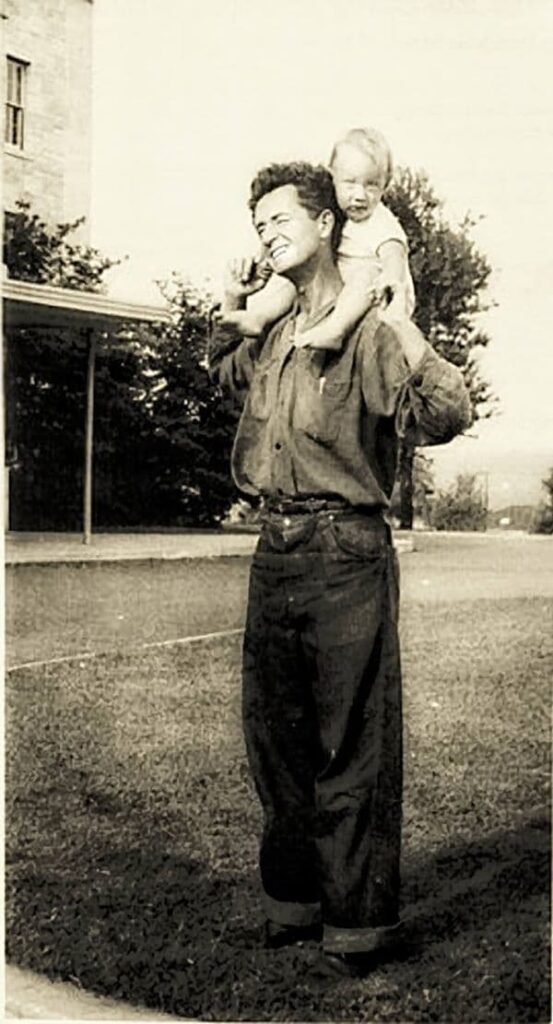
A song that quietly redefined patriotism—“This Land Is Your Land” turns from simple folk melody into a profound meditation on belonging, equality, and the American promise.
When Woody Guthrie first wrote “This Land Is Your Land” in 1940, it was not intended as the gentle, almost hymn-like anthem many later came to know. Instead, it was a response—almost a rebuttal—to the overwhelming popularity of God Bless America, which Guthrie felt painted an overly rosy picture of a nation still struggling through the shadows of the Great Depression. Originally titled “God Blessed America for Me,” the song carried sharper verses—ones that would later be softened or omitted in mainstream recordings.
The version that reached a wider audience came years later, recorded in 1944, though it wouldn’t achieve significant chart recognition in the conventional sense. In fact, like many folk standards of its time, “This Land Is Your Land” did not debut on major charts such as the Billboard Hot 100, which only began in 1958. Its success was measured differently—through oral tradition, classroom sing-alongs, and the voices of countless artists who adopted it as part of the American musical fabric. By the time Arlo Guthrie, Woody’s son, began performing it during the folk revival of the 1960s, the song had already become something larger than a recording—it had become a shared inheritance.
Musically, the song is deceptively simple. Its melody borrows from a Carter Family gospel tune, creating a structure that feels immediately familiar, even to first-time listeners. That simplicity is part of its genius. Guthrie understood that a song meant for the people had to be easy to carry—something one could hum while walking a dusty road or sing among friends without accompaniment. Yet beneath that accessible surface lies a lyrical depth that continues to resonate. Lines about “ribbons of highway” and “endless skyway” evoke a sweeping, almost cinematic vision of America, while the lesser-known verses introduce a more sobering reality—private property signs, hungry people in relief lines, and the quiet question of who truly owns the land.
There is a quiet tension at the heart of “This Land Is Your Land.” On one hand, it celebrates unity and shared identity; on the other, it challenges the listener to consider the inequalities that undermine that ideal. This duality is what gives the song its enduring power. It does not shout its protest—it whispers it, gently but persistently, inviting reflection rather than confrontation.
When Arlo Guthrie performed the song at events like the 1969 Woodstock festival, it took on new meaning for a generation grappling with war, civil rights, and social upheaval. Yet the core message remained intact. Whether sung in a classroom, at a rally, or around a campfire, the song continued to bridge divides, offering a vision of inclusivity that felt both timeless and urgently relevant.
Over the decades, countless artists—from Pete Seeger to Bruce Springsteen—have interpreted “This Land Is Your Land”, each bringing their own nuance while preserving its essential spirit. And perhaps that is the song’s greatest achievement: it belongs to no single voice, yet it speaks through all of them.
Listening to it today, one might be struck not by its age, but by its quiet persistence. It feels less like a relic of a bygone era and more like a conversation that never quite ended. There is something deeply human in that—this idea that a song, simple as it may seem, can carry within it the weight of a nation’s hopes and contradictions.
In the end, “This Land Is Your Land” is not just about geography. It is about dignity, about the right to belong, and about the fragile, enduring belief that the land beneath our feet is meant to be shared—not just in ownership, but in spirit.
Video
https://www.youtube.com/watch?v=bphP7Hh_gxU&list=RDbphP7Hh_gxU&start_radio=1