
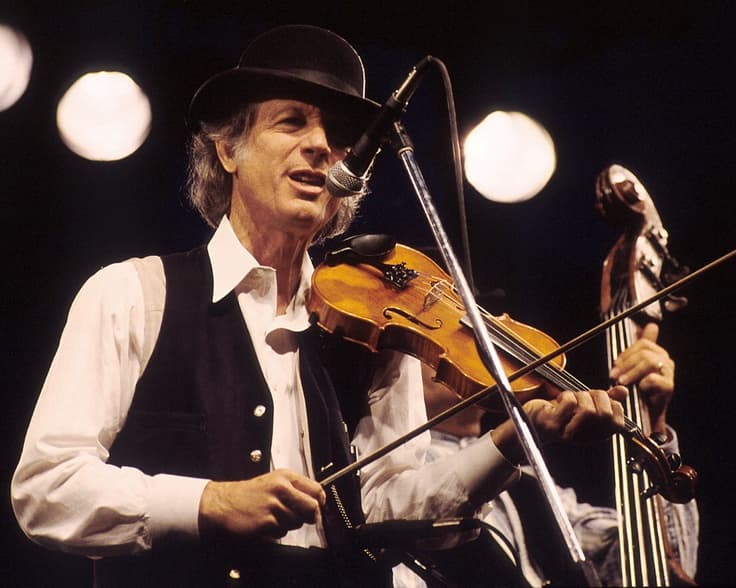
A quiet farewell wrapped in grace — a song about love, distance, and the dignity of letting go
When “This Eve Of Parting” first reached listeners in 1967, it did not arrive with the thunder of a chart-topping hit, nor did it storm the upper reaches of the Billboard Hot 100. In fact, it remained largely outside the mainstream charts, living instead in a more intimate space—one reserved for those who listened closely, who valued the gentle storytelling of a songwriter rather than the spectacle of a pop sensation. Yet, in the world of folk and country-inflected songwriting, John Hartford was already carving out a reputation that would soon be impossible to ignore.
Released on his album Earthwords & Music, “This Eve Of Parting” stands as an early testament to Hartford’s singular voice—a voice that would later bring him widespread recognition with “Gentle On My Mind”, a song immortalized by Glen Campbell. But before the accolades, before the awards, there was this: a fragile, contemplative meditation on goodbye.
What makes John Hartford such a fascinating figure is not just his ability to write melodies, but his gift for capturing emotional nuance. In “This Eve Of Parting”, he avoids melodrama entirely. There are no grand declarations, no desperate pleas. Instead, the song unfolds like a quiet conversation at dusk, where both parties already understand what must happen, even if neither wishes to say it aloud.
The story behind the song is less about a specific documented event and more about the emotional landscape Hartford inhabited at the time. In the mid-1960s, he was a young songwriter navigating the uncertainties of both career and personal life. Folk music was undergoing a transformation—artists like Bob Dylan were electrifying the genre, while traditionalists clung to its acoustic roots. Hartford stood somewhere in between, absorbing influences yet remaining distinctly himself. It’s within this atmosphere of transition—both cultural and personal—that “This Eve Of Parting” seems to have been born.
Lyrically, the song reflects a mature understanding of separation. It does not frame parting as failure, but as an inevitable chapter in the story of two lives that once moved together. There is a sense of acceptance that feels almost philosophical. Hartford seems to suggest that love does not lose its value simply because it cannot continue. On the contrary, it gains a kind of quiet dignity.
Musically, the arrangement is understated—true to Hartford’s style. The gentle acoustic instrumentation allows the lyrics to breathe, creating space for reflection. There’s a subtle melancholy woven into the melody, but it never overwhelms. Instead, it lingers, like the last light of evening fading into night.
What gives “This Eve Of Parting” its enduring power is precisely this restraint. In an era when many songs sought to capture attention through intensity, Hartford chose subtlety. He trusted the listener to meet him halfway, to sit with the silence between the notes, to feel the weight of what is left unsaid.
For those who return to the song years later, it often carries a different resonance. What once may have sounded like a simple farewell begins to reveal deeper layers—memories of roads taken, of people who drifted away, of moments that could not be held onto. Hartford does not tell you how to feel; he simply opens a door and allows you to step through it with your own memories in hand.
In the broader arc of John Hartford’s career, “This Eve Of Parting” may not be the song that defined him publicly. But artistically, it is essential. It shows us the roots of his songwriting philosophy: honesty over ornamentation, emotion over performance.
And perhaps that is why the song endures—not as a relic of its time, but as a quiet companion for anyone who has ever stood at the edge of a goodbye, watching the light fade, knowing that some part of life is about to slip gently into the past.