
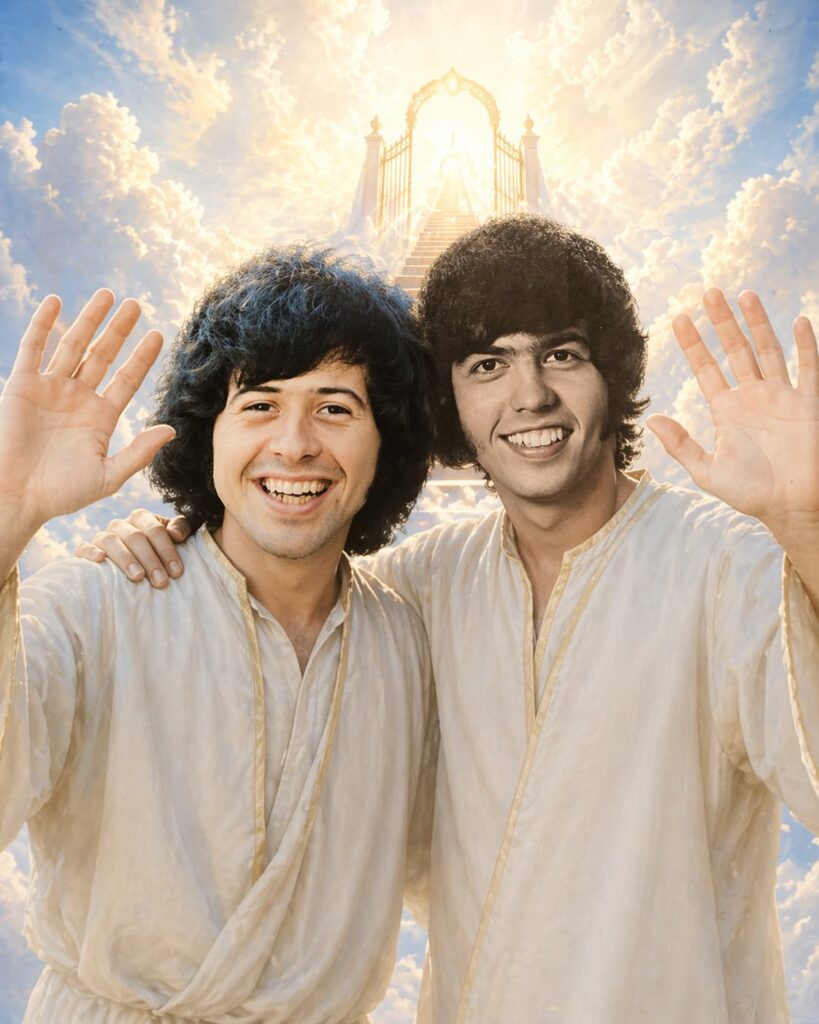
A Life Measured in Love, Not Time
“It’s the last chapter.” The video opens with a quiet, almost poetic reflection on endings—yet what follows is not simply a farewell, but a story of resilience, purpose, and a life that refused to be defined by illness. It tells the story of Alan Osmond, the eldest of The Osmonds, who passed away at the age of 76 after a nearly 40-year battle with multiple sclerosis.
Rather than framing his passing as a loss alone, the video paints it as the closing of a meaningful chapter—one filled with love, creativity, and unwavering dedication to others. A touching tribute from his brother, Merrill Osmond, emphasizes that Alan’s life was “not measured in years, but in love, sacrifice, and purpose.” This sentiment becomes the emotional core of the video, reminding viewers that legacy is not about duration, but depth.
Through archival clips and personal reflections, Alan himself speaks candidly about his journey. Diagnosed with a progressive form of MS, he describes how the illness crept slowly into his life—first noticeable during performances, when his fingers could no longer move as swiftly across instruments like the trumpet. What began as subtle changes gradually became a defining challenge. Yet remarkably, Alan never succumbed to bitterness. He admits he rarely asked, “Why me?” Instead, he reframed his condition as an opportunity to grow.
Before his diagnosis, Alan lived a life full of energy and physical strength—engaging in martial arts, even sparring with Chuck Norris, and serving in the military. The contrast between that vigorous past and his later limitations could have been devastating. But the video highlights how he chose a different path: one of acceptance, patience, and emotional evolution. He saw his illness not as a punishment, but as a teacher.
“There’s a lot of joy that comes in serving others,” he ասում at one point—a line that resonates deeply throughout the video. Even as his physical abilities declined, his commitment to giving back only grew stronger. He speaks of dedicating what he could no longer do for himself to helping others, transforming personal hardship into a source of compassion.
Music, too, remains a subtle but powerful presence in the narrative. Snippets of lyrics and performances echo themes of unity and hope: “Put away your tears… as long as we’re together, bring on tomorrow.” These lines reinforce the idea that even in farewell, there is continuity—through family, through memory, and through the values he embodied.
In the final moments, the video returns to Alan’s defining mantra: “I may have MS, but MS does not have me.” It is a statement of defiance, but also of identity. He refused to let illness dictate who he was. Instead, he chose to be remembered as a man of faith, kindness, and enduring strength.
Ultimately, this is not just a story about death. It is about how to live—with grace, with purpose, and with an open heart, even in the face of life’s most difficult trials.