
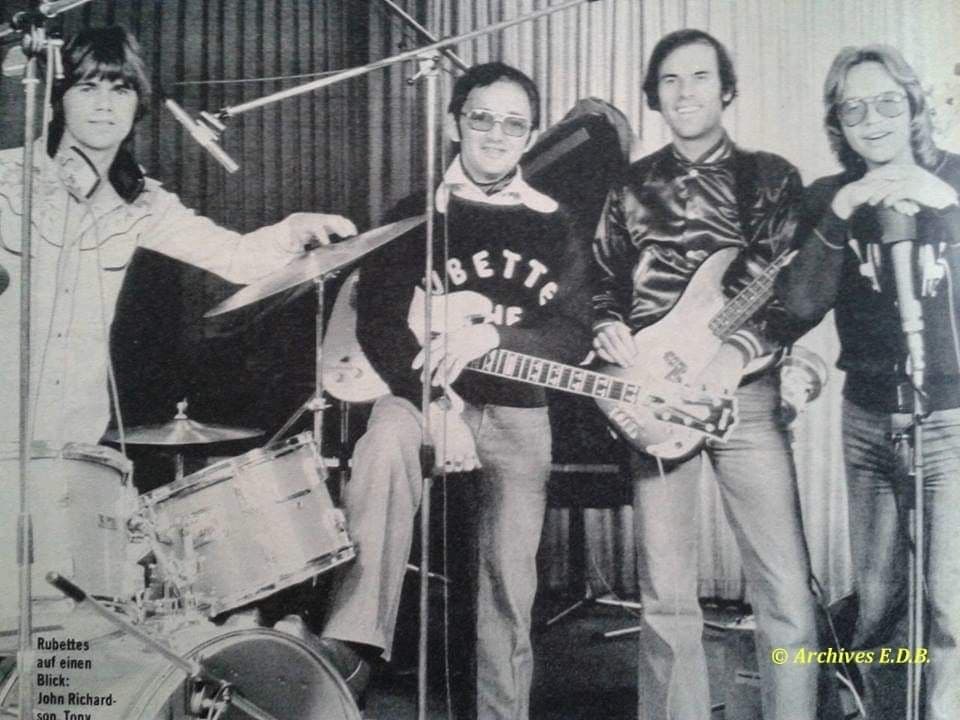
A Spirited Ode to Teenage Joy and Disco Innocence
When The Rubettes released “Juke Box Jive” in 1974, it instantly became a beacon of effervescent pop-rock, capturing a unique moment in music history where innocence, nostalgia, and the early disco beat collided. Hitting No. 3 on the UK Singles Chart, the song exemplified the infectious charm of mid-70s British pop, a time when flamboyant outfits, synchronized dance moves, and melodic hooks were the currency of youthful delight. Behind its seemingly playful exterior lies a careful crafting of melody and story, a hallmark of the songwriting duo Wayne Bickerton and Tony Waddington, who understood how to blend catchy rhythms with a sense of universal longing and joy.
At its heart, “Juke Box Jive” is more than a simple party song. It’s a celebration of the ritual of music itself—the thrill of a coin dropped into a jukebox, the shared moments in local dance halls, and the simple pleasure of a song that makes you tap your feet and hum along. The lyrics evoke a gentle, almost cinematic nostalgia: scenes of teenagers swaying under dim lights, voices lifted in unison, a fleeting escape from the responsibilities creeping into the adult world. There’s a sweetness to the harmonies, a deliberate echo of the early rock ’n’ roll spirit, but polished with the gloss of 70s pop sensibilities. For listeners now, especially those who remember those long-ago nights, the song transports them back to a world where joy was simple, style was exuberant, and music was the heartbeat of social life.
The story behind the song’s recording is as colorful as its sound. The Rubettes, formed in 1973, had already gained attention with their hit “Sugar Baby Love”, and with “Juke Box Jive”, they leaned fully into their signature look: white suits, black ties, and a playful wink to the audience with their eyeliner and coiffed hair. While their visual image made them stand out, it was their musical craftsmanship that sustained them. Every note of “Juke Box Jive” carries an understanding of pop mechanics—tight vocal harmonies, a rollicking piano line, and guitar riffs that flirt between rock and disco. In interviews, the band often reflected on how the recording sessions were filled with laughter and experimentation, a sense of genuine camaraderie that subtly resonates in the final track.
Musically, the song exists in that sweet spot between eras: it nods to the ’50s rock ’n’ roll with its upbeat rhythm and sing-along choruses while flirting with the burgeoning disco sounds of the mid-70s. This blend allowed it to capture audiences across generations, offering both familiarity and novelty. The hook is undeniable, embedding itself in memory with repeated listens, yet it never feels tiresome; it’s the kind of song that invites recollection and storytelling, a soundtrack to evenings shared with friends, to first dances, and to the electric thrill of youth.
Beyond charts and accolades, “Juke Box Jive” carries significance as a cultural artifact. It’s a reminder of an era when music was communal, physical, and deeply intertwined with identity and social connection. For anyone revisiting the song now, there’s a bittersweet pang—a recognition of youth’s fleetingness, the innocence of joy that cannot be recaptured but can be relived through melody and memory. The Rubettes captured, in under three minutes, a sense of timeless elation, a sparkling vignette of an era when pop music was both a mirror and an escape, a means to celebrate life in all its uncomplicated, shining beauty.
In retrospect, “Juke Box Jive” is not just a song but a time capsule: a reminder of mirrored disco balls, the click of a coin in a jukebox, and the heartbeat of a generation discovering freedom, friendship, and fun. Its melodies endure, carrying forward the whispers of laughter, the stomping of shoes on dance floors, and the simple, unspoken understanding that music, above all, unites us in the fleeting yet eternal dance of life.