
A Glam-Pop Anthem of Confidence and Reinvention
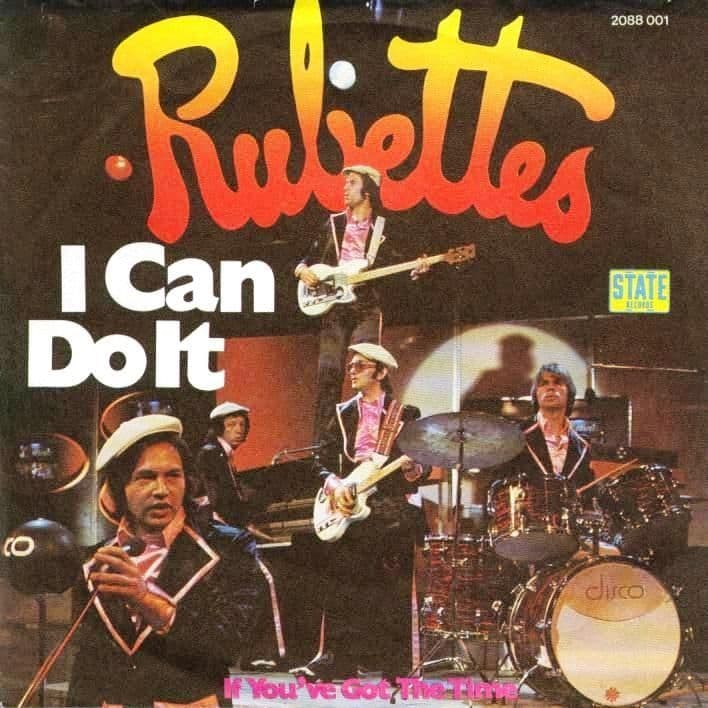
Ah, the mid-1970s. A time when the airwaves were a vibrant tapestry of sounds, from the gritty rock of Led Zeppelin to the smooth soul of Barry White, and amidst it all, a catchy, upbeat tune burst forth, promising self-assurance and boundless possibility: “I Can Do It” by The Rubettes. Released in 1974, this infectious glam-pop gem quickly ascended the charts, reaching a respectable No. 7 on the UK Singles Chart and making a significant splash across Europe, particularly in Germany and the Netherlands where it also cracked the top 10. For many of us who lived through that era, it wasn’t just a song; it was an anthem, a little burst of sunshine on the radio that, even now, can transport us back to simpler times, to dance floors filled with bell-bottoms and platform shoes, to the sheer exuberance of youth.
The story behind “I Can Do It” is, in many ways, emblematic of the pop music industry itself – a testament to the power of a catchy hook and a well-timed release. The Rubettes had already tasted phenomenal success with their debut single, “Sugar Baby Love,” a quintessential piece of glam-rock pastiche with its falsetto vocals and retro-fifties feel. Following up a massive hit is always a daunting task, and for a band that had, in some ways, been initially conceived as a studio project, the pressure was certainly on. “I Can Do It,” penned by the prolific songwriting duo of Wayne Bickerton and Tony Waddington (who also wrote “Sugar Baby Love”), offered a slightly different flavour while retaining the band’s core appeal. It was less overtly nostalgic than its predecessor and embraced a more direct, confident pop sound. The song’s production, with its crisp instrumentation and prominent backing vocals, was designed to be instantly appealing, and it certainly achieved that aim.
But beyond its chart performance and production, the true enduring power of “I Can Do It” lies in its simple yet profound meaning. It’s a straightforward declaration of self-belief, a rejection of doubt, and an embrace of one’s own capabilities. The lyrics, while not complex, are incredibly relatable: “Every time I try to do my best / Someone always puts me to the test / But I can do it, yes I can.” It speaks to that universal human experience of facing challenges, of encountering skepticism, and of ultimately finding the inner strength to overcome. For a generation coming of age in the tumultuous 70s, a decade marked by economic uncertainty and social change, such a message of unwavering confidence resonated deeply. It wasn’t about grand political statements or profound philosophical musings; it was about the everyday triumphs, the personal victories, and the quiet determination that allows us to push forward.
Listening to “I Can Do It” now, all these years later, evokes a bittersweet blend of memories. There’s the warmth of nostalgia for a time when pop music felt so joyous and unburdened, when a three-minute song could genuinely lift your spirits and make you believe, even just for a moment, that anything was possible. You can almost feel the energy of those live performances, the excitement of watching The Rubettes on Top of the Pops with their signature white suits and energetic stage presence. It reminds us of a simpler innocence that, perhaps, we’ve lost a little along the way. Yet, the core message of the song remains as potent as ever. In a world that continues to present its challenges, the simple affirmation “I can do it” is a timeless reminder of resilience and the enduring human spirit. It’s a song that proves that sometimes, the most profound statements are found in the simplest of melodies and the most direct of declarations. And for that, “I Can Do It” continues to hold a special place in the hearts of those who remember it, and for those who discover its uplifting charm anew.