
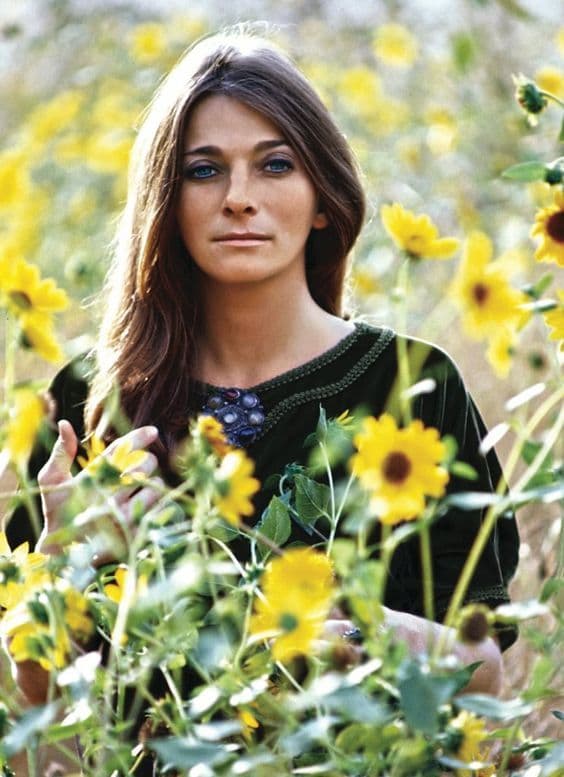
“Amazing Grace” – When a 200-Year-Old Hymn Found a New Voice in Judy Collins’ Gentle, Unforgettable Recording
Few recordings in modern folk music carry the quiet emotional gravity of “Amazing Grace” as sung by Judy Collins. Released in 1970 on her album Whales & Nightingales, Collins’ version of the centuries-old hymn became one of the most unexpected chart successes of the era. In 1971, the single climbed to No. 15 on the Billboard Hot 100, reached No. 5 on the Easy Listening chart, and astonishingly rose to No. 5 on the UK Singles Chart, where it remained for months. For a traditional hymn—recorded with little more than Collins’ crystalline voice and simple accompaniment—this was a remarkable achievement in the age of rock bands, electric guitars, and radio singles built for speed rather than reflection.
Yet the story of “Amazing Grace” begins long before the folk revival of the 1960s. The hymn was written in 1772 by John Newton, an English clergyman and former slave-ship captain whose dramatic spiritual conversion inspired the lyrics. Newton’s words were deeply autobiographical: a man haunted by his past who believed he had been saved by divine mercy. The lines “I once was lost, but now am found / Was blind, but now I see” were not poetic abstractions—they were confessions born from guilt, redemption, and faith. Over the centuries the hymn traveled through churches, revival meetings, and American folk traditions until it became one of the most widely recognized spiritual songs in the English-speaking world.
By the late 1960s, Judy Collins had already established herself as one of the defining voices of the American folk movement. Known for her luminous interpretations of songs by Bob Dylan, Leonard Cohen, and Joni Mitchell, Collins possessed a rare ability: she could approach a song quietly, almost reverently, and reveal depths that listeners hadn’t noticed before. Her 1967 recording of “Both Sides Now” had proven her interpretive power. But when she chose to record “Amazing Grace”, she was not aiming for a chart hit. In fact, the recording was initially created almost as an afterthought.
The arrangement on Whales & Nightingales was deliberately restrained. Rather than transforming the hymn into a dramatic production, Collins sang it with a gentle, nearly unaccompanied purity. The tempo was slow, the instrumentation sparse, and the emotional focus rested entirely on the clarity of her voice. What made the performance so striking was its sincerity. Collins didn’t perform the song like a showpiece; she approached it almost like a quiet prayer.
Something about that honesty resonated deeply when the song was released as a single. In an era marked by the aftermath of the 1960s—political tension, social change, and cultural upheaval—the simple message of grace and redemption felt timeless. Radio stations began playing the song not only on folk programs but also on adult contemporary playlists. Audiences responded with an enthusiasm few had predicted.
Part of the song’s enduring power lies in its universal message. The lyrics never describe a specific moment in history or a particular person’s struggle. Instead, they speak of loss, forgiveness, humility, and renewal—experiences that transcend generations. Collins’ voice captures that emotional balance beautifully. There is both fragility and quiet strength in her delivery, as if she understands that redemption is rarely dramatic. Often it arrives softly, almost unnoticed.
The recording also marked an important moment in Collins’ career. By the early 1970s she had become not just a folk singer but a cultural interpreter—someone who could bridge the worlds of traditional music and contemporary audiences. “Amazing Grace” demonstrated that an old hymn, written nearly two centuries earlier, could still speak directly to modern listeners when placed in the right hands.
Over the decades many artists—from gospel choirs to bagpipe bands—have recorded their own versions of “Amazing Grace.” Yet the recording by Judy Collins remains one of the most beloved. Its success on the charts proved something rare: that simplicity, sincerity, and emotional truth could still find a place in popular music.
Listening to it today feels like opening a quiet window into another time. The arrangement never rushes, the voice never strains, and the message never fades. Instead, the song lingers—like a memory that grows more meaningful the longer one carries it.