
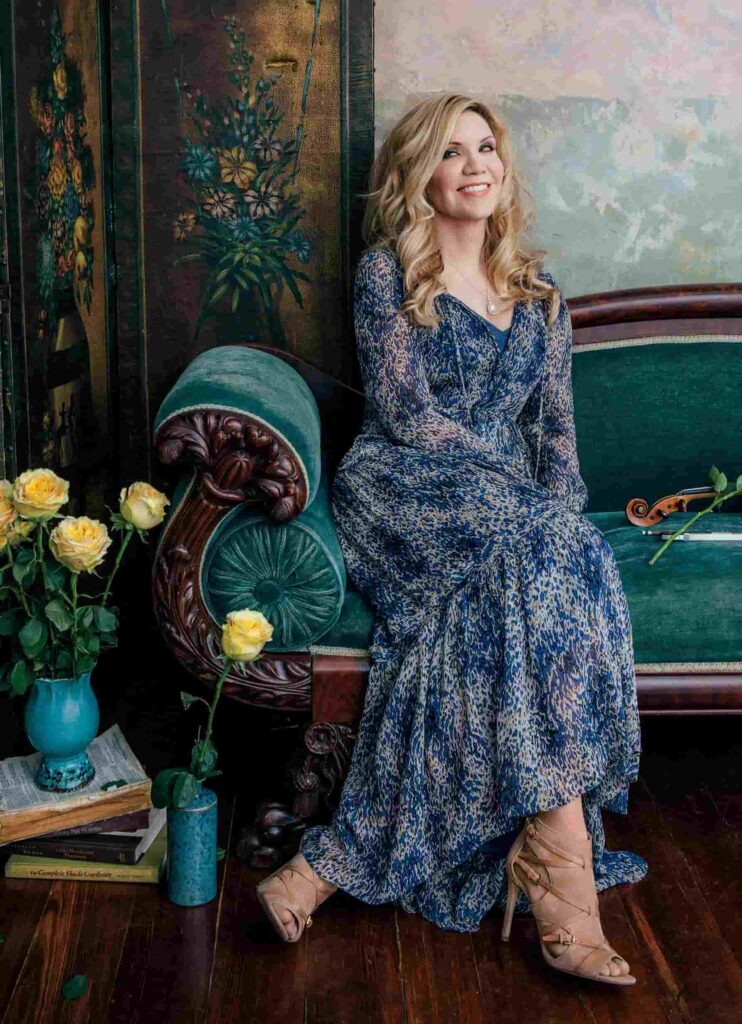
Strings of Memory: My Life Between Bluegrass, Harmony, and the Search for a True Song
Good evening. As I sat on that stage, listening to the introduction and hearing my life summarized in awards, records, and chart positions, I felt something much simpler than pride. I felt gratitude. Because long before people knew my name, I was just a girl growing up in Champaign, Illinois, listening to every kind of music I could find and trying to understand why certain sounds could reach straight into the heart.
I was raised in a home full of different influences. My mother, an illustrator, took me to opera rehearsals and performances, while my grandmother played piano and filled the house with folk songs. My parents, both children of immigrants, believed in exposing us to everything—music, sports, dance, culture—so that if we had any gift at all, it might reveal itself. Bluegrass became one of those gifts, but it was never the only thing I loved. I also listened to Top 40 radio, to Prince, Whitney Houston, English rock, and anything else that stirred my imagination. Even then, I never felt music should live inside narrow borders.
As a child, I fell deeply in love with bluegrass records that seemed to carry entire worlds inside them. Albums like J.D. Crowe & the New South and Clinch Mountain Gospel didn’t just entertain me—they shaped the way I thought about love, home, beauty, and longing. Those songs painted a world where home was sacred, family mattered, and even heartbreak had dignity. I would daydream to that music and build emotional landscapes from it. It was more than listening. It was becoming.
When I first picked up the fiddle, I loved playing, but it was harmony singing that truly captured me. There was something intimate and thrilling about blending with another voice, about listening so closely that you could almost disappear into the phrasing of someone else. Over the years, I found that singing harmony taught me as much about emotion as any solo performance ever could. Whether singing with Union Station, with Dan Tyminski, with the Cox Family, or later with artists as unexpected as Robert Plant, I always found myself drawn to the human connection inside the song.
That has really been the story of my career: following songs that felt true. I never set out with a grand design to reinvent bluegrass or country music. I simply chose material that meant something to me. Even as a teenager recording my first album, I was already drawn to original songs and to music that stretched beyond tradition while still respecting it. I wanted to sing songs that fit who I was—not just songs that had been sung a hundred times before.
Along the way, I met heroes I had admired from afar: Bill Monroe, Kenny Baker, Tony Rice, Charlie Louvin. Some of them became not just legends to me, but real people with stories, humor, tenderness, and pain. Those moments mattered because they reminded me that great music is never only about technique. It is about truth. It is about belief.
And that is still what moves me now. Whether I’m singing an old ballad, standing on the Opry stage, recording with friends, or being surprised by a new voice my son plays for me, I am still searching for that same thing: a song that sounds honest enough to live inside. In the end, that is who I am—not just a fiddler, not just a singer, but someone always listening for the next true note.