
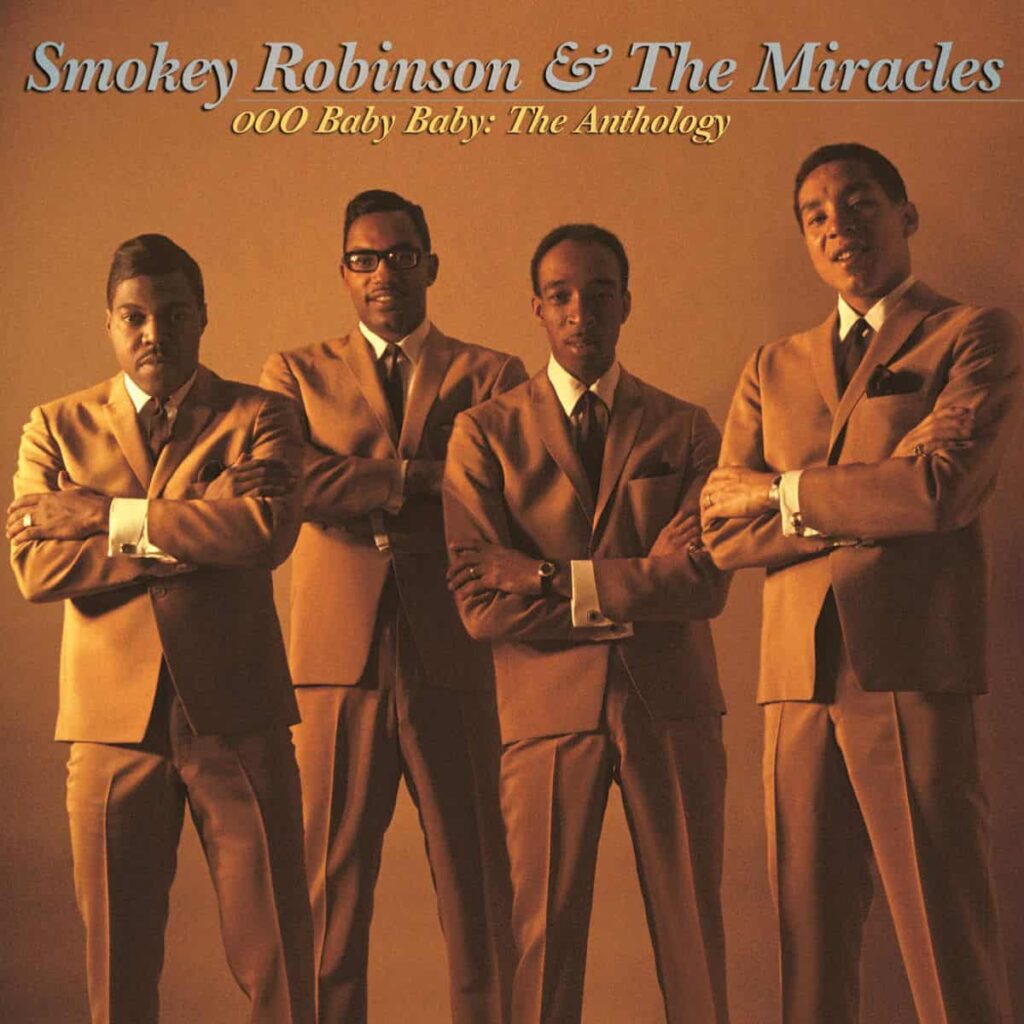
A Tender Apology Wrapped in Soul: When Love Trembles Between Regret and Hope
Few songs in the vast treasury of American soul music capture vulnerability quite like “Ooo Baby Baby” by Smokey Robinson and The Miracles. Released in 1965 on the album Going to a Go-Go, the single climbed to No. 4 on the Billboard R&B chart and reached No. 16 on the Billboard Hot 100. At a time when Motown Records was redefining popular music, this song stood apart—not for exuberant dance rhythms or youthful bravado, but for its hushed confession, its trembling sincerity, and its aching humanity.
Written by Smokey Robinson and fellow Miracle Pete Moore, “Ooo Baby Baby” emerged during a golden era for the label founded by Berry Gordy in Detroit. The Miracles were already one of Motown’s flagship acts, and Robinson had proven himself not only a gifted vocalist but also one of the label’s most poetic songwriters. Yet in this song, he revealed something deeper—an emotional nakedness rarely heard in mainstream pop at the time.
The story behind the song is refreshingly simple. Robinson once admitted that the phrase “Ooo baby baby” came first—a spontaneous melodic expression rather than a carefully constructed lyric. From that fragment of sound grew one of the most heartfelt apologies ever put to music. The song unfolds as a confession of wrongdoing: “I’m just about at the end of my rope / But I can’t stop trying…” There is no arrogance here, no defense. Only remorse. Only longing.
Musically, the arrangement is a masterclass in restraint. Produced by Smokey Robinson himself along with Pete Moore, the track glides gently over a subtle rhythm section and soft orchestration. The backing vocals—so essential to The Miracles’ signature sound—do not overpower but instead cradle Robinson’s fragile lead. His falsetto, delicate and almost breaking at moments, carries the emotional weight. You can hear the quiver in his voice, especially when he repeats, “I’m crying.” It does not feel performed. It feels lived.
In the mid-1960s, soul music often radiated optimism or romantic devotion. But “Ooo Baby Baby” lingered in the quieter spaces of love—the aftermath of mistakes, the humility of asking forgiveness. That nuance is what gave it lasting power. It spoke to listeners not as spectators of a perfect romance, but as participants in flawed relationships. It acknowledged that love is not only about joy; it is also about regret and the courage to say, “I was wrong.”
The commercial success of the song reinforced Robinson’s reputation as “America’s greatest living poet,” a title later given to him by Bob Dylan. Over the decades, “Ooo Baby Baby” has been covered by numerous artists, including Linda Ronstadt, whose 1978 rendition brought the song back into the Top 10 of the Billboard Hot 100, peaking at No. 7. Her version introduced it to a new generation, yet the emotional DNA remained unmistakably Smokey’s.
There is something timeless about the way this song unfolds. The melody does not rush. It allows silence to breathe between phrases. In an era when so much music sought to impress, this song simply confesses. That is its quiet brilliance.
Listening to “Ooo Baby Baby” today feels like opening an old letter—one written in careful handwriting, perhaps slightly faded, but still powerful in its honesty. It reminds us of evenings when the radio glowed softly in the corner of a room, when a voice coming through a small speaker could reach directly into the heart. The ache in Robinson’s delivery still resonates because regret, love, and hope for reconciliation are feelings that never age.
In the grand catalog of Smokey Robinson and The Miracles, this song stands not as their loudest triumph, but perhaps as their most intimate one. It is a testament to the idea that strength in music does not always come from power—it can come from tenderness. And sometimes, the softest plea becomes the most enduring echo.